India’s oceans have stories that history books often overlook. Stories of traders who trusted the winds, ships stitched by hand, and voyages guided by stars rather than screens. The INSV Kaundinya voyage is not just reminding us of those stories—
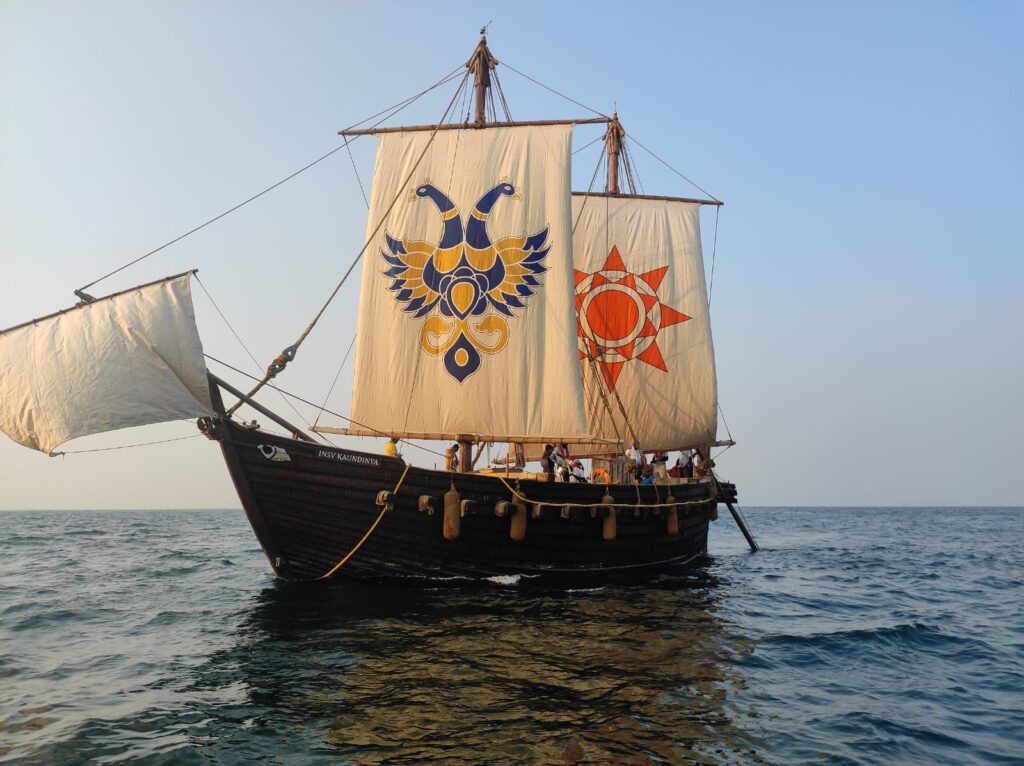
it is bringing them back to life, one wave at a time.As the traditional sailing vessel set sail from Porbandar to Muscat, Oman, it marked a rare moment where history did not stay confined to museums or manuscripts. Instead, it returned to the open sea, moving exactly the way it once did centuries ago.
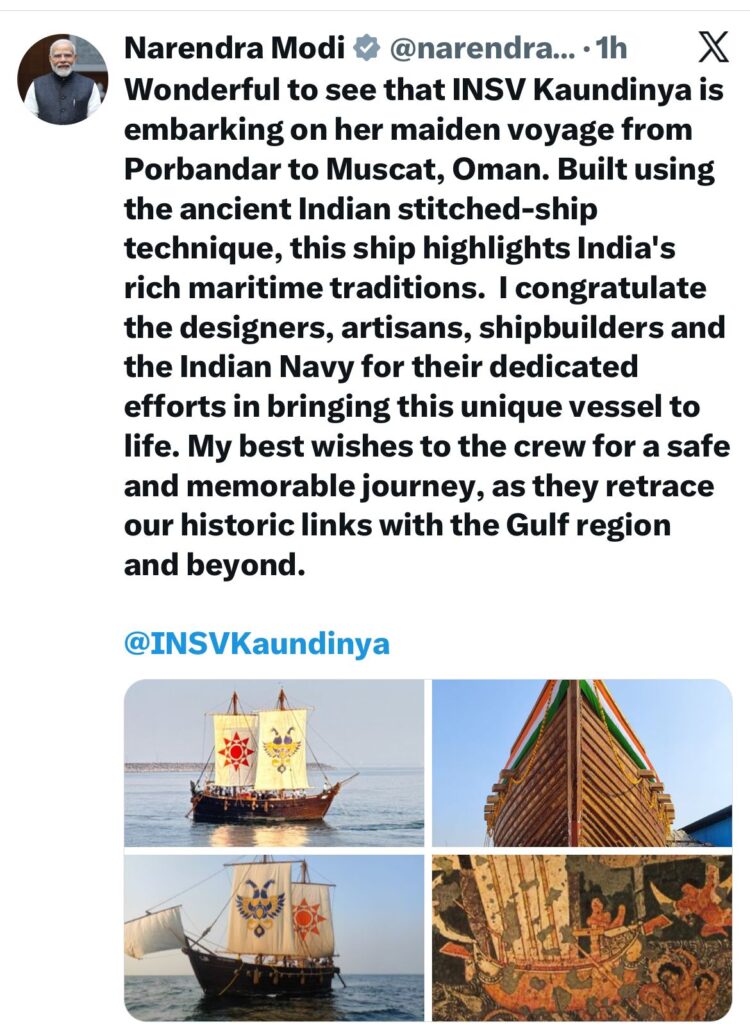
Prime Minister Narendra Modi called the voyage a proud reflection of India’s deep maritime traditions and long-standing ties with the Gulf region. And rightly so—because this journey is not symbolic theatre. It is real craftsmanship, real navigation, and real courage, echoing the maritime confidence of ancient India
INSV Kaundinya Voyage: Built the Way History Intended
What truly sets the INSV Kaundinya voyage apart is how the ship itself was created.Unlike modern vessels assembled with steel frames, welding, and advanced machinery, INSV Kaundinya follows the ancient stitched-ship technique. Wooden planks are carefully stitched together using natural fibers and ropes—no metal nails, no industrial shortcuts.
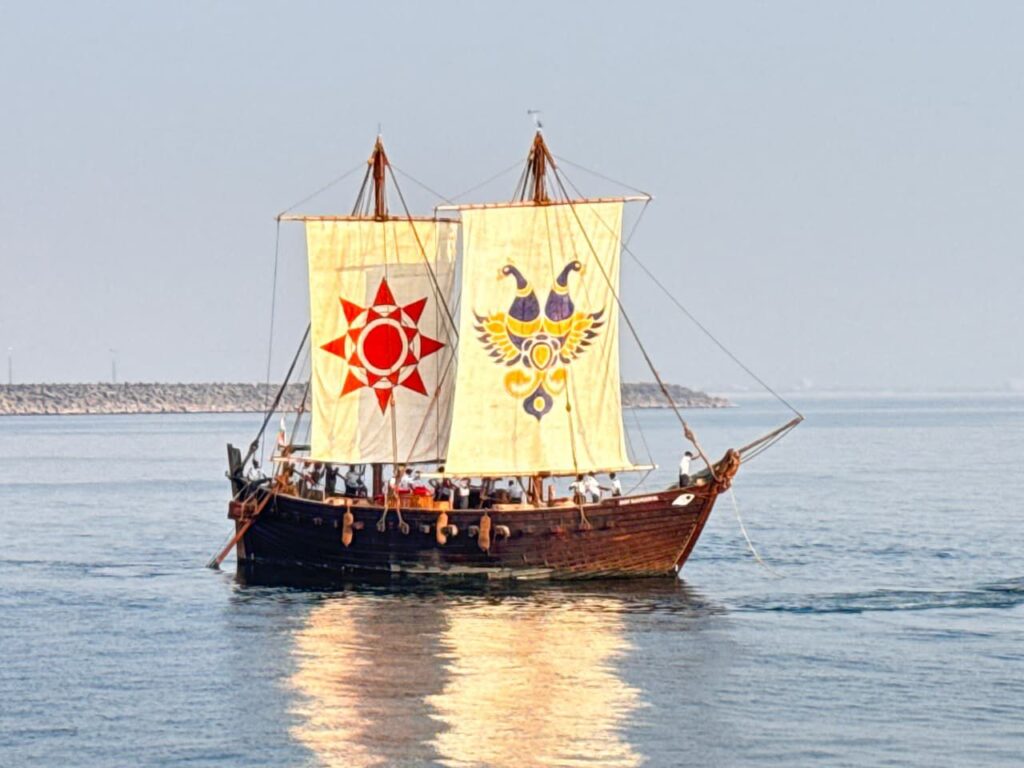
This technique was once widely used along India’s western coastline and allowed Indian traders to travel confidently across the Arabian Sea. The ship’s curved wooden hull, traditional rigging, and large square sails are all faithful recreations based on historical evidence.Seeing the vessel glide across the water feels like watching a forgotten chapter of Indian history breathe again.
Inspired by Murals, Proven by the Sea
The design of INSV Kaundinya draws inspiration from ancient Indian murals and historical texts that depict large Indian ships navigating rough seas. For years, such images were often dismissed as artistic imagination.
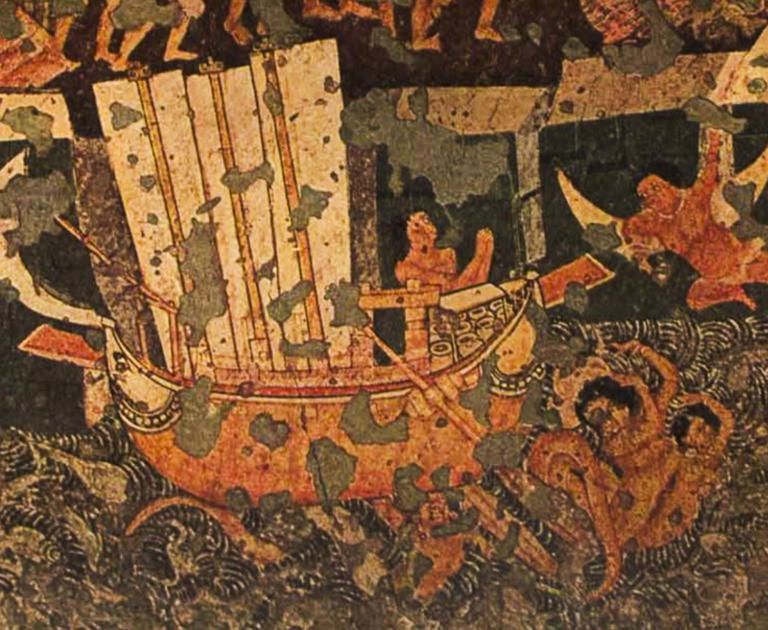
This voyage proves otherwise.
Historical records confirm that Indian merchants traded spices, textiles, metals, and ideas with regions like Arabia, East Africa, and Southeast Asia. The successful launch and navigation of INSV Kaundinya demonstrate that ancient Indian shipbuilders possessed both imagination and engineering mastery.
What once existed on temple walls and manuscripts now sails through real waves.
The Journey So Far: From Porbandar to Muscat
The INSV Kaundinya voyage began from Porbandar, one of India’s most historically significant port cities. From here, the vessel follows ancient maritime routes toward Muscat, Oman—paths once familiar to Indian traders more than a thousand years ago.
The Indian Navy has played a crucial role in supporting the project, from planning and safety oversight to operational guidance. While the spirit of the voyage remains traditional, modern safety protocols ensure the crew’s well-being.
The crew itself is specially trained, blending traditional sailing knowledge with essential contemporary navigation support.
Why the INSV Kaundinya Voyage Matters Today
This voyage arrives at a powerful moment in India’s cultural journey. It highlights three undeniable truths:
First, India was a global maritime power long before colonial influence.
Second, ancient Indian technology was advanced, functional, and ocean-worthy.
Third, India’s cultural and commercial ties with the Gulf are centuries old, rooted in mutual exchange rather than modern geopolitics.
In an age obsessed with digital innovation, the INSV Kaundinya voyage reminds us that true innovation existed long before modern tools—it lived in knowledge, craftsmanship, and confidence.
Rebuilding Cultural Bridges Across the Arabian Sea
The route from Porbandar to Muscat is deeply symbolic. These waters once carried Indian goods, languages, customs, and relationships. Ports across India and Oman were connected not just by trade, but by trust.
By retracing this journey, the INSV Kaundinya voyage strengthens people-to-people connections and adds emotional depth to India’s modern diplomatic relationships with Gulf nations.
It is cultural diplomacy powered by history.
Key Facts at a Glance
- Route: Porbandar (India) to Muscat (Oman)
- Construction: Ancient stitched-ship technique
- Materials: Wood, natural fibers, traditional sails
- Support: Indian Navy and heritage experts
- Purpose: Maritime history revival and cultural reconnection
FAQ
1. What is INSV Kaundinya?
INSV Kaundinya is a traditional Indian sailing vessel built using ancient stitched-ship construction methods.
2. Why is the INSV Kaundinya voyage important?
It revives India’s maritime heritage and proves ancient Indian ships were capable of long open-sea voyages.
3. How is this ship different from modern vessels?
It uses stitched wooden planks instead of metal welding and relies on traditional sailing principles.
4. Where is the ship sailing?
From Porbandar, India, to Muscat, Oman.
5. Who supports the project?
The Indian Navy, along with historians, artisans, and maritime experts.
conclusion
The INSV Kaundinya voyage is not about nostalgia—it is about validation.
Validation that India once mastered the seas.
Validation that ancient knowledge was powerful and practical.Validation that history does not have to stay still to be respected.As the ship cuts through the Arabian Sea, it carries more than a crew. It carries India’s ocean-going legacy—no longer forgotten, and finally visible to the world once again and more trending news visit our site