Introduction: Technology Is Finally Learning to Speak Human
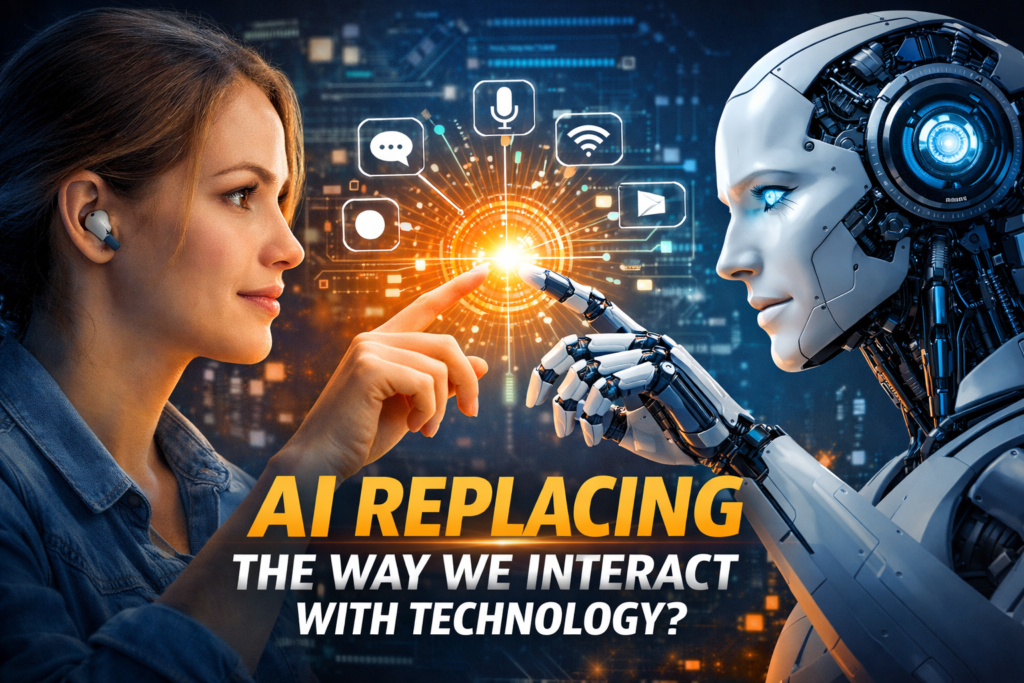
For years, humans adjusted themselves to technology—learning software, memorizing commands, navigating endless menus, and tapping screens for even the smallest task. But that era is quietly ending.Today, AI replacing the way we interact with technology is not a future prediction—it’s a reality unfolding right now. Instead of clicking, typing, and searching, people are talking, asking, and receiving answers instantly. Technology is finally adapting to us, not the other way around.
This shift is one of the biggest digital transformations since the invention of the smartphone.
From Buttons to Conversations: A Major Digital Evolution
Traditional technology worked on instructions. You had to tell machines exactly what to do, step by step. AI changes this completely.now, interaction is becoming:
- Conversational
- Context-aware
- Personalized
- Predictive
Whether it’s ChatGPT answering complex questions, voice assistants booking appointments, or AI recommending content before you even search, AI replacing the way we interact with technology is already reshaping daily habits.
Why Old Interfaces Are Slowly Disappearing
Apps, dashboards, and menus were designed for machines, not humans. They require learning, effort, and constant attention. AI removes this friction.Here’s why traditional interfaces are losing importance:
- Too many apps overwhelm users
- Manual navigation wastes time
- Software learning curves slow productivity
- Interfaces treat all users the same
AI-powered systems understand intent, not clicks. This is why AI replacing the way we interact with technology feels natural rather than forced.
Voice, Vision, and Emotion: The New Digital Language
AI is introducing new ways to interact beyond screens.
1. Voice Interaction
Speaking is faster than typing. Voice-based AI is becoming accurate, multilingual, and emotionally aware, making keyboards less essential.
2. Visual & Gesture Control
AI-powered cameras and sensors allow interaction through gestures, eye movement, and facial expressions—especially useful in AR, VR, and smart devices.
3. Emotion-Aware AI
Modern AI can understand tone, mood, and intent. Technology no longer feels cold—it feels responsive.These advances confirm that AI replacing the way we interact with technology is not just about speed, but comfort.
Will Screens and Apps Completely Disappear?
No—but their role will change.Screens will remain important for:
- Creative work
- Design and media
- Gaming and entertainment
- Data analysis
However, AI will become the first layer of interaction, while screens act as support tools. The future is not screen-free—it’s AI-first.
What This Means for Everyday People
This shift isn’t only for tech experts—it affects everyone.For Users:
- Less effort, more results
- No need to learn complex software
- Highly personalized experiences
For Businesses
- AI-driven customer support
- Conversational shopping
- Smarter user journeys
For Creators & Workers
- Faster workflows
- AI as a productivity partner
- Focus on creativity, not repetition
Clearly, AI replacing the way we interact with technology is changing how we live and work.
Is AI Taking Control or Helping Us ?
One common fear is that AI will replace humans. In reality, AI is becoming a co-pilot, not a controller.AI handles:
- Repetitive tasks
- Data processing
- Predictions
Humans handle
- Creativity
- Ethics
- Final decisions
So while AI replacing the way we interact with technology is true, humans remain at the center.
(FAQs)
1. Is AI replacing the way we interact with technology?
Yes, AI replacing the way we interact with technology is already happening. People are moving away from traditional clicks and menus toward voice commands, conversational AI, and intelligent systems that understand intent instead of instructions.
2. Will AI completely replace screens and mobile apps?
No, AI will not completely replace screens or apps. However, screens will become less central as AI takes over primary interactions. Apps will work more in the background while AI handles tasks through conversation and automation.
3. How is AI making technology more human-friendly?
AI makes technology more human-friendly by understanding natural language, emotions, and context. Instead of learning how software works, users can simply express what they want, and AI handles the rest.
4. Does AI replacing the way we interact with technology mean humans will lose control?
No. AI acts as a helper, not a decision-maker. Humans still set goals, make final decisions, and apply judgment, while AI assists by saving time and reducing complexity
5. Why is this topic popular on Google Discover right now?
This topic is trending on Google Discover because it focuses on the future of technology and its real impact on everyday life. Google Discover prioritizes content that sparks curiosity and explains how emerging trends like AI affect people directly.
Conclusion
AI replacing the way we interact with technology is no longer a distant idea—it is becoming part of everyday life. From voice-based assistants to intelligent systems that understand intent and emotion, technology is shifting toward more natural and human-centered experiences.and how to make money in ai 2026 visit our site
Screens, apps, and keyboards will not disappear, but their role will continue to shrink as AI takes the lead in simplifying digital tasks. The future is not about humans competing with machines, but about working alongside intelligent technology that adapts to us. This change will make technology easier, faster, and more meaningful for everyone and more trending news visit our site