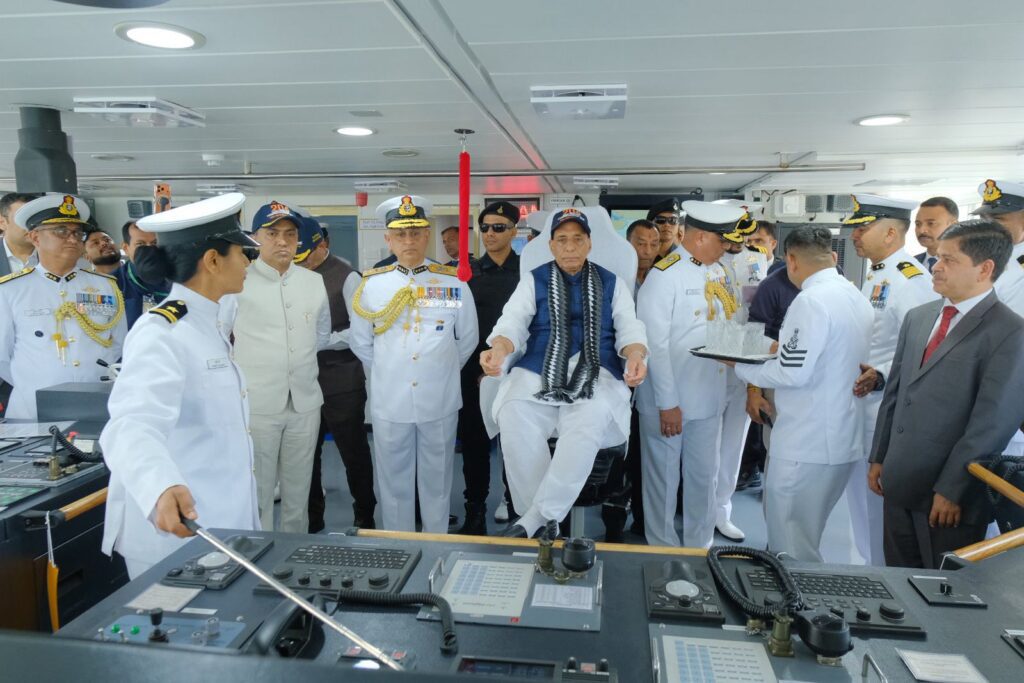
India has reinforced its position as a rising maritime power with the ICGS Samudra Pratap commissioning, a landmark event attended by Defence Minister Rajnath Singh.
The induction of this advanced vessel is not just a ceremonial milestone it reflects India’s evolving maritime strategy that combines security, sustainability, and self-reliance.At a time when the Indo-Pacific region is witnessing heightened strategic activity and increasing maritime traffic, the ICGS Samudra Pratap commissioning sends a clear signal: India is prepared to protect its seas while safeguarding the marine environment.
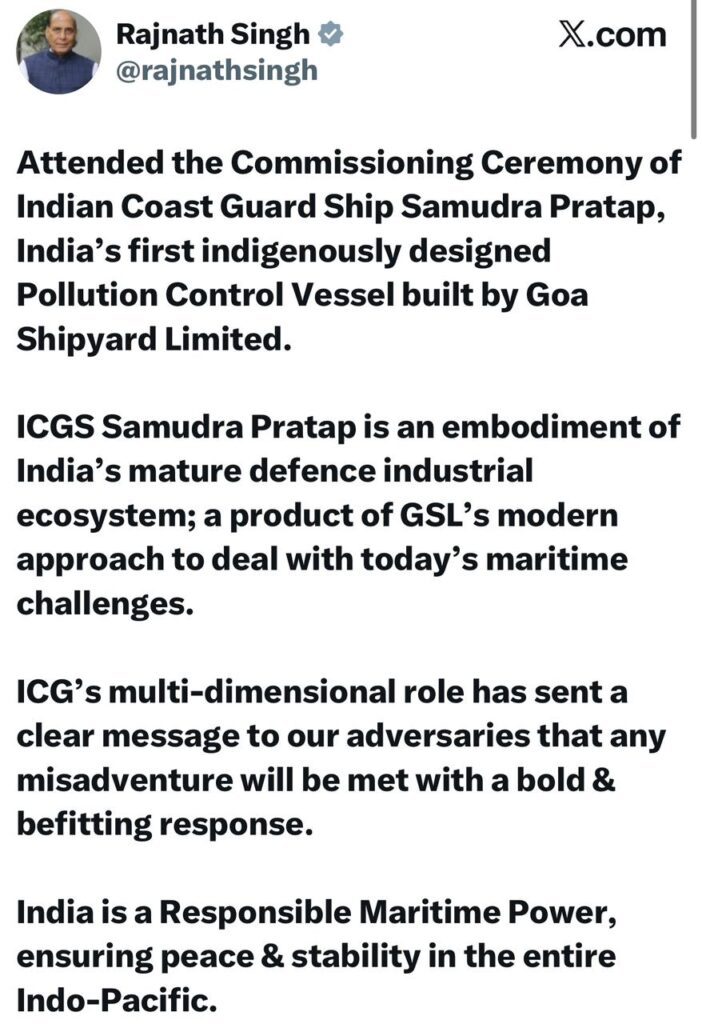
Key Highlights of the ICGS Samudra Pratap Commissioning
- Commissioned in the presence of Defence Minister Rajnath Singh
- India’s first indigenously designed and built pollution control vessel
- Constructed by Goa Shipyard Limited (GSL)
- Enhances Indian Coast Guard’s operational, environmental, and emergency response roles
Strengthens India’s credibility as a responsible Indo-Pacific maritime partner
Why the ICGS Samudra Pratap Commissioning Is a Strategic Milestone
The ICGS Samudra Pratap commissioning represents a decisive shift in how India approaches maritime security. Traditionally, naval strength focused mainly on combat capability. Today, India is expanding that definition to include environmental protection and disaster preparedness.
Samudra Pratap is designed to respond swiftly to oil spills, chemical discharges, and maritime pollution incidents challenges that can cause long-term damage to coastal economies, fisheries, and marine biodiversity.By deploying an indigenous pollution control vessel, India is closing a critical capability gap in its maritime framework.
Rajnath Singh’s Message Security with Responsibility
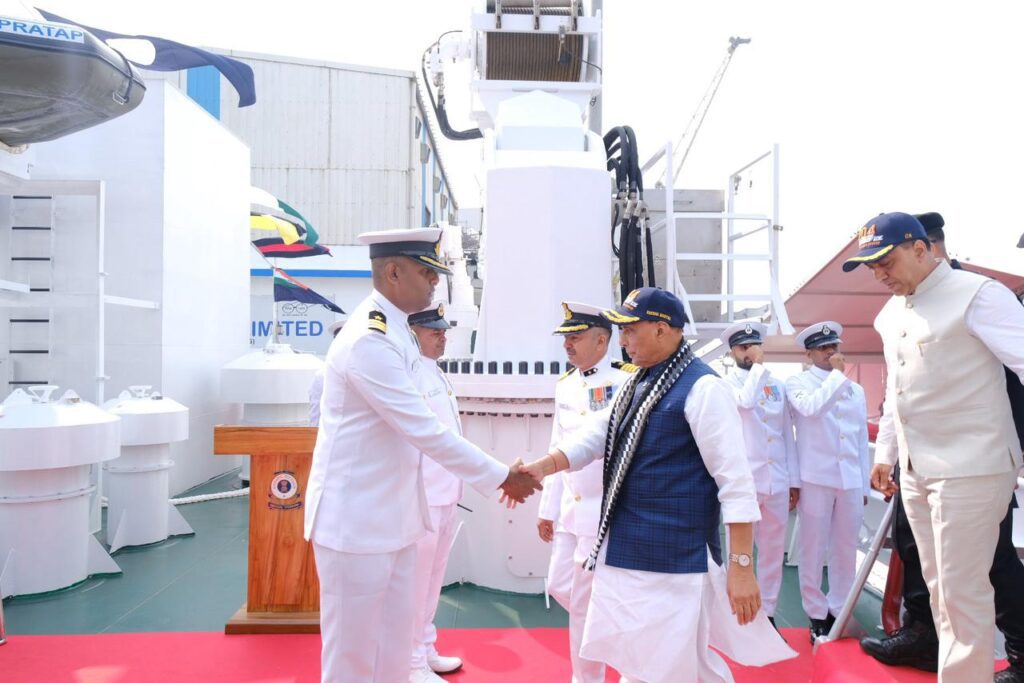
During the ceremony, Rajnath Singh emphasized that India’s maritime rise will be guided by responsibility, restraint, and readiness.
He highlighted that the Indian Coast Guard plays a vital role not only in enforcing maritime law but also in ensuring environmental security across India’s vast coastline.
His remarks underline a key message of the ICGS Samudra Pratap commissioning: India seeks peace and cooperation, but remains fully prepared to respond decisively to any maritime threat.
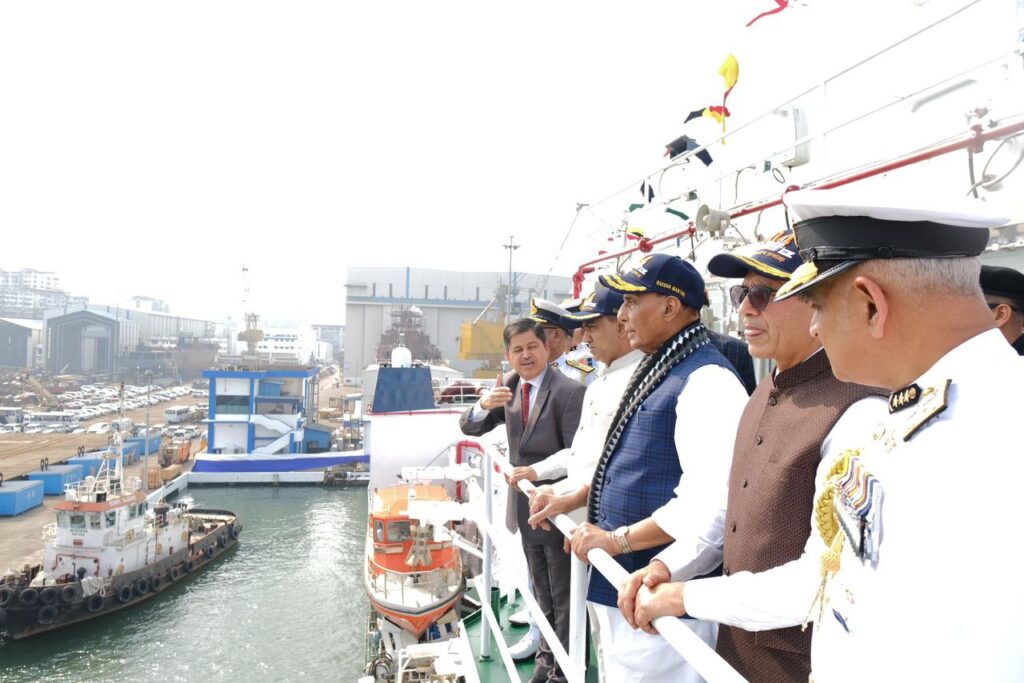
A Big Boost for Make in India Defence Manufacturing
The successful delivery of Samudra Pratap showcases the growing strength of India’s defence manufacturing ecosystem.
Goa Shipyard Limited’s role demonstrates how Indian shipyards are now capable of designing and building specialized, mission-oriented vessels that meet global standards.
The ICGS Samudra Pratap commissioning aligns with India’s broader push for Atmanirbhar Bharat, reducing dependence on imports while creating high-skilled employment and technological expertise within the country.
Why Pollution Control Vessels Are More Important Than Ever
The Indian Ocean has become one of the world’s busiest maritime routes. With this growth comes higher risks of
- Oil spills
- Hazardous material leaks
- Accidental marine pollution
A single major spill can disrupt port operations, tourism, fishing livelihoods, and coastal ecosystems for years.
The induction of Samudra Pratap ensures India can respond rapidly, minimizing damage and reinforcing trust among coastal states and international partners.
What Sets Samudra Pratap Apart
- Fully indigenous design and construction
- Dedicated pollution response and containment systems
- Multi-role capability for emergency and support operations
- Integration into the Indian Coast Guard’s expanding fleet
The ICGS Samudra Pratap commissioning also opens doors for future exports of similar vessels, positioning India as a potential supplier of specialized maritime platforms.
Why This Matters in the Indo-Pacific Context
The Indo-Pacific is increasingly central to global trade and geopolitics. Nations are closely watching how regional powers manage security and environmental responsibilities.By inducting Samudra Pratap, India strengthens:
- Maritime domain awareness
- Environmental leadership
- Cooperative security partnerships
This move reassures neighboring countries that India’s maritime expansion is stability-oriented, not confrontational.
FAQs
Q1. What is the significance of the ICGS Samudra Pratap commissioning?
It marks India’s entry into an elite group of nations with indigenous maritime pollution control capability.
Q2. Who commissioned the vessel?
The commissioning ceremony was attended by Defence Minister Rajnath Singh.
Q3. Who built Samudra Pratap?
The vessel was built by Goa Shipyard Limited.
Q4. How does this help coastal communities?
It enables faster response to pollution incidents, protecting fisheries, tourism, and livelihoods.
Q5. What does this mean for India’s global image?
It strengthens India’s reputation as a responsible maritime and environmental steward.
Conclusion
The ICGS Samudra Pratap commissioning is not just about adding a ship to the Indian Coast Guard fleet.more maritine power news visit
It represents India’s evolving maritime vision one that balances power with responsibility, security with sustainability, and growth with self-reliance.As India deepens its role in the Indo-Pacific, milestones like this underline a clear message: India is ready to lead, protect, and cooperate on the world’s oceans and more trending news visit our site