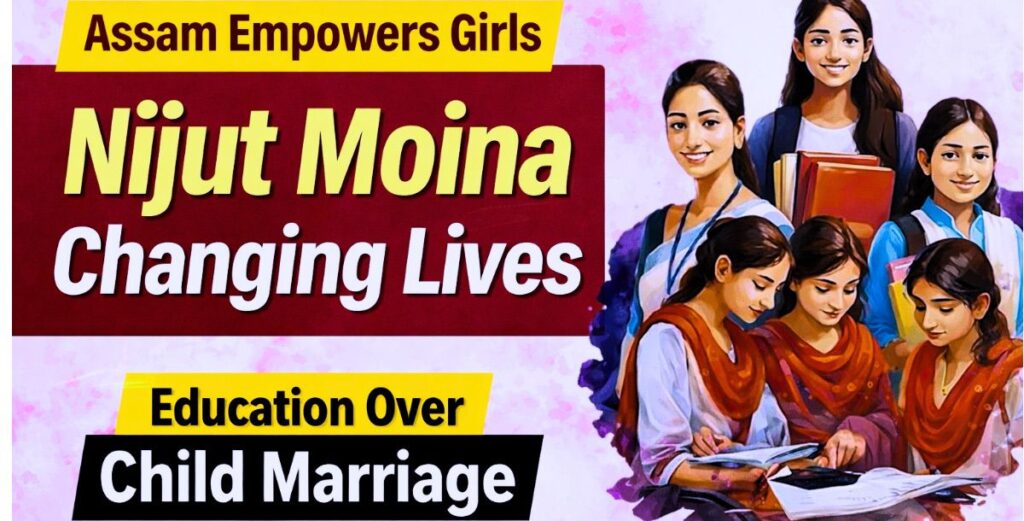
In Assam, where many girls are still forced to leave school too early, a quiet but powerful change is taking shape. The Mukhyamantri Nijut Moina Asoni Scheme has emerged as a lifeline for thousands of young girls who once stood at the edge of dropping out. Today, it is helping them stay in classrooms, dream bigger, and delay early marriage.
Launched by the Assam government, the Mukhyamantri Nijut Moina Asoni Scheme is not just another welfare program. It is a long-term social reform designed to protect girls through education, dignity, and financial security. Recent remarks by Chief Minister Himanta Biswa Sarma underline why this initiative has become one of the most meaningful steps toward girls’ empowerment in the state.
Mukhyamantri Nijut Moina Asoni Scheme: Key Highlights
- Flagship Assam government scheme focused on girls’ education
- Financial assistance from school to higher education
- Strong link between education and prevention of child marriage
- Benefits reaching lakhs of students across Assam
What Is the Mukhyamantri Nijut Moina Asoni Scheme?
The Mukhyamantri Nijut Moina Asoni Scheme is a state-supported program that provides direct financial help to eligible girl students. Its goal is simple yet transformative: ensure that money never becomes the reason a girl leaves her education midway.
By supporting girls from school through college, the scheme tackles the root causes of dropout—poverty, social pressure, and early marriage. The Assam government believes that when girls remain in education, families become stronger and communities progress faster.
How the Mukhyamantri Nijut Moina Asoni Scheme Is Changing Lives
On the ground, the impact of the Mukhyamantri Nijut Moina Asoni Scheme is already visible. Schools report improved attendance among girls, and colleges are seeing more first-generation female learners continue higher studies.
Chief Minister Himanta Biswa Sarma recently shared that the smiles and confidence of these students reflect the success of the scheme. According to the government, this initiative has connected lakhs of girls to a safer, more hopeful future through education.
Why Child Marriage Is Central to the Scheme’s Mission
Assam has long struggled with child marriage, especially in rural and economically weaker regions. Early marriage often ends a girl’s education permanently, limiting her health, income, and independence.
The Mukhyamantri Nijut Moina Asoni Scheme addresses this challenge at its source. By offering financial support and motivation to continue studies, families are encouraged to choose education over early marriage. This preventive approach creates lasting social change beyond legal enforcement alone.
Facts That Show Why This Scheme Matters
- Assam has historically reported high child marriage rates
- Girls who complete higher education marry later on average
- Educated women contribute more to household and state economies
- Investment in girls’ education improves health and social outcomes
These realities explain why the Mukhyamantri Nijut Moina Asoni Scheme is seen as an investment in Assam’s future, not just short-term aid.
How the Mukhyamantri Nijut Moina Asoni Scheme Works
The scheme supports girls across multiple education levels, from school to college. Financial benefits are transferred directly to beneficiaries, ensuring transparency and reducing misuse.
Officials confirm that enrollment under the Mukhyamantri Nijut Moina Asoni Scheme has increased steadily since its launch. The program is being closely monitored, with further improvements and expansion expected.
Why the Scheme Is Important Right Now
At a time when inflation and financial stress threaten education access, the Mukhyamantri Nijut Moina Asoni Scheme provides timely relief. It aligns with India’s broader vision of women-led development and social justice.
For many families, this support ensures girls no longer have to choose between survival and schooling. Education becomes a right, not a sacrifice.
Public Response and Social Impact
Parents across Assam have welcomed the scheme, calling it a turning point for their daughters. Teachers report higher motivation and confidence among girl students, while social workers see gradual changes in community mindsets.The Mukhyamantri Nijut Moina Asoni Scheme is helping education be viewed as an asset for girls, not a burden on families.
Frequently Asked Questions
1.Who can apply for the Mukhyamantri Nijut Moina Asoni Scheme?
Eligible girls as per Assam government guidelines can apply.
2.Does the scheme support college education?
Yes, it supports girls from school through higher education.
3.How does it prevent child marriage?
By providing financial security, families delay marriage and prioritize education.
4.Is the benefit transferred directly?
Yes, funds are credited directly to beneficiaries.
5.Is the scheme active in 2026?
Yes, the scheme is active and expanding.
Conclusion
The Mukhyamantri Nijut Moina Asoni Scheme is more than financial assistance. It is Assam’s commitment to its daughters. By combining education, empowerment, and social reform, the scheme is quietly reshaping the state’s future.
If sustained and strengthened, the Mukhyamantri Nijut Moina Asoni Scheme could stand as a national model for how education can protect, empower, and uplift an entire generation of girls