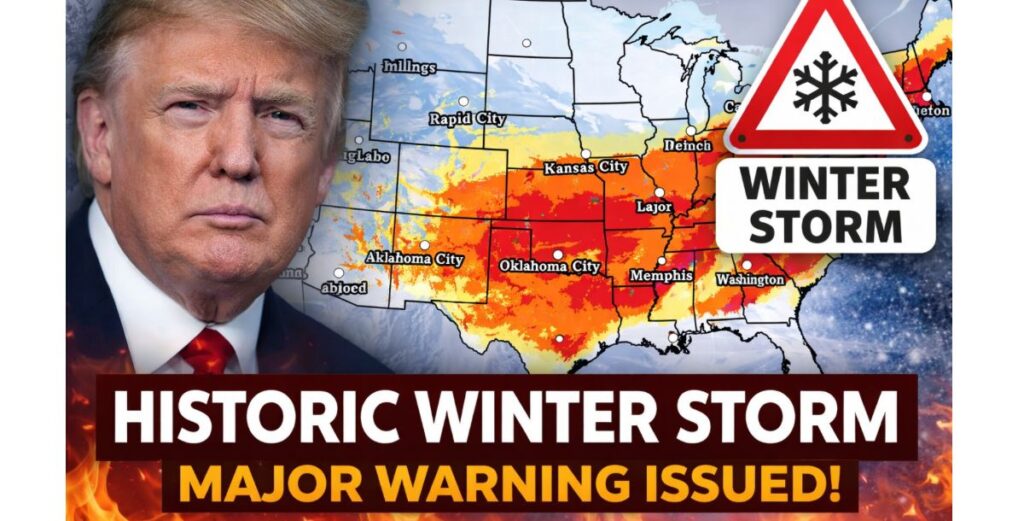
A Historic US Winter Storm is sweeping across large parts of the United States, placing millions on high alert as dangerous cold, heavy snowfall, and ice threaten to disrupt daily life. Federal weather agencies and state authorities warn that the scale and intensity of this system make it one of the most serious winter threats of the season.
From the Central Plains to the Northeast, officials are urging residents to stay informed and limit movement as conditions worsen. Unlike routine winter weather, this storm combines prolonged Arctic cold with widespread precipitation, increasing risks to transportation, power supply, and public safety
Meteorologists say the Historic US Winter Storm is driven by a surge of Arctic air colliding with moisture-rich systems moving eastward. This rare alignment is producing heavy snow, freezing rain, and sustained subzero temperatures across multiple regions at once.According to the Winter Storm Severity Index (WSSI), several states face moderate to major impacts, particularly where ice accumulation overlaps with extreme cold. Emergency management teams are coordinating with local authorities to prepare for potential rescues, power outages, and extended road closures.
Regions Facing the Greatest
Central United States
Large areas are experiencing rapid snowfall and falling temperatures, making highways unsafe within hours. Officials warn that travel conditions could deteriorate faster than forecast.
Midwest and Ohio Valley
Ice buildup combined with snow is raising the risk of accidents and utility disruptions. Even brief power outages could become dangerous due to the cold.
Northeast Corridor
Major cities may see transportation delays, airport disruptions, and school closures as snowfall intensity increases under the Historic US Winter Storm.
Weather agencies emphasize that conditions may change quickly, urging residents to rely on real-time alerts rather than forecasts alone.
Experts note that the Historic US Winter Storm covers an unusually wide geographic area, placing sustained pressure on infrastructure. Snow removal crews, emergency responders, and power grids may be stretched for several days, especially if temperatures remain below normal after snowfall ends.The prolonged cold also increases risks for vulnerable populations, including the elderly and those without reliable heating.
Travel and Safety Advisory
Authorities strongly discourage non-essential travel during peak storm periods. Roads that appear manageable can become dangerous within minutes due to ice and reduced visibility.Safety officials recommend
- Staying indoors during severe conditions
- Keeping emergency supplies and medications ready
- Monitoring official alerts and local advisories
- Checking on elderly neighbors and those with limited mobility
Officials warn that ignoring advisories during the Historic US Winter Storm could put both drivers and emergency responders at risk.
Severe winter events often have ripple effects beyond the storm zone. Supply chains, healthcare access, and emergency services can be disrupted long after snowfall stops. Power failures and transportation delays may affect businesses and households far from the heaviest snow.Preparation and early caution can significantly reduce injuries and prevent emergencies as the Historic US Winter Storm continues to evolve.
The Historic US Winter Storm is shaping up to be a major national weather event with real consequences for safety and infrastructure. Officials continue to monitor conditions closely, but the message remains consistent: stay informed, prepare ahead, and avoid unnecessary travel.As the storm unfolds, awareness and caution may be the most effective tools for staying safe.
(FAQs)
Q1: How long is the winter storm expected to last?
Meteorologists say the storm’s main impacts will continue through the weekend, with extreme cold and localized disruptions possibly lingering into early next week.
Q2: Which areas are facing the most severe conditions?
The Central United States, Midwest, Ohio Valley, and parts of the Northeast are currently seeing the highest risk from snow, ice, and dangerously low temperatures.
Q3: Why are officials calling this storm “historic”?
The storm’s unusually wide reach, prolonged Arctic cold, and combination of snow and ice across multiple regions make it more severe than a typical winter system.
Q4: Should people cancel travel plans?
Yes. Authorities strongly advise postponing non-essential travel, as road conditions can shift from manageable to dangerous in a short time.
Q5: What is the Winter Storm Severity Index (WSSI)?
The WSSI is a tool used by weather agencies to measure how winter storms may impact daily life, including travel, infrastructure, and public safety.
Conclusion
The Historic US Winter Storm is more than just another winter weather event it is a nationwide safety challenge affecting travel, infrastructure, and daily routines for millions of people. With extreme cold, heavy snowfall, and ice creating hazardous conditions across multiple regions, officials are urging early preparation and caution.and more breaking news visit our site
As weather patterns continue to evolve, staying informed and following official guidance could prevent emergencies and save lives. Limiting travel, checking on vulnerable individuals, and responding quickly to alerts remain key steps as this powerful winter system moves through the country.