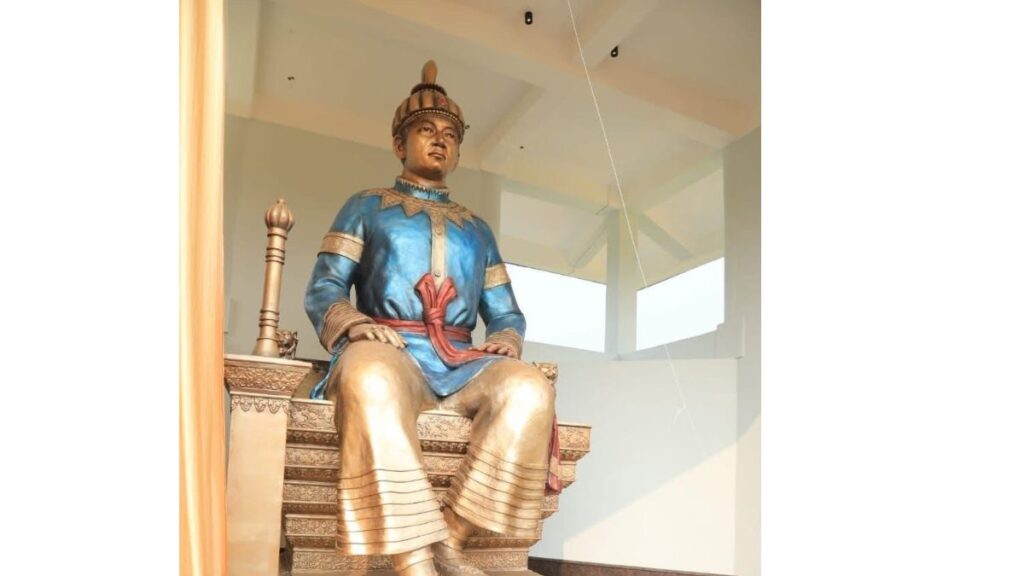
On Me-Dam-Me-Phi 2026, Assam witnessed a moment that blended history, emotion, and identity into one powerful public expression. In Guwahati, a newly constructed grand statue of Chao Lung Siu-Ka-Pha, the founder of the Ahom Kingdom, was officially unveiled turning a sacred cultural observance into a defining chapter of contemporary Assam.
This was not just about unveiling a monument. It was about reclaiming memory at a time when fast urbanisation and modern life often distance younger generations from their roots. The timing, symbolism, and setting made the moment resonate far beyond the ceremony itself.The significance of Me-Dam-Me-Phi 2026 lies in its context. Across Assam, there is a renewed public focus on cultural identity, indigenous history, and unity across communities.
By choosing this sacred Ahom observance to unveil the statue, the state consciously tied spiritual tradition with civic remembrance. It sent a message that heritage is not frozen in the past it actively shapes the present.For many attendees, the day felt like a reminder that Assam’s story did not begin in modern times but was built over centuries of coexistence, governance, and resilience.
Understanding Me-Dam-Me-Phi: More Than a Ritual
Me-Dam-Me-Phi 2026 continues an ancient Ahom tradition dedicated to honouring ancestors and seeking blessings for peace, prosperity, and social balance.
Observed annually, the ritual connects families and communities with those who came before them. This year, however, the observance gained deeper meaning as private remembrance transformed into a shared public experience.
The rituals performed alongside the statue unveiling symbolised continuity linking personal faith, collective history, and future responsibility.
Who Was Chao Lung Siu-Ka-Pha?
Chao Lung Siu-Ka-Pha was not merely the founder of a kingdom; he was a visionary leader whose ideas remain relevant even today.
Arriving in the Brahmaputra Valley in the 13th century, he established the Ahom Kingdom, which ruled Assam for nearly 600 years. His governance model was inclusive, allowing different ethnic groups, beliefs, and traditions to coexist under a shared political structure.Historians often credit Siu-Ka-Pha’s emphasis on consensus and respect as a key reason behind the Ahom dynasty’s long stability an achievement rare for its era.
The Statue at Nataboma, Guwahati
The statue, installed at Nataboma in Guwahati, stands as a striking new landmark.
Crafted on a massive scale, it portrays Siu-Ka-Pha seated with calm authority, reflecting wisdom rather than aggression. Designers intentionally avoided dramatic posturing, choosing instead a composed presence that mirrors his leadership style.
Officials involved in the project described it as a “living classrooma space where history becomes visible and accessible to everyday citizens.
What Makes This Unveiling Significant
The unveiling during Me-Dam-Me-Phi 2026 was not accidental. Cultural experts say the moment represents a broader shift in how Assam tells its story.Key takeaways include
- Public recognition of Ahom civilisational contributions
- Reinforcement of unity across ethnic and cultural lines
- Preservation of indigenous narratives in urban spaces
- Encouragement for youth to engage with regional history
The statue is also expected to boost cultural tourism, drawing historians, students, and visitors interested in Assam’s rich past
Cultural and Social Impact
At a time when identity debates often become divisive, Me-Dam-Me-Phi 2026 offered a rare moment of collective pride.
Siu-Ka-Pha’s legacy reminds people that Assam’s strength historically came from accommodation, not exclusion. By commemorating him in the heart of Guwahati, the state reinforced values of cooperation, respect, and shared belonging.Cultural scholars note that such monuments play a critical role in shaping public consciousness, especially for younger generations who may not encounter these stories elsewhere.
Public Response and Emotional Connection
For many attendees, the unveiling was deeply emotional.Members of the Ahom community described it as long-overdue recognition. Others saw it as a symbol of Assam finally placing its indigenous founders at the centre of public memory.
Images from Me-Dam-Me-Phi 2026 quickly spread online, sparking conversations about heritage, pride, and the responsibility of preserving history for the future.
Experts suggest that monuments like this should be supported with educational initiatives—guided tours, digital storytelling, and school-level engagement—to ensure long-term impact.As discussions around identity continue, Me-Dam-Me-Phi 2026 may be remembered as a moment when Assam chose reflection over forgetting.
FAQs
1.What is Me-Dam-Me-Phi?
An Ahom ritual to honour ancestors and seek peace and prosperity.
2.Who founded the Ahom Kingdom?
Chao Lung Siu-Ka-Pha founded the Ahom Kingdom in the 13th century.
3.Where is the statue located?
At Nataboma, Guwahati.
4.Why is this unveiling important?
It links cultural tradition with public history and identity.
5.Will it attract tourists?
Yes, it is expected to become a cultural and historical attraction.
Conclusion
The unveiling of Chao Lung Siu-Ka-Pha’s statue on Me-Dam-Me-Phi 2026 was more than a tribute it was a statement.and more realvent news visit our site
A statement that Assam remembers its origins, values unity over division, and understands that a strong future is built on an honest connection with the past.