The Lakhimpur Development Projects announced by the Assam government arrive at a defining moment for Upper Assam. As Chief Minister Dr. Himanta Biswa Sarma inaugurates and lays foundation stones for multiple initiatives, the message is clear: development is no longer concentrated in urban centers alone.
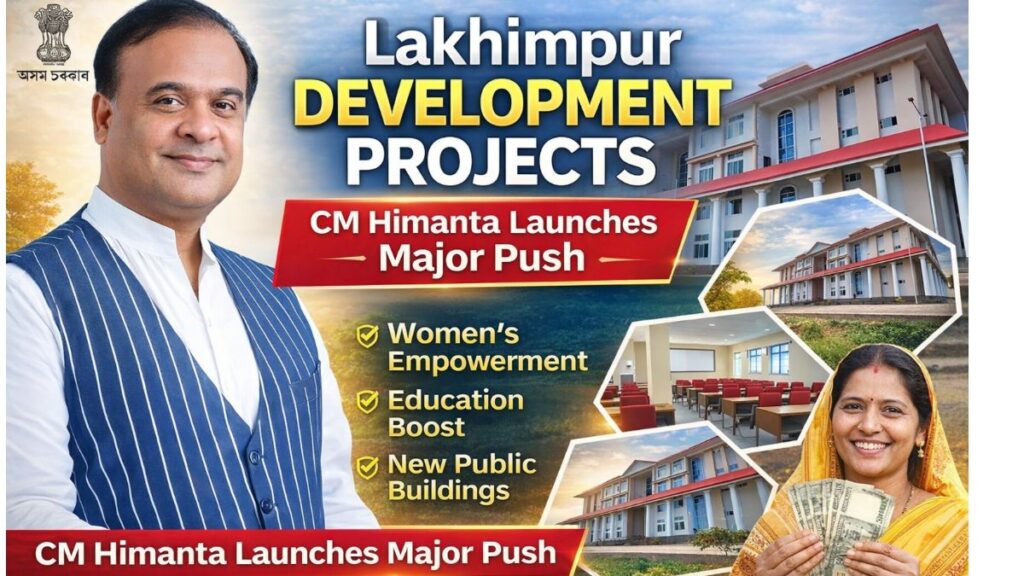
For Lakhimpur, a district that plays a crucial administrative and educational role in the region, this phase represents more than new buildings or welfare schemes. It signals long-term planning focused on people, institutions, and local opportunity areas that directly shape everyday life.
A Strategic Push Beyond Ceremonial Announcements
What sets the Lakhimpur Development Projects apart is their structured approach. Instead of isolated schemes, the initiatives form part of Assam’s district-level development framework, designed to deliver measurable outcomes over time.
Government officials have emphasized that these projects are backed by budgetary planning and monitoring mechanisms. The Chief Minister’s direct involvement underscores political accountability an important factor for districts that have previously seen delays or incomplete execution.
Women Empowerment Takes Center Stage
One of the most impactful elements of the Lakhimpur Development Projects is the direct financial assistance announced for women beneficiaries. Eligible women will receive ₹10,000 in one-time support, aimed at strengthening household stability and economic independence.
In districts like Lakhimpur, where many families rely on agriculture, informal work, or seasonal income, even modest financial support can create meaningful change. The initiative aligns with Assam’s broader push for women-centric development, moving beyond symbolic gestures to direct economic participation.
For many beneficiaries, this assistance is expected to support small livelihood activities, education-related expenses, or basic household needs areas that have long required targeted support.
Strengthening Education and Public Institutions
Education infrastructure forms another key pillar of the Lakhimpur Development Projects. New academic buildings, administrative facilities, and institutional upgrades are being inaugurated or proposed to improve learning environments and service delivery.
Officials note that improving physical infrastructure is essential to retain skilled teachers, administrators, and students within the district. Over time, stronger institutions reduce migration to larger cities and help Lakhimpur maintain its role as an educational hub in Upper Assam.
Better facilities also mean improved access to government services, faster administrative processes, and increased trust between citizens and public institutions.
Why Infrastructure Investment Is Critical for Lakhimpur
Lakhimpur’s geographic and administrative position makes it a key link between rural communities and state-level governance. The Lakhimpur Development Projects aim to strengthen this link through infrastructure that supports both governance and daily public interaction.
The expected long-term impact includes improved service delivery, creation of local employment opportunities, reduced pressure on urban centers, and a more balanced regional development model. These outcomes are essential for sustaining growth beyond election cycles.
According to official communication, the Lakhimpur Development Projects include multiple inaugurations across sectors, foundation-laying ceremonies for new public buildings, targeted welfare initiatives for women, and continuous monitoring at the state level.
While department-wise details are expected to be released gradually, the government has positioned these initiatives as part of a sustained roadmap rather than short-term interventions.
Assam is currently recalibrating its development strategy, shifting focus from metro-driven growth to district-led progress. The launch of the Lakhimpur Development Projects reflects this transition in action.
For residents, this approach promises easier access to education, welfare schemes, and public services without the need to relocate. For the state, it represents a move toward inclusive growth that addresses regional imbalances.
Assam Government’s Broader Development Vision
The state government has repeatedly highlighted inclusive growth, women empowerment, institutional strength, and transparency as core priorities. The Lakhimpur Development Projects translate these policy goals into on-ground action.
Policy experts believe that if implementation remains consistent, district-focused initiatives like this could redefine Assam’s development narrative over the next decade.
Citizens and local stakeholders will be watching project timelines, beneficiary selection processes, and institutional outcomes closely. Transparency in execution will determine whether these initiatives deliver lasting impact or remain symbolic.
For Lakhimpur, sustained follow-through could transform the district into a model for balanced regional development in Assam.
FAQs
1.What are the Lakhimpur Development Projects?
They are infrastructure and welfare initiatives focusing on women empowerment, education, and public institutions.
2.Who launched the initiatives?
Assam Chief Minister Dr. Himanta Biswa Sarma led the inaugurations and foundation-laying ceremonies.
3.Is financial assistance included?
Yes, eligible women beneficiaries will receive ₹10,000 in one-time assistance.
4.Are these projects long-term?
Yes, they are designed for sustained institutional and social impact.
5.Why is Lakhimpur important for Assam?
Lakhimpur plays a key administrative and educational role in Upper Assam.
Conclusion
The Lakhimpur Development Projects mark a meaningful shift toward people-first, district-led growth in Assam. With women empowerment, education, and institutional strengthening at the core, the initiatives offer Lakhimpur an opportunity for durable and inclusive transformation.
If executed effectively, this phase could redefine the district’s development trajectory turning policy intent into real, everyday progress for its residents.