Assam to Distribute ₹65 Crore to 6,561 Youth in 3 Districts is not just another government announcement it’s a direct cash infusion into thousands of small dreams waiting for capital.At a time when many young people are stuck between limited private jobs and shrinking government vacancies, this move under Self-Reliant Assam Mission 2.0 shifts the conversation from seeking employment to building employment.
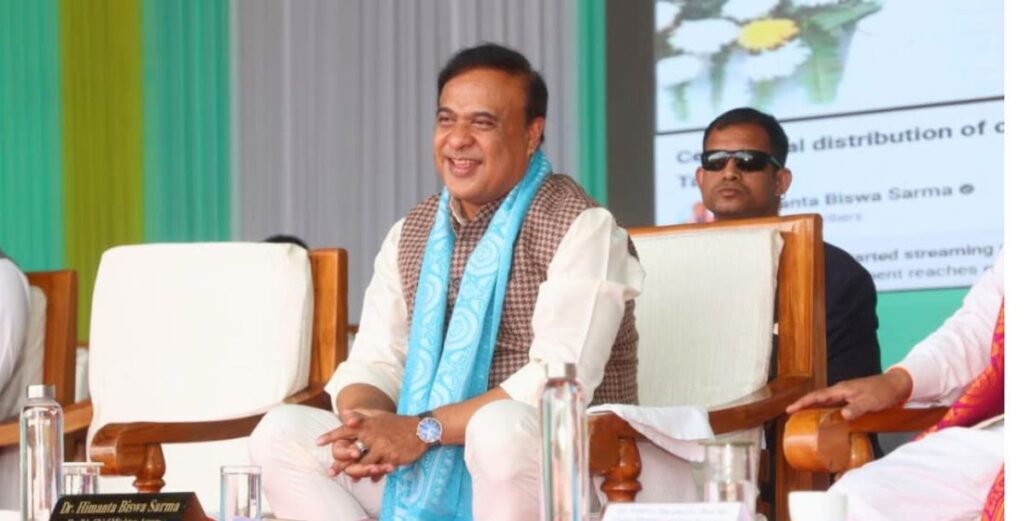
Chief Minister Himanta Biswa Sarma will formally inaugurate the distribution, covering beneficiaries from Sonitpur, Biswanath and Darang. For 6,561 individuals, this is startup capital. For local markets, it could mean renewed business activity.Under the announcement that Assam to Distribute ₹65 Crore to 6,561 Youth in 3 Districts:
- Sonitpur: 2,869 beneficiaries
- Biswanath: 1,864 beneficiaries
- Darang: 1,828 beneficiaries
The total allocation of ₹65 crore will be transferred to verified applicants whose business proposals have been approved.Financial support ranges
- Up to ₹2 lakh for general category entrepreneurs
- Up to ₹5 lakh for higher investment categories
The assistance is designed to help youth start or expand micro and small businesses from retail shops and service centers to agriculture-based ventures and small manufacturing units.The phrase Assam to Distribute ₹65 Crore to 6,561 Youth in 3 Districts carries deeper economic implications.
In semi-urban and rural districts, access to formal startup capital is often the biggest barrier. Many aspiring entrepreneurs either delay their plans or borrow from informal lenders at high interest rates.A structured, government-backed financial push reduces that risk.
When capital becomes accessible
- A mechanic can open his own garage.
- A tailoring unit can upgrade equipment.
- A dairy farmer can scale operations.
- A local retailer can stock inventory in bulk.
Small capital often triggers large confidence.
What Makes Mission 2.0 Different?
Self-Reliant Assam Mission 2.0 builds on earlier self-employment schemes but introduces tighter screening and monitoring mechanisms.Officials say
- Applications undergo verification for feasibility.
- Funds are transferred directly to beneficiaries.
- Follow-up systems aim to track business usage.
Past schemes sometimes struggled due to weak post-disbursement monitoring. The success of this phase will depend heavily on implementation discipline.Execution, not announcement, will define impact.
When Assam to Distribute ₹65 Crore to 6,561 Youth in 3 Districts becomes operational, the money doesn’t stay with just one person.Here’s how the ripple spreads
- Equipment suppliers receive new orders.
- Local labor gets short-term setup work.
- Wholesale markets see increased purchasing.
- Transporters benefit from distribution needs.
Micro-enterprises are the backbone of district economies. If even half of these ventures sustain and grow, indirect job creation could follow.In rural Assam, that multiplier effect is powerful.For readers who may benefit from similar schemes in future phases, here are practical insights:
1. Focus on sustainability, not just setup.
The first six months are critical. Market research and cost control matter more than initial funding size.
2. Keep documentation clean.
Proper records help with future loan eligibility and expansion opportunities.
3. Diversify income streams if possible.
For example, a retail shop can add digital payment services or recharge facilities to increase margins.
4. Build community networks.
Local trust drives repeat business in district markets.
Government funding is a boost but long-term survival depends on smart management.The announcement that Assam to Distribute ₹65 Crore to 6,561 Youth in 3 Districts also reflects a wider policy trend: states investing in self-employment as a faster solution than large-scale industrial hiring.
Instead of waiting for big factories, the strategy is to strengthen local entrepreneurship.This approach aligns with national self-reliance goals while addressing district-level realities.
However, experts caution that continuous mentoring and market linkage support will determine whether these enterprises thrive beyond the first year.Over the coming months, key indicators will show the scheme’s real impact
- Business survival rates after 12–18 months
- Revenue growth among beneficiaries
- Additional employment created
- Expansion into new markets
If outcomes are positive, Assam to Distribute ₹65 Crore to 6,561 Youth in 3 Districts could become a model replicated in other states.
FAQ
1.Who is eligible under Mission 2.0?
Youth and aspiring entrepreneurs with approved business proposals.
2.Is this a loan or grant?
Financial assistance is provided under defined scheme guidelines; specific repayment or subsidy terms depend on category.
3.Will more districts be included?
Yes, the mission is expected to expand in phases.
Conclusion
Assam to Distribute ₹65 Crore to 6,561 Youth in 3 Districts is not just a funding event it is a test of how effectively district-level entrepreneurship can reshape local economies.For thousands of young people, this is a rare moment where policy meets personal ambition.
If implemented with discipline and supported with mentoring, the ₹65 crore infusion could do more than create businesses it could restore economic confidence across Assam’s districts.And in today’s employment climate, confidence is currency