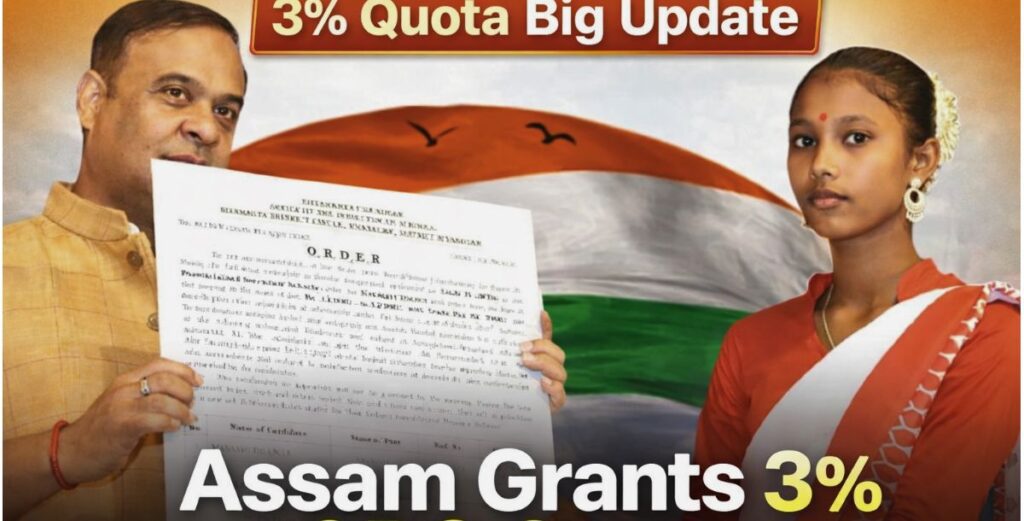
When a government opens the door to senior administrative posts, it is not just filling vacancies it is redefining who gets to shape the future. This week, as Assam Grants 3% OBC Quota for Tea Tribes in Grade I and Grade II government jobs, the decision signals a deeper structural shift in how power and opportunity are distributed in the state.
Announced by Chief Minister Himanta Biswa Sarma, the reform extends reservation benefits beyond lower-level posts into the ranks that directly influence policy, budgeting, and governance. For communities historically confined to the margins of administration, this move carries emotional and generational weight.
For years, Tea Tribes and Adivasi communities had access to reservation largely in Grade III and Grade IV posts roles that provide stability but limited influence.
Now, as Assam Grants 3% OBC Quota for Tea Tribes in Grade I and II positions, the state is expanding entry into officer-level services. These roles include senior administrators, departmental heads, and policymakers the very individuals who draft and implement schemes affecting millions.
This matters because representation at the top changes priorities at the ground level.When decision-makers come from diverse backgrounds, policy blind spots shrink.
Tea Tribes in Assam are descendants of workers brought during the British era to work in tea estates. Their labor helped build Assam’s global tea identity.
Yet, despite Assam contributing over half of India’s tea output, many tea garden families still struggle with limited educational access, low income stability, and underrepresentation in government services.As a journalist who has covered rural recruitment drives and public service exams in Assam, one pattern is clear: aspiration exists but access does not always follow.
Many talented candidates from tea garden areas clear preliminary exams but fall short at interview stages or lack access to structured coaching. Policies like this one attempt to address structural imbalance, not individual merit.
By approving this reform, Assam Grants 3% OBC Quota for Tea Tribes in roles that carry institutional authority a step that could gradually change administrative culture itself.
What Grade I and II Posts Actually Mean
For readers unfamiliar with bureaucratic classifications:
- Grade I posts include top-tier administrative services officers who manage districts, oversee departments, and advise on policy.
- Grade II posts involve mid-level authority, including executive and departmental roles that directly supervise implementation of government schemes.
Recruitment to many of these roles happens through competitive exams conducted by bodies such as the Assam Public Service Commission.Until now, representation from Tea Tribes in these ranks was limited.
With this reform, Assam Grants 3% OBC Quota for Tea Tribes in positions that shape state decisions not just execute them.
Social Justice or Political Strategy?
Reservation policy in India has always existed at the intersection of governance and politics.
Tea Tribes have long demanded Scheduled Tribe (ST) status a matter pending at the national level. While this new quota does not address that demand directly, policy analysts describe it as an immediate administrative intervention within the existing OBC framework.
From a governance perspective, the move aligns with Assam’s stated emphasis on inclusive growth.From a political perspective, it strengthens outreach to communities that form a significant voter base in multiple districts.Both realities can coexist.
As important as the announcement is, execution will determine impact.Based on past recruitment cycles, three factors will be crucial:
- Clear Implementation Guidelines – Departments must update recruitment rules without delay.
- Awareness Campaigns – Eligible candidates need timely information.
- Coaching & Academic Support – Competitive exams require structured preparation.
Without parallel investment in education, the policy risks underutilization.But if implemented well, Assam Grants 3% OBC Quota for Tea Tribes could significantly improve long-term income mobility and institutional trust.
For young candidates preparing for civil services and administrative exams, the psychological impact may be as important as the numerical benefit.
Representation inspires participation.When students see officers from similar backgrounds serving in district administration or state secretariats, ambition feels achievable rather than distant.
In conversations with education mentors across Upper Assam districts, many say this announcement may increase applications from tea garden communities for officer-level exams over the next few years.Opportunity expands aspiration.
At its core, this reform is about access to influence.Grade I and II officers
- Frame development priorities
- Approve budgets
- Oversee welfare schemes
- Interact directly with elected leadership
When communities gain entry into these ranks, governance becomes more socially reflective.By ensuring representation at the top, Assam Grants 3% OBC Quota for Tea Tribes moves beyond symbolic inclusion toward institutional participation.
FAQs
1.What is the new reservation percentage?
3% under the OBC category for Tea Tribes and Adivasi communities.
2.Which jobs are covered?
Grade I and Grade II government posts.
3.Were these communities already receiving reservation?
Yes, mainly in Grade III and IV positions.
4.When will implementation begin?
Detailed government guidelines are expected soon.
5.Does this grant ST status?
No. The policy operates within the existing OBC framework.
Conclusion
The decision that Assam Grants 3% OBC Quota for Tea Tribes marks a visible shift in the state’s social justice architecture.It opens pathways to leadership, not just employment.But the announcement is only the first chapter.
If supported by transparent recruitment, educational infrastructure, and sustained monitoring, this reform could redefine administrative diversity in Assam.
If not, it risks becoming a headline without depth.For now, however, one fact stands clear: Assam has expanded the conversation about who gets to lead and that alone makes this moment historic.