
Guwahati is on the brink of a technological shift that could redefine how governance works in Assam. On February 14, Prime Minister Narendra Modi will inaugurate the Guwahati National Data Centre, a project officials describe as the backbone of the state’s next phase of digital governance.
At a time when India is accelerating its Digital India push and cyber security threats are growing more complex, the launch of the Guwahati National Data Centre signals more than just a new buildin it marks a strategic investment in data sovereignty, secure governance, and faster public service delivery in the Northeast.
Why the Guwahati National Data Centre

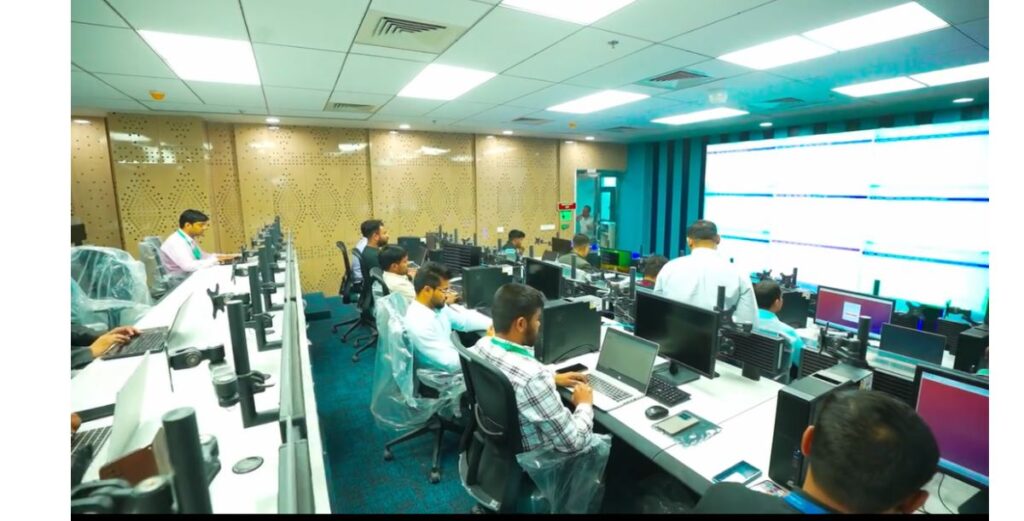
Across India, government services are rapidly moving online from land records and tenders to welfare benefits and official documentation. But digital services are only as strong as the infrastructure supporting them.
The Guwahati National Data Centre is designed to ensure that Assam’s expanding e-Governance ecosystem runs on secure, high-speed, and locally managed digital infrastructure. Instead of relying heavily on distant servers, critical government data will now be hosted closer to home.
In practical terms, that means better uptime, quicker response times, and stronger cyber resilience.
What Is the Guwahati National Data Centre?

Developed under the National Informatics Centre (NIC), the Guwahati National Data Centre is a state-of-the-art facility built to store, process, and secure massive volumes of government data.
It follows a ‘Cloud First’ strategy prioritizing scalable and secure cloud-based systems. This approach allows departments to expand digital services without repeatedly investing in separate physical infrastructure.
Officials say the centre will support thousands of users across government offices and institutions, making it one of the most critical IT assets in Assam’s administrative network.
Backbone of Assam’s Digital Governance Network
Assam’s State Centre of NIC already operates a vast network known as NICNET. This includes over 21,000 nodes connecting state headquarters, district offices, and administrative units.
More than 12,000 of these nodes operate at the state level, while nearly 9,000 support district-level governance. These connections enable file transfers, digital communication, video conferencing, and service delivery across departments.
With the Guwahati National Data Centre now coming online, this entire network is expected to run on stronger, more secure infrastructure reducing the risk of outages and improving efficiency.The centre also supports the National Knowledge Network (NKN), which connects 57 educational and research institutions in Assam with ultra-high-speed connectivity.
Powering Critical e-Governance Platforms
Several key government platforms will directly rely on the Guwahati National Data Centre.
eOffice Platform:
Used by 58 departments in the Assam Secretariat, it has significantly reduced paperwork and sped up file movement. Hosting it locally can enhance reliability and speed.
ePrastuti Framework:
Currently implemented across 206 government websites, covering 55 departments and multiple district portals. It standardizes digital communication and improves citizen access.
GePNIC e-Procurement:
Ensures transparent online tendering and procurement processes critical for public accountability.
ServicePlus Platform:
An integrated citizen services portal delivering certificates, licenses, and other public services online.
By centralizing these systems within the Guwahati National Data Centre, authorities aim to improve load handling, security, and disaster recovery readiness.
A Stronger Cyber Security Shield
Data centres today are not just storage hubs they are security fortresses.
The Guwahati National Data Centre is equipped with advanced monitoring systems, controlled access mechanisms, backup power solutions, and disaster recovery planning. With cyberattacks becoming more sophisticated globally, localized and hardened infrastructure reduces vulnerability.
The Assam Secretariat campus already operates hundreds of secure WiFi access points with roaming capability. The new facility strengthens that ecosystem with enhanced data protection standards.For citizens, this means greater confidence that personal data shared for government services is better protec
For ordinary citizens, the benefits may not be visible immediately but they will be felt.
Faster website loading times.
Reduced downtime during peak hours.
Quicker approvals for online services.
Improved data security.
For businesses especially startups and IT digital infrastructure builds investor confidence. Reliable e-procurement systems and faster government approvals can directly impact operational efficiency.
For students and researchers connected through the National Knowledge Network, improved digital stability enhances access to online resources and collaboration tools.In short, the Guwahati National Data Centre strengthens the digital foundation on which modern governance operates.
The inauguration of the Guwahati National Data Centre also carries political and economic significance. It signals stronger digital investment in the Northeast an area historically seeking deeper infrastructure integration with the rest of India.
As governance increasingly relies on AI tools, data analytics, and cloud computing, robust data centres become strategic national assets.By establishing this facility in Guwahati, the government reinforces Assam’s role as a digital hub in the region.
FAQs
1.When will PM Modi inaugurate the Guwahati National Data Centre?
The inauguration is scheduled for February 14.
2.Who developed the facility?
It has been developed under the National Informatics Centre (NIC).
3.What is the Cloud First approach?
It prioritizes cloud-based digital infrastructure to ensure scalability, faster deployment, and enhanced security.
4.How many departments will benefit?
More than 55 departments and multiple district offices will directly rely on the infrastructure.
5.Will citizens see immediate changes?
While changes may be gradual, online services are expected to become more stable and secure.
Conclusion
The launch of the Guwahati National Data Centre marks a defining moment in Assam’s digital transformation journey. Beyond its technical specifications, the facility represents a deeper shift toward secure, efficient, and citizen-centric governance.
As PM Modi inaugurates the Guwahati National Data Centre, the message is clear: in today’s India, digital infrastructure is no longer optional it is foundational to trust, development, and the future of public service delivery.