
writer by sanjoy gorh/22.01.2026/ 10;10 am Published
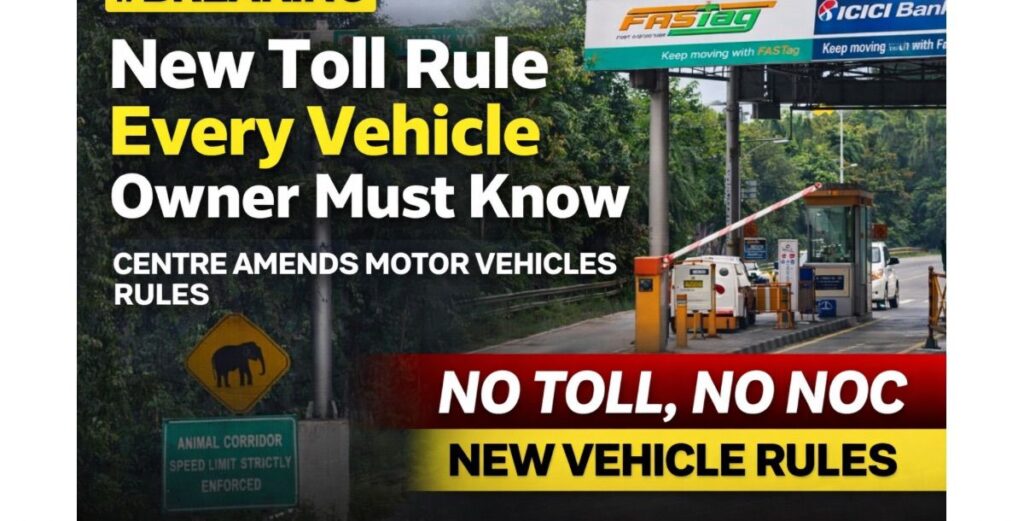
Central Motor Vehicles Rules Amendment 2026 has quietly changed how India enforces toll payments and its impact reaches far beyond highways. From private car owners to fleet operators, this rule update can now decide whether your vehicle transfer, permit, or fitness certificate moves forward or comes to a halt.
This is not just a procedural tweak. It is a structural shift in how digital compliance is tied to everyday mobility
What Is the Central Motor Vehicles Rules Amendment 2026?
The Central Motor Vehicles Rules Amendment 2026 updates the Central Motor Vehicles Rules, 1989, introducing a legally enforceable definition of unpaid user fee
Any toll amount recorded through Electronic Toll Collection (ETC) systems such as FASTag but not successfully paid, is now officially recognised as a pending liability. Once logged digitally, it follows the vehicle across government systems.In effect, toll data has become part of a vehicle’s regulatory profile.
India is preparing for barrier-less highways and Multi-Lane Free Flow (MLFF) tolling, where vehicles will no longer stop at toll plazas. Payments will be captured automatically using cameras and sensors.
Without strict enforcement, unpaid tolls could rise sharply. The Central Motor Vehicles Rules Amendment 2026 creates the legal backbone needed to prevent that risk before MLFF goes live at scale.
How Unpaid Toll Fees Can Affect You
Vehicle Transfers and NOCs Can Be Blocked Under the Central Motor Vehicles Rules Amendment 2026, unpaid toll fees are no longer treated as minor lapses.If dues remain unpaid
- No Objection Certificates (NOCs) for ownership transfer can be denied
- Inter-state vehicle transfer approvals can be withheld
- Other vehicle-related permissions may remain on hold
For individual vehicle owners, this means toll compliance directly affects legal ownership rights.
Stricter Rules for Commercial Vehicles
Permits and Fitness Certificates at Risk Commercial operators face even tighter enforcement under the Central Motor Vehicles Rules Amendment 2026.Officials have confirmed that:
- Fitness Certificates will not be issued or renewed
- National and state permits can be denied
- All outstanding toll dues must be cleared first
For logistics companies and transporters, toll discipline is now inseparable from operational continuity.
What Changes for Daily Highway Users
The Central Motor Vehicles Rules Amendment 2026 does not introduce new toll rates or additional charges. Instead, it strengthens accountability using existing digital infrastructure.Key points to know
- Applies nationwide
- Covers private and commercial vehicles
- Relies entirely on ETC and digital records
- No manual discretion once dues are recorded
The absence of cash lanes and manual checks makes digital compliance non-negotiable.
NHAI and the Bigger Infrastructure
According to officials, the Central Motor Vehicles Rules Amendment 2026 will help the National Highways Authority of India (NHAI):
- Reduce revenue leakage
- Improve transparency in toll collection
- Ensure steady funding for road maintenance
- Support long-term highway expansion
Toll revenue is a critical source for infrastructure upkeep, and delayed payments weaken the system as a whole.
Transport policy analysts describe the Central Motor Vehicles Rules Amendment 2026 as a shift from enforcement at toll booths to enforcement through digital governance.Instead of penalties on the road, consequences now appear at the transport office when approvals matter most.
This approach reduces conflict, limits evasion, and aligns India’s highway policy with global best practices.
FAQ
1.What is an unpaid user fee under the new rules?
It is a toll charge recorded electronically but not successfully paid.
2.Can unpaid tolls stop my vehicle sale?
Yes. NOCs for ownership transfer can be denied until dues are cleared.
3.Does this affect private car owners?
Yes. The Central Motor Vehicles Rules Amendment 2026 applies to all vehicle categories.
4.Is FASTag mandatory for enforcement?
The rules apply to all ETC-based toll systems, including FASTag.
5.Is this connected to MLFF tolling?
Yes. The amendment prepares the legal framework for barrier-less toll roads.
Conclusion
The Central Motor Vehicles Rules Amendment 2026https://www.newsonair.gov.in/govt-amends-central-motor-vehicles-rules-to-strengthen-user-fee-payments/ signals a new reality for Indian road users toll payments are no longer just a transaction they are a compliance requirement tied to your vehicle’s legal status.
As highways become smarter and faster, accountability is becoming stricter. For motorists, staying toll-compliant is now as essential as having valid insurance or registration.




Leave a Reply