

writer by sanjoy gorh 02.04.2026 time 8.00 PM PUBLISHED
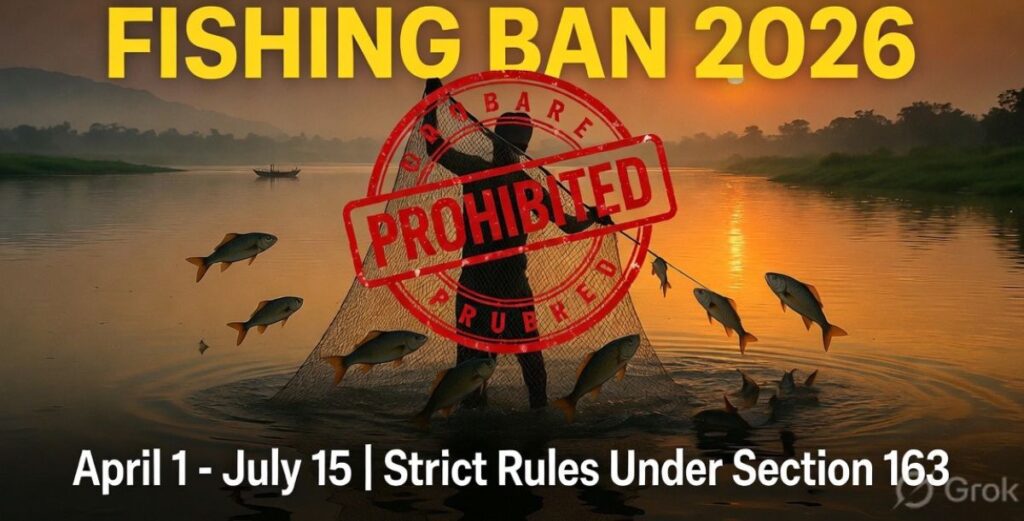
Dibrugarh, April 2026: In a decisive move to combat overfishing and restore the health of its rivers and wetlands, the Dibrugarh district administration has issued strict prohibitory orders under Section 163 of the Bharatiya Nagarik Suraksha Sanhita (BNSS), 2023. Issued by District Magistrate Bikram Kairi, the order targets destructive fishing practices during critical breeding periods in the Brahmaputra river system and notified fisheries.
This is not a blanket ban on all fishing. Instead, it is a science-backed, targeted intervention designed to protect juvenile fish, brood stock, and the entire aquatic food chain. With fish populations in Assam’s rivers declining sharply due to overfishing, illegal fine-mesh nets, habitat degradation, and pollution, this step is both urgent and essential for long-term sustainability.
Key Highlights of the Dibrugarh Fishing Ban 2026
- Small-mesh nets banned: Nets with mesh size below 7 cm (including Berjal, Mahajal, and Fasijal) prohibited from April 1 to July 15, 2026.
- Ultra-fine nets banned year-round: Mesh sizes of 1–2 cm completely prohibited across the district.
- Brood fish protection: Catching or killing brood (egg-carrying) fish banned from May 1 to July 31, 2026.
- Undersized fish restriction: Capture, sale, or killing of juvenile/undersized fish banned from August 1 to October 31, 2026.
- Penalties: Heavy fines, seizure of equipment, lease cancellation, and legal action under relevant sections.
These measures align with Assam Fishery Rules, 1953 (as amended) and similar orders now active across multiple districts including Sivasagar and Morigaon.
Why Dibrugarh Is Acting Now: The Crisis in the Brahmaputra Basin
The Brahmaputra and its tributaries are the lifeline of Assam’s fisheries, supporting thousands of fishermen and supplying protein-rich food to millions. Yet years of unchecked overfishing, use of destructive fine-mesh nets that trap even larvae and fingerlings, siltation, and encroachment have led to a visible collapse in fish stocks.
Local fishermen have reported smaller catches and lower earnings. Studies and ground reports from the region consistently show declining landings of major species, with many once-abundant varieties becoming rare. Without intervention, this threatens not only biodiversity but also the economic security of fishing communities that depend on healthy rivers for their daily livelihood.
Seasonal bans like this one give fish a fighting chance to spawn, grow, and replenish stocks. Similar closed seasons in marine fisheries across India have proven highly effective—post-ban catch per hour has increased significantly, and biomass has shown measurable recovery.
Detailed Rules and What They Mean
Ban on Small-Mesh Nets (April 1 – July 15)
The breeding season is when most indigenous fish species spawn. Nets smaller than 7 cm mesh sweep up immature fish before they can reproduce. By banning Berjal, Mahajal, Fasijal, and similar gears in notified fisheries, the administration is directly stopping “juvenile slaughter” that has been devastating stocks for years.
Year-Round Ban on Ultra-Fine Nets (1–2 cm mesh)
These “ghost nets” are ecological disasters. They capture everything from plankton to the smallest fish, destroying the base of the aquatic food web. The permanent ban sends a clear message: destructive gear has no place in sustainable fisheries.
Brood Fish Protection (May 1 – July 31)
Brood fish are the future of the river. Protecting them during peak spawning ensures next-generation populations. Disturbing them now would mean empty rivers in the coming years.
Undersized Fish Ban (August 1 – October 31)
This post-breeding window gives surviving juveniles time to grow and reach reproductive age before they enter the market. It prevents a second wave of depletion just as new stocks begin to establish.
Enforcement and Penalties: No Tolerance for Violations
The district administration has directed enforcement teams to conduct regular patrols and monitoring. Violators face:
- Immediate seizure of illegal nets and boats
- Heavy monetary fines
- Cancellation of fishing leases
- Prosecution under BNSS and Assam Fishery Rules
Officials have made it clear: the focus is on strict compliance to ensure the rules deliver real results.
Impact on Local Fishermen: Short-Term Pain, Long-Term Gain
Restrictions will naturally affect daily earnings during peak ban periods. However, experts and successful models from other states show that healthy fish stocks lead to bigger catches, better market prices, and more stable incomes once the ban lifts.
Many fishermen already support such measures because they have seen the river’s decline firsthand. The administration’s approach balances conservation with livelihoods—by protecting the resource today, it secures tomorrow’s catch.
Sustainable Fishing: A National and Global Imperative
India has successfully used seasonal fishing bans for decades in marine waters, resulting in higher biomass and improved catch rates. Assam is now applying the same proven principle to its inland rivers and beels.
This Dibrugarh order is part of a larger state-wide awakening. The Assam Fisheries Department has been directing all districts to enforce breeding-season protections. When followed sincerely, such steps deliver healthier ecosystems, stronger biodiversity, better flood control (wetlands act as sponges), and enhanced food security.
FAQ
1. When does the main ban start?
Small-mesh net restrictions begin April 1 and run until July 15, 2026.
2. Is all fishing stopped?
No. Only specific destructive methods and periods are restricted. Traditional, sustainable fishing with permitted gear remains allowed outside banned categories.
3. What about ultra-fine nets?
Completely banned throughout the year, irrespective of season.
4. What are the penalties?
Fines, equipment seizure, lease cancellation, and legal action.
5. Why protect brood and undersized fish?
They are the foundation of future fish populations. Protecting them prevents collapse and ensures generational sustainability.
conclusion
Dibrugarh’s proactive stand under District Magistrate Bikram Kairi sets a strong example. By combining enforcement with ecological wisdom, the district is investing in its natural capital—the rivers that feed its people.
While challenges remain—awareness campaigns, alternative livelihood support during ban periods, and continued monitoring—the long-term rewards are clear: abundant fish, thriving wetlands, and resilient fishing communities.
This is more than a ban. It is a commitment to restoring the balance that nature once provided freely. For Dibrugarh and for Assam, 2026 marks the beginning of a more sustainable and hopeful chapter for its rivers and the people who depend on them.
Key reference points include:
• Official notification under Section 163 of the Bharatiya Nagarik Suraksha Sanhita (BNSS)
• Public update shared by Dibrugarh district authorities
• Local administrative communication circulated through verified regional platforms such as Dibrugarh Unofficial (public update page)

Leave a Reply