
Writer by sanjoy 09.04.2026 Time 2.46 PM Published
Iran Restricts Strait of Hormuz Shipping: Global Oil Supply and India’s Economy Face Fresh Risks
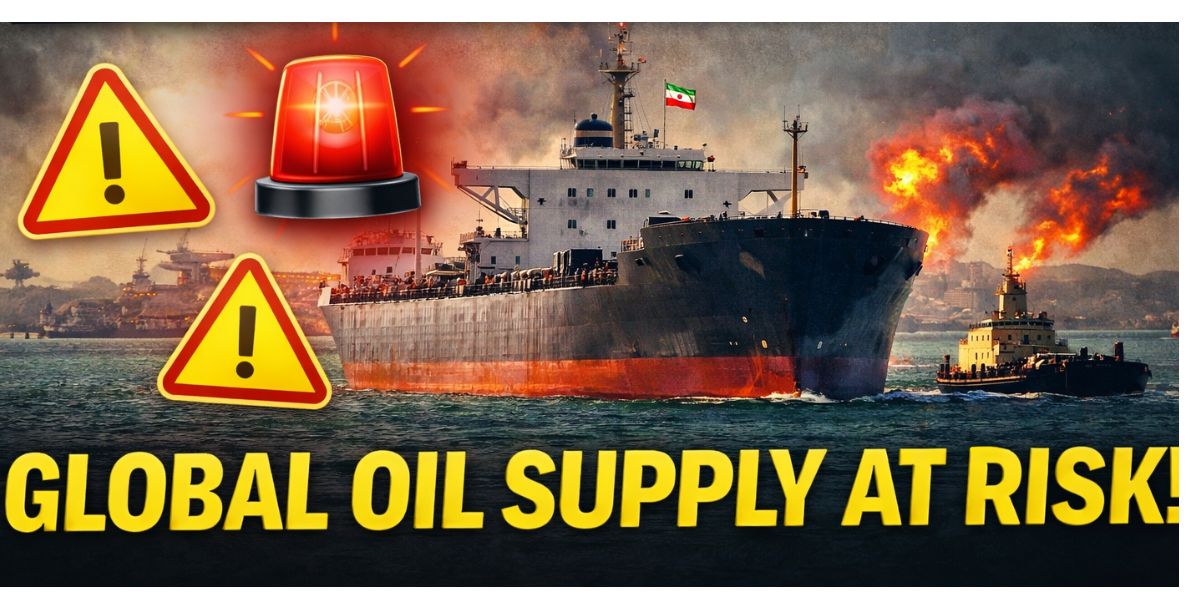
A sudden tightening of shipping rules in the Strait of Hormuz by Iran has triggered widespread concern across energy markets and global trade. The move, reported by Iranian state media on April 8, 2026, comes just hours after a fragile U.S.-Iran ceasefire took effect and is directly linked to ongoing Israeli military actions in Lebanon.
For India, which relies heavily on oil imports from the Persian Gulf, the development carries immediate economic stakes. Even limited disruptions in this narrow waterway can ripple into higher fuel prices, rising inflation, and pressure on household budgets within weeks.
Key Highlights
- Iran has imposed new restrictions on vessels transiting the Strait of Hormuz, citing Israeli strikes in Lebanon as the trigger.
- Nearly 20% of the world’s seaborne oil trade roughly 20 million barrels per day normally passes through this chokepoint.
- Shipping companies are already reporting delays, rerouting, and higher insurance costs.
- Oil prices reacted with an initial spike of more than 2% on Brent crude following the announcement.
- India, the world’s second-largest buyer of oil through the strait after China, faces direct exposure to supply volatility and higher import bills.
According to Iranian state media and maritime tracking reports, Tehran has begun requiring explicit approval for ships passing through the Strait of Hormuz and has effectively slowed or halted much of the normal tanker traffic. While two oil tankers were reportedly allowed through earlier on Wednesday, subsequent traffic has been restricted, with some vessels turning back or seeking alternative routes.
The strait, a 21-mile-wide passage between the Persian Gulf and the Gulf of Oman, serves as the primary export route for oil from Saudi Arabia, Iraq, the UAE, Kuwait, and Qatar. Any congestion here quickly affects global supply chains because there are few realistic alternatives for large-volume crude shipments.
Iran frames the restrictions as a direct response to Israeli airstrikes in Lebanon, which it views as a violation of the spirit if not the letter of the recent ceasefire agreement brokered with U.S. involvement. Israeli Prime Minister Benjamin Netanyahu has publicly stated that the truce does not extend to operations against Hezbollah in Lebanon, a position supported by Washington. Iran strongly disagrees, arguing that continued strikes undermine regional de-escalation.
This disagreement has now moved from land to sea. By controlling access to the strait, Iran leverages one of its strongest strategic assets: the ability to influence the flow of global energy.
Intensified Israeli Action in Lebanon
Israeli strikes have increased in recent days, with reports of significant casualties in Beirut and surrounding areas, further inflaming tensions.
Ceasefire Ambiguity
Confusion persists over the exact scope of the U.S.-Iran truce. While the deal was intended to pause direct hostilities, Lebanon appears to fall outside its protections according to Israel and the United States.
Shipping Disruptions
Global shipping firms are already avoiding the strait where possible, leading to higher insurance premiums and longer voyage times via alternative routes around Africa a costly detour for supertankers.
International Monitoring
Major importers, including India, China, Japan, and South Korea, are closely watching developments. Energy ministries and refineries are assessing contingency plans for supply shortfalls.
Impact on India and the Global Economy
India imports more than 85% of its crude oil, with a significant share approximately 14.7% of all oil transiting the Strait of Hormuz coming from Persian Gulf producers. Any sustained restriction or even the perception of risk can drive up landed costs at Indian ports.
Traders and analysts expect this uncertainty to push domestic petrol and diesel prices higher in the coming weeks. Transportation costs for goods would rise, feeding into broader inflation that affects everything from groceries to manufacturing inputs. Stock markets in Mumbai have already shown early sensitivity to energy volatility.
On the global stage, the effects are equally serious. Shipping insurance rates have climbed, delivery timelines have lengthened, and oil traders are pricing in a risk premium. Asian economies, which receive nearly 90% of the strait’s crude and condensate flows, stand to feel the heaviest impact. Even short-term disruptions can slow industrial activity, raise manufacturing costs, and pressure central banks to reconsider interest-rate policies.
Iran has warned that continued Israeli actions could lead it to withdraw further from ceasefire commitments. The situation remains highly fluid. Diplomatic channels between Washington, Tehran, and regional players are active, yet the risk of escalation lingers.
A prolonged closure or mining of the strait though not confirmed would represent a major escalation with unpredictable consequences for world energy security. For now, the focus remains on de-escalation and keeping the waterway open under “international norms,” as stated by Iranian officials.
FAQs
1. What is the Strait of Hormuz?
It is the narrow sea passage connecting the Persian Gulf to the Arabian Sea. Roughly one-fifth of global oil and significant volumes of liquefied natural gas flow through it daily.
2. Why did Iran impose these restrictions?
Iran cites Israeli military strikes in Lebanon as a ceasefire violation and has used control of the strait to register its protest.
3. Will oil prices increase?
Prices have already risen on news of the restrictions. A prolonged disruption would likely push them higher, though the exact scale depends on how quickly traffic resumes.
4. How does this affect India specifically?
Higher crude import costs could translate into elevated fuel prices at the pump, increased logistics expenses, and added inflationary pressure on the economy.
5. Are ships completely stopped?
No. Reports indicate restricted and selective passage rather than a total shutdown, but the uncertainty has already caused widespread rerouting and delays.
Conclusion
The restrictions in the Strait of Hormuz have transformed a regional ceasefire dispute into a potential global economic flashpoint. With nearly 20% of the world’s oil supply at stake and India among the most exposed importers, the coming days will test diplomatic resolve and market resilience alike.
While full resolution remains uncertain, the episode underscores a timeless truth: in today’s interconnected energy markets, even limited chokepoint friction can send shockwaves through economies worldwide. Policymakers in New Delhi and traders globally will be watching closely as the situation evolves.







Leave a Reply