As the coldest days of winter settle over North India, Lohri Festival 2026 arrives like a promise of warmth. The crackle of bonfires, the rhythm of folk songs, and the sharing of simple food turn an ordinary January evening into something deeply meaningful.
Lohri is not just a date on the calendar. It is a living tradition one that speaks of harvest hopes, community strength, and gratitude toward nature. In 2026, as lives grow more digital and fast-paced, Lohri’s emotional relevance feels stronger than ever.Celebrated widely across Punjab, Haryana, Himachal Pradesh, Delhi, and parts of North India, Lohri continues to unite generations around a shared cultural flame.
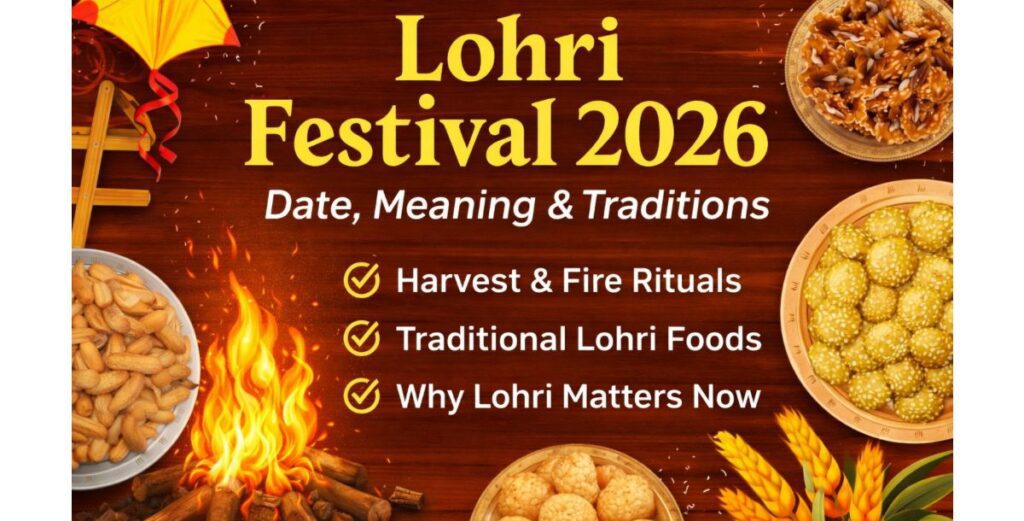
Lohri Festival 2026: Key Facts at
- Date: January 13, 2026
- Seasonal Meaning: End of peak winter, beginning of longer days
- Core Ritual: Sacred bonfire and offerings
- Traditional Foods: Peanuts, sesame sweets, jaggery, popcorn
Cultural Importance: Harvest gratitude, family milestones, community bonding
What Is Lohri Festival 2026 and Why It Matters
Lohri Festival 2026 is a traditional harvest celebration rooted in India’s agricultural calendar. It marks the time when farmers look toward the ripening of rabi crops and thank nature for protection through the harsh winter.
Historically, Lohri was a farmer’s festival. Today, it has evolved into a wider cultural celebration observed by families regardless of profession, especially during new marriages, childbirth, or a child’s first Lohri.The fixed date of January 13 also aligns closely with the solar transition, reinforcing Lohri’s connection to the Sun, growth, and renewal.
The Deeper Meaning of Lohri: Fire, Faith, and Renewal
At the center of every Lohri celebration is the bonfire. It is not symbolic decoration it is the heart of the festival.Families gather around the fire to:
- Offer peanuts, sesame, and jaggery
- Sing age-old folk songs
- Walk in circles as a sign of unity and continuity
The fire represents energy, warmth, and hope. It reflects humanity’s ancient dependence on nature and collective survival — values that remain relevant even in modern urban life.In a time when festivals are often reduced to social media moments, Lohri remains refreshingly grounded.4
Traditional Lohri Foods: Simple, Seasonal, and Meaningful
Lohri food is rooted in practicality and wisdom passed down through generations. Every item served has seasonal value.
Common Lohri foods include:
- Peanuts and roasted grains
- Sesame seed sweets (til laddoos)
- Popcorn and puffed rice
- Jaggery-based snacks
- Sugarcane juice or warm milk drinks
Sesame and jaggery are known for generating body warmth ideal for mid-winter. Lohri food is nourishment, not indulgence, reflecting a culture that celebrated balance long before modern health trends.
Why Lohri Festival 2026 Still Holds Power Today
Lohri’s importance in 2026 goes beyond tradition.It matters because:
- It honors farmers and food systems at a time of global climate concern
- It strengthens family and neighborhood bonds
- It promotes seasonal living and mindful celebration
- It preserves regional identity in an increasingly globalized world
In cities, Lohri has become a cultural anchor a reminder of roots for younger generations growing up far from ancestral villages.
How Lohri Celebrations Are Evolving in 2026
Modern Lohri celebrations reflect a balance between tradition and change.
- Eco-friendly bonfires are replacing large wood fires
- Community housing societies host shared Lohri events
- Folk music and cultural performances are gaining renewed interest
- Social media has expanded Lohri’s global visibility among the Indian diaspora
Despite these changes, the core rituals remain unchanged a rare achievement for any festival.
Lohri Festival 2026: FAQ
1.When is Lohri Festival 2026 celebrated?
Lohri will be celebrated on January 13, 2026.
2.Why is Lohri celebrated?
It marks the harvest season, expresses gratitude to nature, and signals the end of peak winter.
3.Which regions celebrate Lohri?
Punjab, Haryana, Himachal Pradesh, Delhi, and parts of North India.
4.What foods are traditionally eaten on Lohri?
Peanuts, sesame sweets, jaggery-based items, popcorn, and seasonal drinks.
5.Is Lohri only a farmer’s festival?
No. While rooted in agriculture, Lohri is celebrated by families, communities, and urban societies alike.
Conclusion
Why Lohri Festival 2026 Still Feels Necessary.Lohri Festival 2026 reminds us that traditions survive not because they are old, but because they are meaningful.in one quiet winter evening, Lohri brings together fire and faith, food and family, memory and hope. It asks nothing more than presence and offers something rare in return: genuine human connection.more relevent news visit our site
That is why Lohri continues to glow, year after year, long after the fire fades.