Assam tea garden workers have lived on land they nurtured but never legally owned. Now, a significant policy shift could change that reality. A high-level discussion in Naharkatiya has brought renewed attention to land ownership rights for Assam tea garden workers a move that could redefine economic security for over lakh families.
At a time when livelihood stability and social equity dominate public discourse in Assam, the conversation is no longer symbolic. It is about structural change.better future for naharkatiya consistution
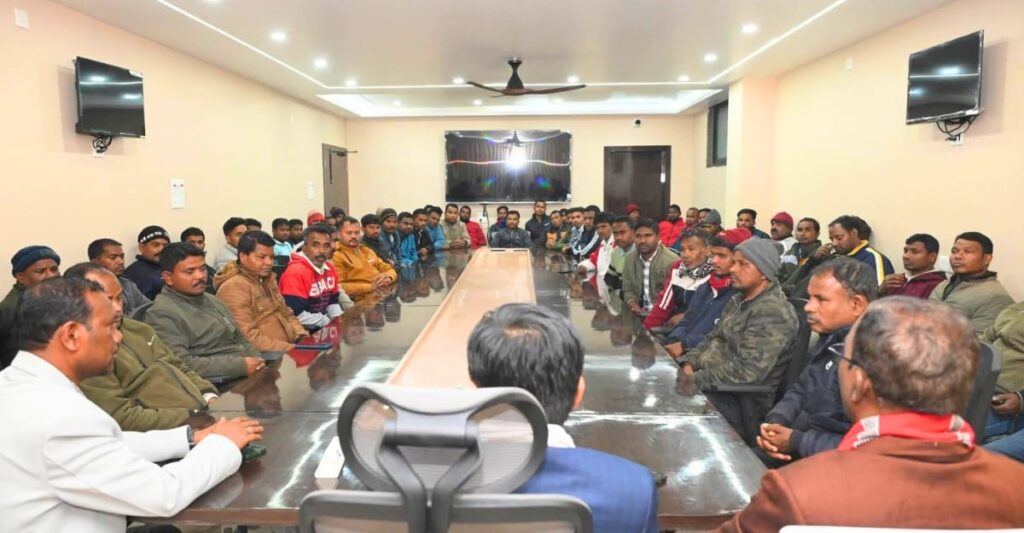
The President and Secretary of the Assam Labour Association (ASCMS), along with officials from the Naharkatiya region, held a detailed discussion with representatives of the Tea Garden Association. Naharkatiya MLA Shri Taranga Gogoi in the meeting, underlining the urgency of securing land rights for Assam tea garden workers.
According to those present, the dialogue centered on converting long-standing land management arrangements into ownership rights. The goal is clear: grant legal land pattas to workers living in labour lines.For many Assam tea garden workers, this would mean, for the first time, having documented ownership of their homes.
A key reference point in the meeting was the 2025 amendment that introduced provisions to convert tea garden land management into ownership-based rights.
Policy experts say this amendment could become one of the most consequential reforms in Assam’s plantation history. Unlike short-term welfare measures, land ownership creates permanent economic assets.
For Assam tea garden workers, legal titles could open access to institutional credit, housing upgrades, educational loans, and financial inclusion schemes. It also reduces vulnerability during disputes or estate closures implemented efficiently, the reform will directly impact more than 3.33 lakh families across Assam. January 2026, Chief Minister Himanta Biswa Sarma launched the Mukhyamantri Ati Koli Duti Pat Scheme.
Under this initiative, eligible Assam tea garden workers receive a one-time financial assistance of ₹5,000.
While modest in size, the assistance comes at a critical time. Labour representatives say the support helps families manage essential needs such as school expenses, medical bills, and household essentials.
The scheme reflects a dual strategy: immediate financial relief combined with long-term structural reform through land ownership.The Assam Government has also revised daily wages for Assam tea garden workers from ₹251 to ₹281, along with an additional increase.
For daily wage earners, even incremental adjustments significantly affect household budgets. Rising food prices and healthcare costs have placed pressure on plantation families in recent years.
Labour economists note that while the wage increase may not fully bridge income gaps, it signals responsiveness to long-standing demands from worker unions.
3% Job Reservation: Expanding Opportunity for Youth
Beyond land and wages, the state has announced a 3% reservation in government jobs for members of the tea garden community.This provision aims to provide structured pathways for young men and women from Assam tea garden workers’ families to enter public service.
Education activists believe the reservation policy could gradually reduce generational dependence on plantation labour by expanding career opportunities.For many young aspirants in tea estates, government employment represents economic stability and social mobility.
During the meeting, MLA Shri Taranga Gogoi encouraged young boys and girls of Naharkatiya to actively participate in sports and physical activities.
His message emphasized discipline, health, and exposure to opportunities beyond traditional plantation work. In regions where tea estates shape social identity, promoting sports is seen as a step toward diversifying aspirations.Assam’s tea industry is one of India’s most historic plantation systems. Yet, Assam tea garden workers have often remained on the margins of land ownership and socio-economic mobility.
The convergence of policy measures land pattas, wage hikes, direct financial assistance, and job reservations suggests a coordinated approach rather than isolated announcements.However, experts caution that implementation will determine the true impact. Transparent beneficiary identification, timely issuance of land titles, and strict enforcement of wage revisions will be crucial.
- Timeline for distributing land pattas
- Clear eligibility criteria under the 2025 amendment
- Monitoring of wage implementation across estates
- Long-term employment outcomes under the 3% reservation
The coming months will reveal whether these policy commitments translate into tangible improvements for Assam tea garden workers.
FAQ
1.How many families are expected to benefit from land ownership reform?
More than 3.33 lakh families could benefit if the conversion process is fully implemented.
2.What is the amount provided under the Mukhyamantri Ati Koli Duti Pat Scheme?
Eligible workers receive a one-time financial assistance of ₹5,000.
3.What is the new daily wage rate?
The daily wage has increased to ₹281, along with an additional 2% increment.
4.What is the purpose of the 3% job reservation?
It aims to create government employment opportunities for members of the tea garden community.
Conclusion
For decades, Assam tea garden workers have sustained one of the state’s most valuable industries without secure land rights.
The recent discussions in Naharkatiya signal a transition from temporary welfare measures to structural reform. If effectively implemented, land ownership could provide long-term dignity, economic stability, and opportunity.For over lakh families, the promise is simple yet powerful: a home not just to live in but to truly own.