
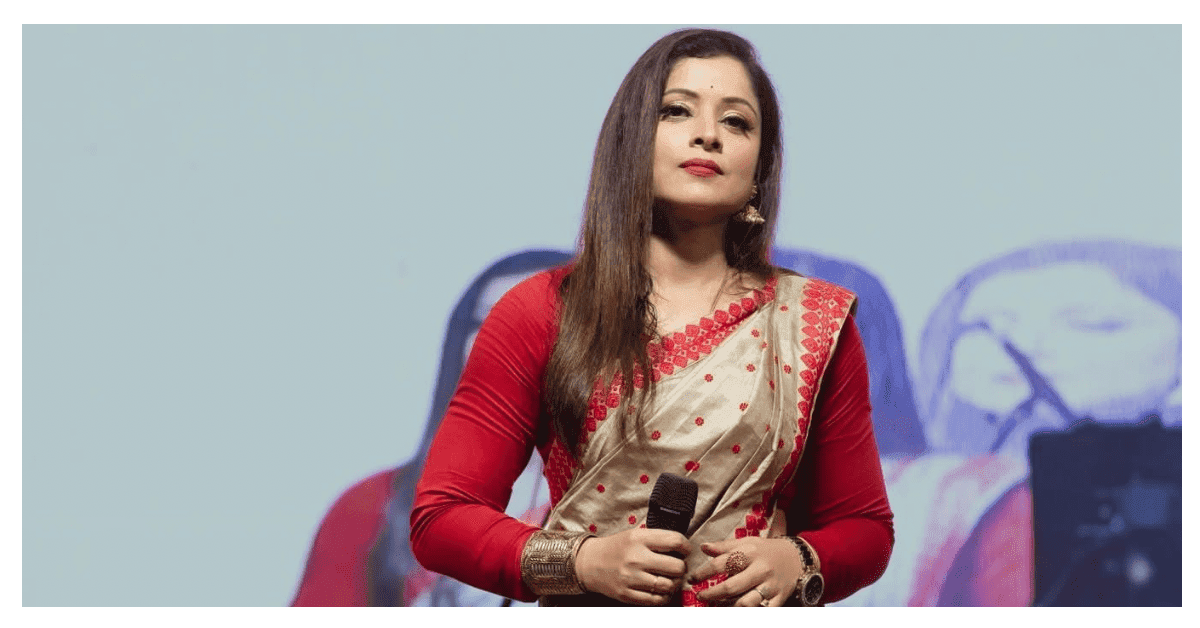
Writer by sanjoy 06.05.2025 time 12.53 AM PUBLISHED
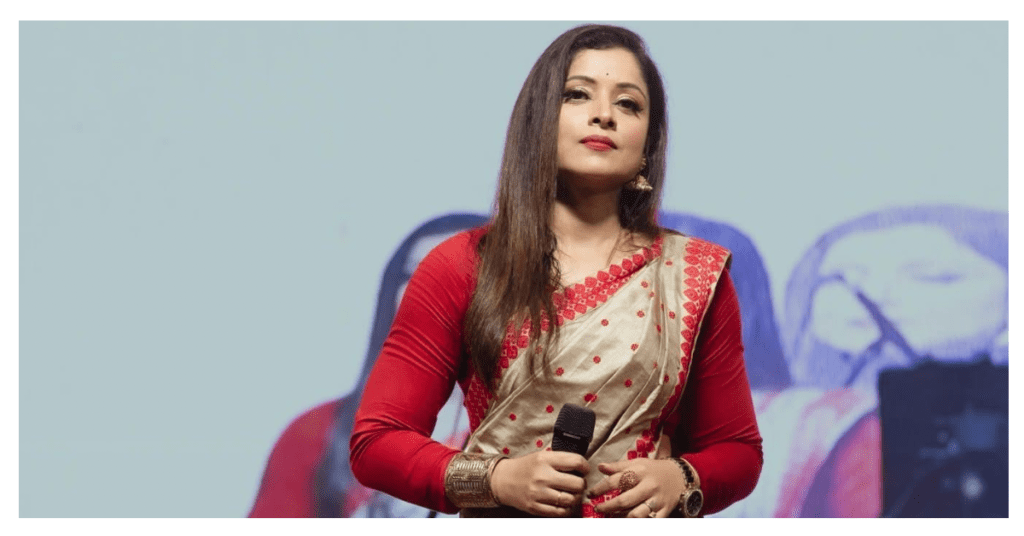
Popular Assamese singer Priyanka Bharali has sparked a powerful conversation across Assam and beyond after sharing her distressing experience during a recent Bihu performance. Known for her soulful voice and deep cultural connection with Assamese traditions, Bharali’s emotional statement has now become a wake-up call about the growing safety concerns faced by artists—especially female performers—on public stages.
Her post, shared on social media, reflects not just a personal experience but a broader issue affecting many artists across the region.
Assamese singer Priyanka Bharali has come forward with serious concerns about performer safety after a troubling on-stage experience. Her statement has drawn attention from fans, artists, and cultural organizers across the state.She alleged that the performance was repeatedly disrupted by unruly audience members, with some individuals climbing onto the stage, taking selfies, and behaving inappropriately, creating an unsafe and chaotic environment.
The incident occurred on May 3 during a scheduled live performance, though her detailed response was shared publicly a day later through social media.The event took place at the Chabua Regional Rongali Bihu Sanmilani in Assam, a well-known cultural gathering that attracts large crowds during the festive season.
Bharali raised the issue to highlight the lack of proper security, poor crowd management, and growing disrespect toward artists especially women during public cultural events.According to her account, repeated requests to control the crowd were ignored, security arrangements failed, and the situation escalated as people forcefully accessed the stage, leading to disruption and emotional distress.
Key Details of the Incident
What should have been a joyful cultural evening slowly turned uncomfortable as the crowd began to lose control. According to Priyanka Bharali, the performance started on a positive note, with music, energy, and audience engagement exactly as expected during a Bihu celebration.But as time passed, the situation changed. People began stepping onto the stage without permission. Some came forward to take selfies, others moved around freely, and the boundary between performer and crowd disappeared. This not only disrupted the performance but also created confusion and tension on stage.
Even when requests were made to maintain order, things did not improve much. The lack of proper control allowed the situation to continue, making it increasingly difficult for the performance to go on smoothly.
Sharing her experience openly, Priyanka Bharali did not hide her emotions. Her words reflect both pain and frustration—something many artists may feel but rarely speak about.
“I go to perform with love for music, but such situations make it very difficult to continue.”“As a woman, I have to think about my safety first. Where is that safety on stage?”
“A stage is not just a place to stand—it deserves respect.”
She also spoke about how certain actions crossed personal limits. What may have seemed casual to some people—like taking photos—became uncomfortable when done without permission or awareness.
“There is a limit to patience. After a point, it becomes overwhelming.”
Her statement feels less like a complaint and more like an honest expression of what many performers silently go through.Bihu events are deeply emotional and cultural for the people of Assam. They are not just festivals—they are moments of identity, pride, and togetherness. Artists like Priyanka Bharali play a big role in keeping that spirit alive.
However, with growing crowds and increasing popularity, managing these events has become more challenging. In many places, basic arrangements like crowd control and stage security are still not strong enough.
This is not the first time such concerns have been raised. Many artists have quietly faced similar situations—unexpected interruptions, lack of security, and moments of discomfort—but not everyone speaks out.That is why this incident feels different. It brings a hidden issue into the open.
Impact
The reaction to Bharali’s statement has been immediate and emotional. People are not just talking about the incident—they are reflecting on a larger problem.For many, this is a moment of realization. Respect for artists cannot be optional, especially in cultural spaces that are meant to celebrate tradition and talent.
There is also a growing understanding that safety is not just about physical protection—it is about feeling secure, respected, and valued while performing.For young and upcoming artists, especially women, this raises an important question: Is the stage really a safe place?
At the same time, it puts responsibility on organizers and audiences alike. A successful event is not only about a big crowd or loud applause—it is about how well the space is managed and how people behave within it.
- The performance initially began in a positive and festive atmosphere, reflecting the true spirit of Bihu celebrations.
- As the crowd increased, discipline gradually broke down, leading to confusion and lack of coordination.
- Several audience members entered the stage area without permission, disrupting the performance flow.
- Selfie-taking and video recording on stage became a major source of interruption.
- The boundary between performer and audience was not maintained, creating an unsafe situation.
- Despite requests, crowd control measures were not effectively enforced.
- Security presence appeared insufficient for the size and behavior of the crowd.
- The incident caused both technical disruptions and emotional stress for the performer.
Safety Concerns Highlighted
- Lack of controlled stage access allowed unrestricted movement of individuals.
- Personal space of the artist was not respected at multiple points.
- Inappropriate behavior was reported under the pretext of casual interaction.
- Female performer safety emerged as a major concern.
- Absence of immediate response increased the seriousness of the situation.
FAQs
1.Who is Priyanka Bharali?
Priyanka Bharali is an Indian playback singer from Jorhat, Assam, known for her melodious voice in the Assamese music industry (Jollywood). She has built a strong identity through cultural performances and film songs.
2.What is Priyanka Bharali’s age?
Priyanka Bharali was born on October 10, 1988. As of May 2026, she is 37 years old.
Q3.Who is Priyanka Bharali?
Priyanka Bharali is a well-known Indian playback singer who primarily works in the Assamese music industry (often referred to as Jollywood). She is highly regarded for her melodious voice and has won several accolades, including the prestigious Bhupen Hazarika Award in 2013.
Q4.What is Priyanka Bharali’s age?
Born on October 10, 1988, Priyanka Bharali is 37 years old as of 2026.
Q5.Priyanka Bharali married? / Who is Priyanka Bharali’s husband?
While there have been occasional public discussions and media rumors surrounding her personal life and relationships over the years, specific audited or verified details regarding her current marital status or husband’s identity are kept private and not officially documented in her public professional biography.
Q6.Where is Priyanka Bharali from?
She is from Jorhat, Assam, India.
Q7.What is Priyanka Bharali’s profession?
She is a professional playback singer and musical artist.
Q8.What are her popular songs?
Priyanka Bharali began her musical career in 2008 and rose to prominent fame across Northeast India. Some of her most popular songs and milestones include:
- “Kahili Puwate Jaanoi” – Her debut song from the popular album Jaanmoni (2009), sung alongside Assam’s music icon Zubeen Garg.
- “Sesa Pori Jabo Nidiba” – A massive hit song from the album Lakhimi, recorded with Babu Baruah.
- “Xile Xile Theka Khale”
- “Lipstick Kajol”
Q9.What is Priyanka Bharali’s educational background?
While her personal, non-music schooling and higher education details are kept out of the mainstream media limelight, she received her early professional-artistic background and deep roots in the cultural space of Jorhat, Assam, before debuting under NK Production Films.
Conclusion
The incident involving Priyanka Bharali is a reminder that cultural celebrations must never come at the cost of safety and respect. A stage is not just a platform for entertainment—it is a space where artists share their passion and identity. When that space becomes unsafe, it reflects a deeper gap in responsibility from both organizers and audiences. This moment should push for better planning, stronger security, and more awareness. If real changes are made now, future events can remain joyful while ensuring every artist feels safe, valued, and respected.