On January 14, 2026, while much of India celebrates Makar Sankranti, a quieter but deeply powerful festival unfolds across eastern India. Tusu Festival 2026 is not just observed it is lived.
In villages, tea gardens, and riverbanks across West Bengal, Jharkhand, Odisha, and Assam, thousands of tribal and agrarian families come together to honour Tusu Devi, a symbol of harvest, hope, and collective gratitude. There are no grand temples, no televised rituals yet the emotional strength of this festival is unmatched.
Tusu Festival is India’s living reminder that faith can exist without monuments, and tradition can survive without commercialisation
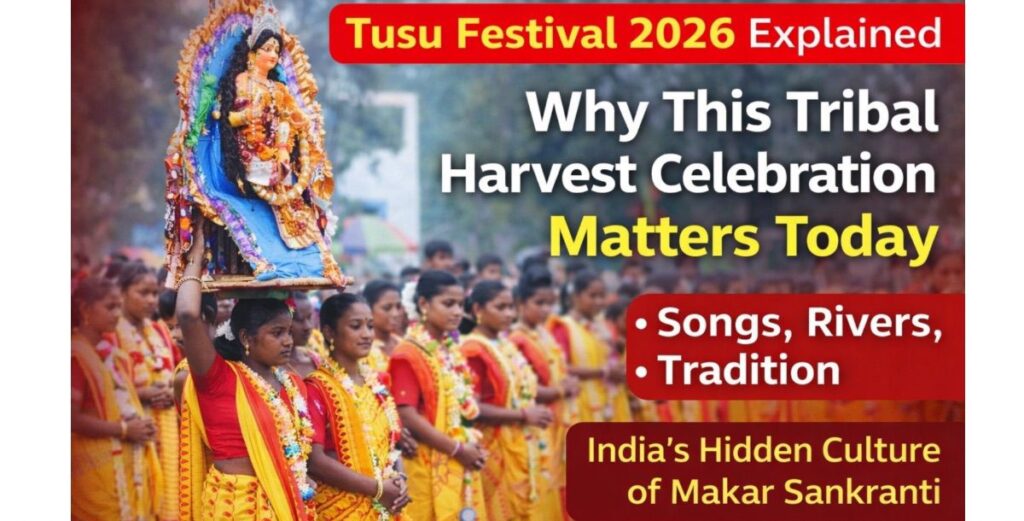
Why Tusu Festival 2026 Matters More Than Ever
In an age of fast festivals and fading folk traditions, Tusu Festival stands rooted in the soil. It speaks of farming cycles, community bonds, women-led rituals, and respect for rivers values increasingly rare in modern celebrations.
This is not a festival of spectacle.It is a festival of participation, memory, and belonging.
What Is Tusu Festival 2026?
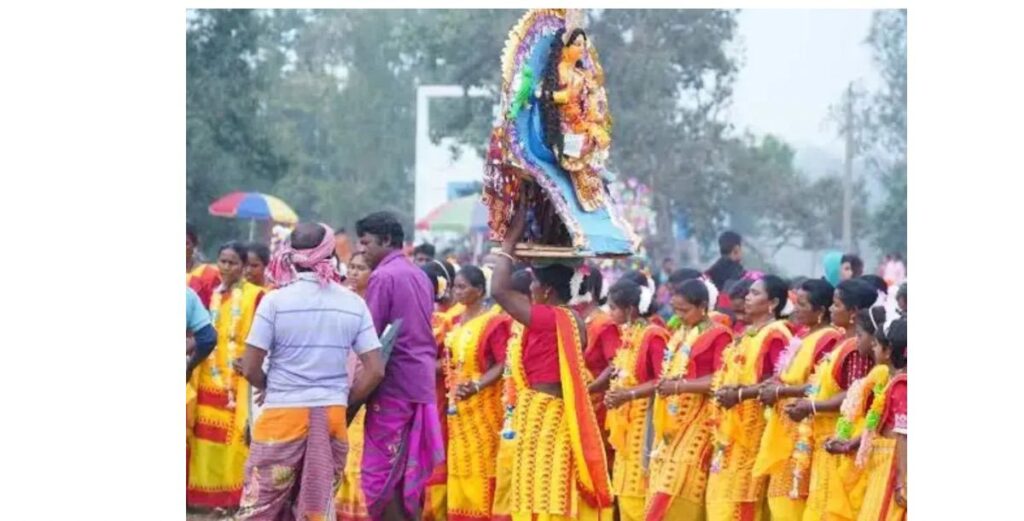
Tusu Festival is a traditional tribal harvest festival linked to the solar transition of Makar Sankranti. The name Tusu is believed to be connected to rice husk or bran, directly reflecting its agricultural origins.
Tusu Devi is imagined both as:
- a young village girl, and
- a gentle goddess of abundance and compassion
Her worship is intimate, handmade, and deeply personal.There are no priests.There are no scriptures.There are only songs, stories, and shared labour.
The Heart of Tusu Festival: Women and Young Girls
Unlike many mainstream festivals, unmarried young girls lead Tusu Festival 2026.They
- Create clay idols of Tusu Devi
- Compose and sing traditional folk songs
- Perform group dances in vibrant attire
- Carry the oral history of their community forward
These songs speak of:
- Daily village life
- Love and loss
- Nature’s generosity
- Social justice and courage
Passed from mother to daughter, these verses are not written anywhere yet they survive year after year.
Rituals That Keep the Festival Alive
Handmade Idols and Village Processions
Tusu Devi idols are crafted from mud, decorated with flowers, leaves, and local materials. Placed on wooden platforms, they are carried from home to home, uniting entire villages.Children, elders, farmers, and tea workers all participate making Tusu Festival one of the most inclusive celebrations in India.
River Immersion: The Soul of the Festival
The festival concludes with the immersion of the idol in nearby rivers.As drums like dhamsa and madol echo through the air, the immersion symbolises:
- gratitude to nature
- the end of one harvest cycle
- the beginning of renewal
Local fairs often bloom around riverbanks, adding colour, music, and shared joy to the closing ritual.
Where Is Tusu Festival 2026 Celebrated?
Tusu Festival is mainly observed in:
- Southwestern districts of West Bengal
- Southeastern Jharkhand
- Northeastern Odisha
- Tea-garden regions of Assam
In Assam, especially among tea-tribe communities, Tusu Festival has become a powerful marker of cultural identity and unity.
Why Tusu Festival 2026 Is Culturally Important Today
Preserving Indigenous Heritage
As many folk traditions disappear, Tusu Festival survives through collective memory and community effort.
Strengthening Social Bonds
The festival removes social and economic divisions. Every household participates equally.
Respecting Nature
Tusu Festival honours rivers, soil, and seasons — reinforcing sustainable living long before it became a global discussion
What Makes Tusu Festival Unique
- Celebrated alongside Makar Sankranti every year
- Entirely community-funded
- Strong women-led traditions
- No commercial influence
- Oral storytelling instead of written text
Frequently Asked Questions (FAQs)
1.When is Tusu Festival 2026 celebrated?
Tusu Festival 2026 is celebrated on January 14, along with Makar Sankranti.
2.Who worships Tusu Devi?
Primarily tribal, agrarian, and tea-garden communities, with young unmarried girls leading rituals.
3.Is Tusu Festival limited to West Bengal?
No. It is also widely celebrated in Jharkhand, Odisha, and Assam.
4.What does Tusu Devi represent?
She symbolises compassion, sacrifice, love, fertility, and agricultural prosperity.
5.How does the festival conclude?
With river immersion of the idol, accompanied by traditional music and community gatherings.
Conclusion
Tusu Festival 2026 is not just a date on the calendar.It is a living tradition that reminds us where India’s true cultural strength lies in its villages, its rivers, and its people.and more relative news visit our site
As songs rise over riverbanks this Makar Sankranti, Tusu Festival continues to quietly tell a powerful story:
that progress does not have to erase roots it can grow from them. happy tusu puja 2026