Introduction: The Night That Changed India Forever
November 26, 2008, is not just a date in the Indian calendar; it is a scar on the collective soul of a nation. It was a night when the ‘City of Dreams’ turned into a landscape of nightmares. As ten terrorists infiltrated Mumbai’s shores, they didn’t just target buildings; they targeted the spirit of India.
Today, we look back not only with grief for the 166 innocent lives lost but with a profound sense of pride for the legends who stood between the bullets and the citizens.tribute explores the untold stories of bravery, the strategic shifts in India’s security, and why the legacy of 26/11 must never be forgotten by the next generation.
The Siege of Mumbai: 60 Hours of Terror
The attacks were meticulously planned, involving 10 members of the Lashkar-e-Taiba who arrived via sea. The coordinated strikes at Chhatrapati Shivaji Terminus (CST), The Taj Mahal Palace Hotel, Trident Hotel, Leopold Cafe, and Nariman House were designed to maximize international media attention and casualty rates.
For nearly 60 hours, Mumbai was under siege. The world watched in horror as smoke billowed from the iconic red domes of the Taj. Yet, amidst the chaos, a story of unparalleled Indian courage was being written in blood and sacrifice.
The Immortals: Honoring the Heroes of 26/11
To understand the value of our freedom today, we must remember the names of those who ensured it.
- 1. Tukaram Omble: The Man Who Caught a Terrorist with Bare Hands
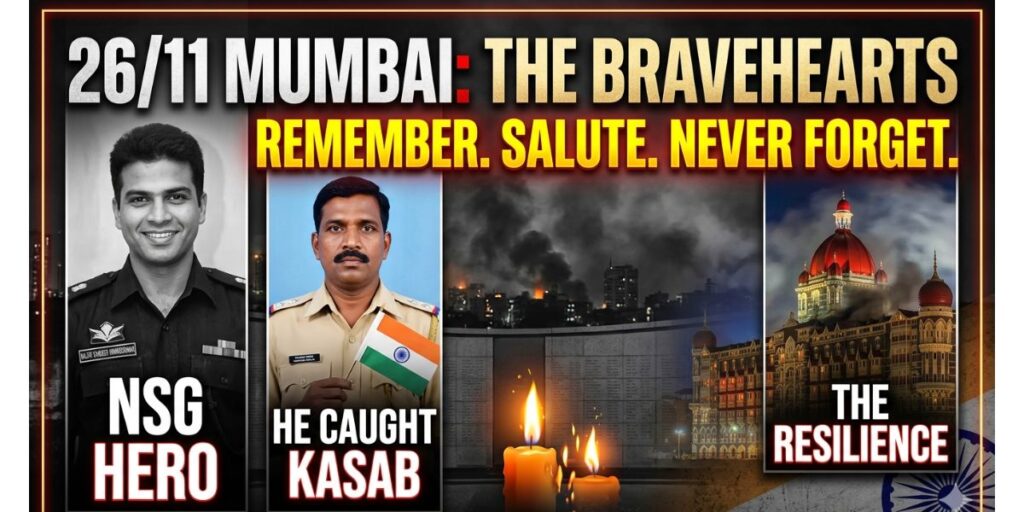
Assistant Sub-Inspector Tukaram Omble is the reason the world knows the truth about the 26/11 plot. Armed with only a lathi (baton), he lunged at Ajmal Kasab’s rifle. He took a hail of bullets in his chest but refused to let go of the barrel, allowing his colleagues to capture Kasab alive. Without Omble’s sacrifice, the link to cross-border terrorism might never have been proven.
- 2. Major Sandeep Unnikrishnan: “Don’t Come Up, I’ll Handle Them”
An NSG commando whose name has become synonymous with “bravery.” During the rescue operation at the Taj Hotel, Major Unnikrishnan was shot while rescuing a fellow commando. His final words to his team—”Don’t come up, I will handle them”—reflect the selflessness of the Indian Armed Forces.
- 3. Hemant Karkare, Vijay Salaskar, and Ashok Kamte
These top-tier officers of the Mumbai Police didn’t wait for reinforcements. They drove toward the sound of gunfire. Their martyrdom in a narrow lane near Cama Hospital remains one of the most tragic losses of that night, proving that leadership in India starts from the front lines.
- 4. The Silent Guardians: Karambir Kang and the Taj Staff
While the soldiers fought outside, the Taj Hotel staff, led by General Manager Karambir Kang, stayed behind to save guests. Even after Kang lost his wife and children in the fire at the hotel, he continued to lead the evacuation”
Strategic Impact: How 26/11 Modernized Indian Security
- Formation of the NIA: The National Investigation Agency was born out of the need for a central agency to combat terror.
- NSG Hubs: To ensure faster response times, NSG hubs were established in Mumbai, Kolkata, Hyderabad, and Chennai.
- Coastal Security: The Indian Navy was given full charge of maritime security, closing the gaps that the terrorists exploited.
- MARCOS and Force One: Mumbai strengthened its local elite commando unit, Force One, ensuring that the city is never caught off guard again.
- Anniversary Significance: Every year, millions search for “26/11 tribute” and “Mumbai attack heroes.”
- Emotional Resonance: Stories of survivors, like Baby Moshe (the toddler saved at Nariman House), continue to inspire hope.
- Never Forget: The hashtag #MumbaiAttacks is a digital memorial.
The Philosophy of Resilience: Why Mumbai Never Stopped
The most remarkable part of the 26/11 story is the “Spirit of Mumbai.” Within days of the attacks, the Leopold Cafe reopened. Within months, the Taj was welcoming guests again. Terrorism aims to halt life; Mumbai’s response was to live even louder.
This resilience is India’s greatest strength. It is a message to the world that while we value peace, our resolve is unbreakable.
Frequently Asked Questions
Q: Who were the main heroes of the 26/11 attacks?
A: Key heroes include Tukaram Omble, Major Sandeep Unnikrishnan, Hemant Karkare, Vijay Salaskar, and Ashok Kamte, along with the brave staff of the Taj and Trident hotels.
Q: How many people died in the 2008 Mumbai attacks?
A: Approximately 166 people were killed, and over 300 were injured in the coordinated attacks.
Q: What is Operation Black Tornado?
A: It was the official name of the mission conducted by the National Security Guard (NSG) to flush out the terrorists from the Mumbai landmarks.
Conclusion:
As we pay tribute to the bravehearts of 26/11, we must do more than just remember. We must remain vigilant and united. The heroes of Mumbai didn’t just save lives; they saved the idea of India.
To the families of the victims and the martyrs: The nation stands with you. Your sacrifice is the foundation of our security. We will never forget. We will never forgive. We will always prevail.
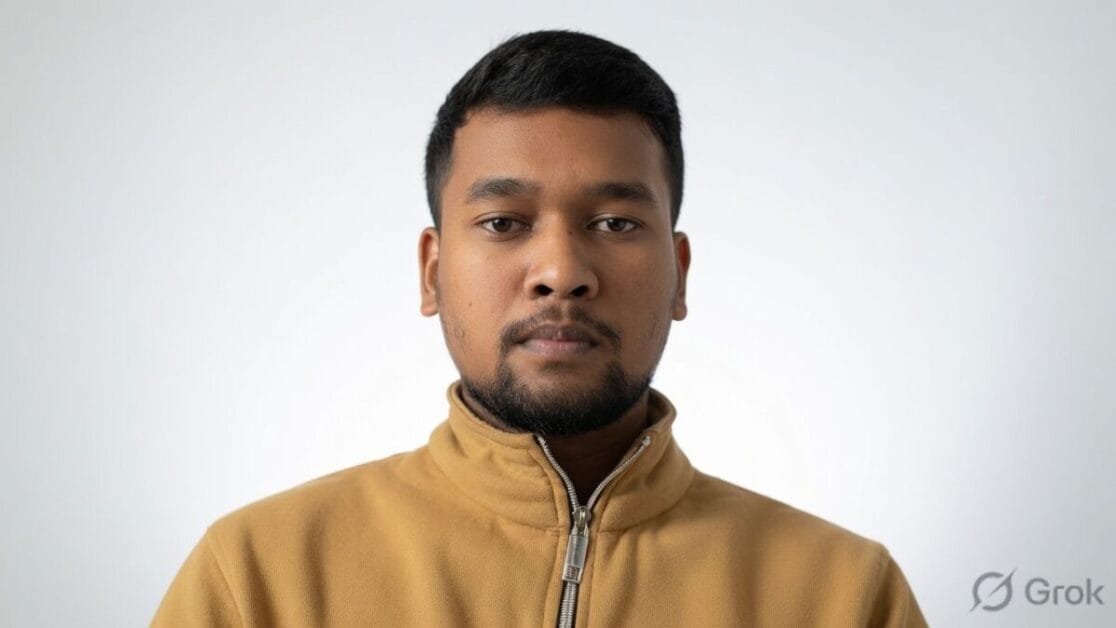
Sanjoy Gorh – Founder & Editor, FinBuzz India
Sanjoy Gorh is the founder and editor of FinBuzz India (finbuzzindia.com), an independent digital news platform delivering accurate, clear, and timely news to readers across Assam, Northeast India, and beyond.
Driven by a deep passion for digital journalism, Sanjoy launched FinBuzz India with a clear mission: to give grassroots stories the attention they deserve and bring local voices to a national stage. Hailing from Assam, he brings hands-on, on-ground experience in news reporting, content creation, and digital media management.
His editorial focus spans Assam local news, Northeast India developments, government schemes and exam updates, finance, technology and AI, business and startups, sports, and national affairs — always with an emphasis on making important topics simple, relevant, and accessible to everyday readers.
At the heart of his work lies an unwavering commitment to factual, unbiased reporting. Sanjoy believes journalism’s greatest responsibility is building reader trust, and every story published on FinBuzz India reflects that belief.
With a vision to grow FinBuzz India into the most trusted digital news voice of Northeast India, Sanjoy continues to raise the bar, one story at a time.
Connect with Sanjoy: [Twitter/Xhttps://x.com/amolgorh84648?s=11 ] | [https://www.linkedin.com/in/finbuzz-india-6b0a00307?utm_source=share_via&utm_content=profile&utm_medium=member_ios]