
AI Work in 2026 is no longer just for engineers sitting behind complex code.In 2026, online AI work has quietly expanded into everyday roles that blend human judgment with smart tools.
From content editing to customer support, the AI job market is changing how people earn online.And for many, this shift is opening doors that didn’t exist just two years ago.
Over the past few years, AI tools became faster, cheaper, and easier to use.Companies realized they don’t just need builders they need humans to guide, test, and refine AI output.That shift has reshaped online work across freelancing and remote platforms.
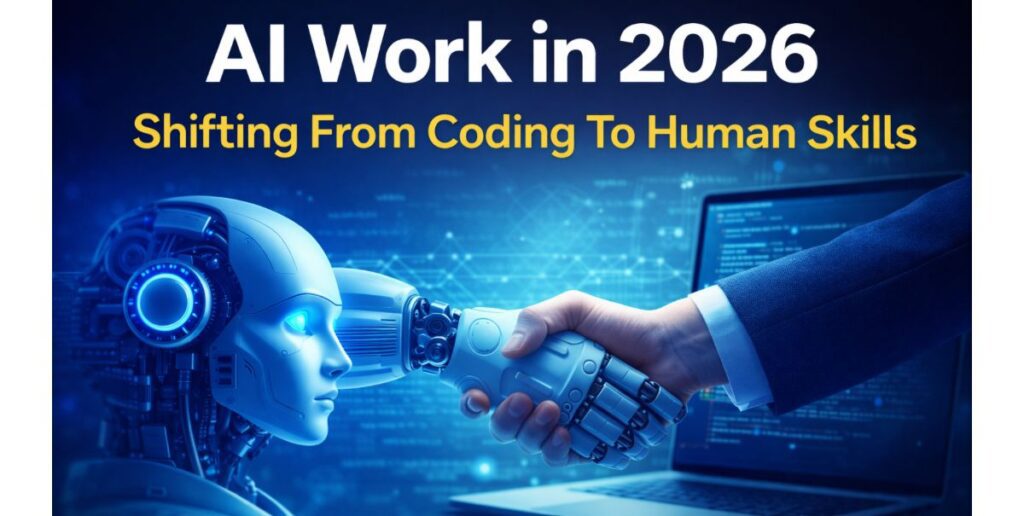
AI Work in 2026 Work Is No Longer Only Technical
In 2026, AI jobs fall into two broad categories:technical roles and AI-assisted human roles.Not every position requires coding or deep engineering knowledge.
Beginner & Non-Technical AI Roles
Many entry-level and freelance jobs now focus on human–AI collaboration.
These include AI content assistants who refine and fact-check AI-written text,data labelers who help train models using images, text, or audio,and AI customer support assistants who handle complex or emotional queries alongside chatbots.
Technical & Specialized Roles Still Lead Pay
High-skill roles like AI/ML engineers, data scientists, and NLP engineers remain in strong demand.These jobs rely heavily on Python, machine learning frameworks, data analysis, and cloud platforms.They are fewer in number but command higher salaries and long-term growth.
Platforms Driving AI Online Work
Freelance marketplaces such as Upwork and Fiverr continue to host AI-related gigs.Remote job boards like LinkedIn Jobs, Indeed, and We Work Remotely list both technical and non-technical AI roles.Skill-based hiring has clearly overtaken degree-based screening.
What’s striking in 2026 is how “normal” AI work has become.
You don’t need to build a model to work with AI anymore.
The real value now lies in judgment knowing what AI gets right, what it misses, and where humans must step in.This is why communication, creativity, and critical thinking matter as much as technical skills.
For online workers, this shift lowers the entry barrier.People without coding backgrounds can still earn through AI-assisted roles.For businesses, it improves quality and trust in AI-driven systems.And for the job market, it signals that human skills are becoming more valuable, not less
In earlier years, AI jobs mostly meant engineering or research roles.By 2026, the market looks broader and more balanced.Compared to traditional IT jobs, AI-assisted roles offer faster entry and remote flexibility,though technical roles still offer higher long-term stability.
Not every AI job pays well, and competition is rising.Some roles are repetitive and short-term.However, demand for skilled human oversight continues to grow across industries Success depends more on real skills and adaptability than hype.
CONCLUSION
AI work in 2026 is no longer a narrow tech niche.It’s a mixed ecosystem where humans and machines work side by side.Those who build practical skills, create portfolios, and understand AI limits will stay ahead.The next phase won’t be about replacing people it will be about using AI wisely.and more trending news visit our site





Leave a Reply