writer by sanjoy gorh 28.03.2026/ time 8.00 Pm Published
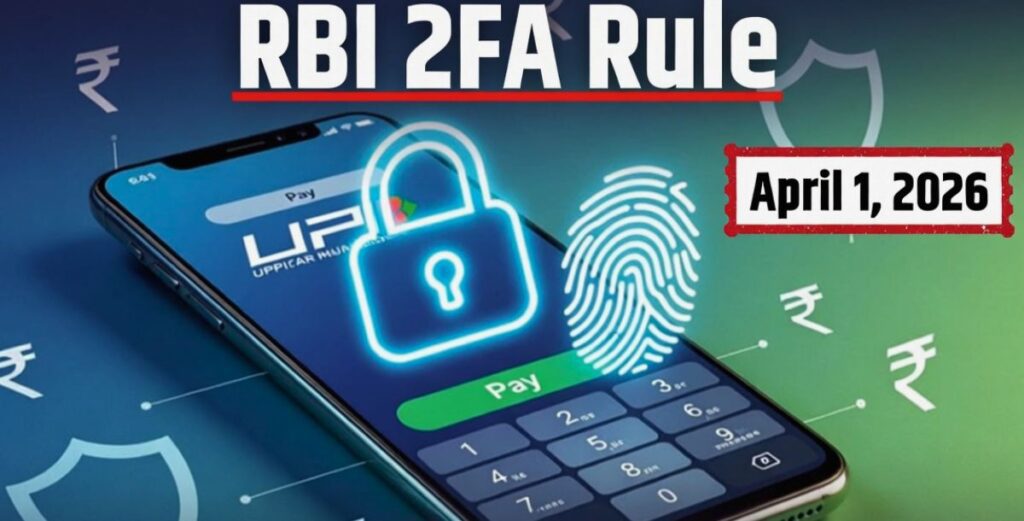
Starting April 1, 2026, every UPI, card, and wallet payment in India will require stronger verification. The Reserve Bank of India (RBI) has made two-factor authentication (2FA) mandatory for all digital transactions to fight rising fraud.
This change aims to make payments more secure without completely sacrificing convenience.
What Exactly is Changing?
Under the new RBI guidelines, every digital payment must use at least two different authentication factors. Importantly, at least one factor must be dynamic (unique to that transaction).
Common combinations you may see:
- UPI PIN + Biometric (fingerprint/face ID)
- Password + OTP (or app-based confirmation)
- Device binding + OTP/Biometric
- Single OTP or static PIN alone will no longer be enough for most transactions.
Why RBI Introduced This Rule Now
India’s UPI ecosystem has grown massively, but so have fraud cases involving phishing, fake calls, and OTP scams. The older system relying heavily on SMS OTPs had become vulnerable.
Key benefits of the new rule:
- Even if someone gets your PIN or password, they can’t complete the payment without the second dynamic factor.
- Banks and fintech apps will be more accountable — they can be held responsible for fraud if they fail to implement proper authentication.
- Encourages modern methods like biometrics and device-based verification instead of only SMS OTP.
How This Will Affect Your Daily Payments
For most users, payments will feel slightly different:
- An extra confirmation step (like fingerprint or in-app prompt)
- Possible small delay of a few seconds
- More secure experience overall
Impact on different users:
- Regular users: Quick UPI transfers to friends or shops may need one extra tap.
- Small merchants: Checkout might take a bit longer, but customer trust can increase.
- Senior citizens: Initial confusion possible — family members should help them update apps and enable biometrics.
What Banks & Apps Must Do
RBI has clearly put responsibility on banks, card networks, and payment platforms. They need to:
- Offer multiple easy authentication options (biometrics, app push, device recognition)
- Ensure at least one dynamic factor
- Improve user experience so security doesn’t feel too burdensome
Many apps are already preparing biometric-friendly flows and risk-based checks for low-risk small transactions.
How to Prepare Before April 1
- Keep your registered mobile number active and linked to all banking apps.
- Update your UPI, banking, and wallet apps to the latest version.
- Enable fingerprint or face unlock on your phone.
- Never share your UPI PIN, OTP, or password with anyone (even if they claim to be from the bank).
- Start using biometric authentication wherever available — it’s usually faster and safer.
Frequently Asked Questions
1.Will every UPI payment now require an OTP?
Not necessarily. You may use biometric + PIN or other combinations. But at least one factor must be dynamic.
2.Will payments become slower?
Slightly yes, due to the extra verification. However, the added security is expected to reduce fraud significantly.
3.Is this rule only for UPI?
No. It applies to all digital payments — UPI, net banking, mobile wallets, and card transactions.
4.Can I choose my preferred authentication method?
Yes, banks and apps will offer multiple options. You can usually select the most convenient one for you.
Conclusion
The RBI’s new 2FA rule from April 1, 2026 marks a significant milestone in strengthening India’s digital payment ecosystem. While users may experience a slight delay due to the extra verification layer, this change is a proactive step to safeguard millions from sophisticated cyber threats like phishing and OTP fraud. In the long run, it will build greater trust and confidence in UPI and other digital platforms, encouraging even more people to adopt cashless transactions without fear.
Banks are expected to innovate with seamless biometric and risk-based solutions to minimize friction. Ultimately, a few extra seconds of security can prevent substantial financial losses and contribute to a safer, more reliable digital economy for every Indian. Embracing this update today will help you stay protected tomorrow as the nation continues its journey toward a fully secure digital future.

Sanjoy Gorh – Founder & Editor, FinBuzz India
Sanjoy Gorh is the founder and editor of FinBuzz India (finbuzzindia.com), an independent digital news platform delivering accurate, clear, and timely news to readers across Assam, Northeast India, and beyond.
Driven by a deep passion for digital journalism, Sanjoy launched FinBuzz India with a clear mission: to give grassroots stories the attention they deserve and bring local voices to a national stage. Hailing from Assam, he brings hands-on, on-ground experience in news reporting, content creation, and digital media management.
His editorial focus spans Assam local news, Northeast India developments, government schemes and exam updates, finance, technology and AI, business and startups, sports, and national affairs — always with an emphasis on making important topics simple, relevant, and accessible to everyday readers.
At the heart of his work lies an unwavering commitment to factual, unbiased reporting. Sanjoy believes journalism’s greatest responsibility is building reader trust, and every story published on FinBuzz India reflects that belief.
With a vision to grow FinBuzz India into the most trusted digital news voice of Northeast India, Sanjoy continues to raise the bar, one story at a time.
Connect with Sanjoy: [Twitter/Xhttps://x.com/amolgorh84648?s=11 ] | [https://www.linkedin.com/in/finbuzz-india-6b0a00307?utm_source=share_via&utm_content=profile&utm_medium=member_ios]