

Writer by sanjoy 05.04.2026 time 12.30 PM Published
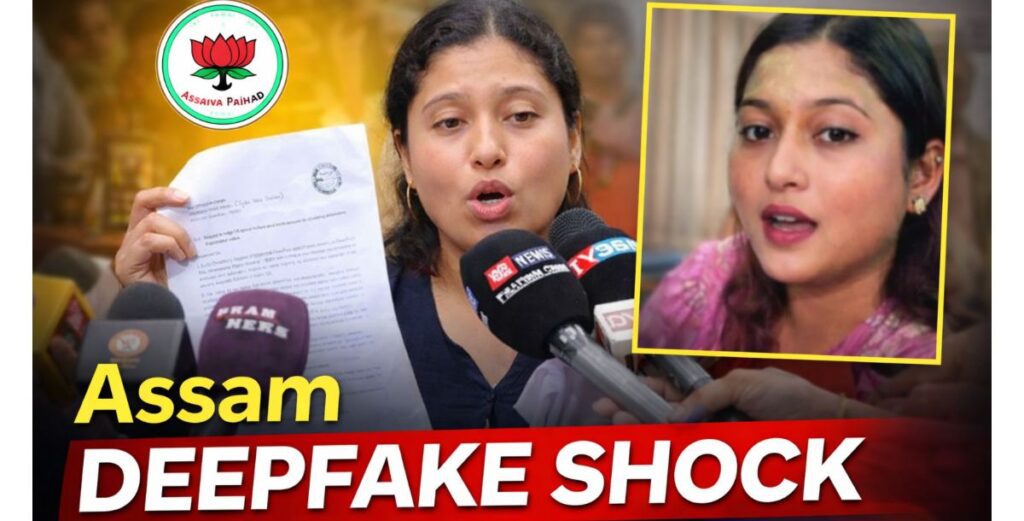
Assam Elections 2026: Young AJP Candidate Kunki Chowdhury Battles Alleged Deepfake Smear Campaign
In a stark reminder of how artificial intelligence is reshaping—and potentially distorting—political battles, Assam Jatiya Parishad (AJP) candidate Kunki Chowdhury has filed a formal complaint over allegedly AI-generated deepfake videos circulating on social media. The incident, reported on April 4, 2026, comes just days before Assam goes to polls on April 9, 2026, turning the spotlight on the dark side of digital campaigning in one of India’s most watched state elections. 
Kunki Chowdhury, the 27-year-old Gen Z face of the opposition in the prestigious Guwahati Central constituency, is contesting against seasoned BJP leader Vijay Kumar Gupta. With a master’s degree in educational leadership from University College London and a strong focus on ground-level issues like drainage, youth employment, waste management, and urban infrastructure, Chowdhury represents a fresh, educated voice in Assam politics. Her rapid rise has apparently made her a target, with the complaint highlighting how deepfakes can weaponize technology against emerging candidates. 
Key Highlights
- Complaint filed at Panbazar Cyber Police Station in Guwahati.
- Alleged deepfake videos use AI to defame Chowdhury and drag her family into controversy.
- Videos reportedly aim to damage her reputation and influence voters in Guwahati Central.
- Incident sparks fresh debate on digital ethics, misinformation, and the need for stronger safeguards ahead of the April 9 polls.
- Chowdhury has accused unidentified social media accounts, with some reports linking it to political desperation from rivals.
What Exactly Happened?
According to the complaint lodged at the cyber cell of Panbazar Police Station, multiple unidentified individuals created and circulated manipulated videos using artificial intelligence (deepfake) technology. These clips allegedly distort Chowdhury’s image, misrepresent her statements, and extend attacks to her family members, including references tied to recent political exchanges involving her mother. 
Chowdhury stated in her complaint that the content is “morphed and fabricated” with the clear intent to harm her character, dignity, and electoral prospects. She has urged authorities to investigate under relevant provisions of the IT Act, defamation laws, and election codes of conduct. The videos are said to have gone viral across platforms, amplifying misinformation at a critical juncture when campaigning is at its peak.
This is not an isolated personal attack. It reflects a broader pattern where deepfakes exploit the speed and reach of social media to create confusion just before voters head to the booths on April 9.
The Unique Angle: A Generational Battle Meets the AI Threat
What makes this case particularly compelling is the clash of eras it represents. On one side stands a battle-hardened BJP veteran with decades of experience; on the other, a young, highly educated woman making her political debut with a vision centered on “Assam First” and practical urban solutions for Guwahati. Kunki Chowdhury’s campaign has gained traction among youth and progressive voters, positioning her as a symbol of change in a constituency that blends tradition with modern aspirations. 
The alleged deepfake attack, reportedly surfacing after public exchanges involving Assam Chief Minister Himanta Biswa Sarma, underscores a troubling tactic: using advanced technology to target newcomers who lack the deep organizational machinery of established parties. Instead of engaging on issues like flooding, jobs, or infrastructure—Chowdhury’s five key promises—rivals appear to resort to character assassination through AI.
Cyber experts note that deepfake tools have become alarmingly accessible. What once required sophisticated studios can now be generated with consumer-grade software, making it a low-cost, high-impact weapon in election seasons. In Assam, where social media penetration is growing rapidly, a single viral clip can sway perceptions in urban pockets like Guwahati Central before fact-checks catch up.
Why Deepfakes Pose a Grave Risk to Indian Democracy
Deepfakes are not mere pranks—they erode the foundation of informed voting. They can:
- Mislead voters by creating false narratives that spread faster than truth.
- Damage reputations irreversibly, especially for women candidates facing heightened scrutiny.
- Undermine trust in digital content, leading to cynicism about all political messaging.
- Influence outcomes in close contests, where even a small shift in perception matters.
India has witnessed a surge in such cases during recent election cycles. From morphed speeches to fabricated controversies, AI manipulation tests the limits of existing laws. While the Information Technology Act and defamation provisions offer some recourse, enforcement remains challenging due to anonymous accounts, cross-border servers, and the technical difficulty in proving manipulation.
Authorities in this case are expected to trace origins, analyze videos using forensic tools, and collaborate with social media platforms for swift takedowns. An FIR under cybercrime and relevant sections is likely, though quick identification of perpetrators is never guaranteed.
Handling deepfake complaints involves multiple hurdles:
- Technical verification of AI involvement.
- Tracking creators behind pseudonymous profiles.
- Balancing free speech with the need to curb malicious content.
- Raising voter awareness so people pause before sharing sensational videos.
Experts call for urgent reforms: clearer deepfake-specific guidelines, faster platform accountability, and public education campaigns. Some states and the central government have been strengthening digital literacy initiatives, but the pace must accelerate as elections approach.
For candidates like Kunki Chowdhury, such incidents transcend personal harm. They can derail focused campaigning on real issues be it tackling Guwahati’s civic problems or empowering youth and shift the narrative to defense and damage control.
What Voters and Stakeholders Should Do
As Assam prepares to vote on April 9, 2026, with results expected on May 4, this episode serves as a wake-up call. Voters must:
- Verify sources before believing or sharing political videos.
- Rely on official statements and reputable fact-checks.
- Focus on candidates’ track records, promises, and vision rather than viral sensationalism.
Political parties, meanwhile, have a responsibility to condemn such tactics regardless of affiliation and advocate for ethical digital campaigning.
FAQs
1. What is a deepfake? A deepfake is an AI-generated or altered video/audio that realistically depicts someone saying or doing something they did not.
2. Where and when was the complaint filed? On April 4, 2026, at Panbazar Cyber Police Station in Guwahati.
3. Who is Kunki Chowdhury? The 27-year-old AJP candidate from Guwahati Central, known as Assam’s youngest contestant in the 2026 polls, with an international education and focus on urban development.
4. Are deepfakes common in Indian elections? Yes, their use has increased, raising concerns about misinformation, though specific regulations continue to evolve.
5. What happens next? Police investigation is underway. No arrests confirmed yet; focus remains on tracing sources and verifying content.
Conclusion
Safeguarding Democracy in the AI Age
Kunki Chowdhury’s complaint is more than a local political skirmish. It highlights how emerging technologies can either empower or endanger democratic processes. With Assam’s high-stakes Assembly elections just around the corner, the case demands not only swift justice but also collective vigilance.
In an era where anyone with a smartphone can potentially create convincing fakes, protecting electoral integrity requires technology, law, awareness, and ethics to work in tandem. As the investigation proceeds, the story reminds us that truth and accountability must remain the cornerstones of politics—offline and online

Leave a Reply