

By Sanjoy Gorh | 09:00 AM | 02/03/2026 Published
Assam, long celebrated for its lush tea gardens and rich oil reserves, is undergoing a remarkable economic metamorphosis. No longer confined to its traditional identity, the state is rapidly positioning itself as India’s emerging industrial hub in the Northeast. With massive infrastructure upgrades, landmark investments, and investor-friendly policies, Assam is poised to become the manufacturing and logistics gateway to Eastern India and Southeast Asia.
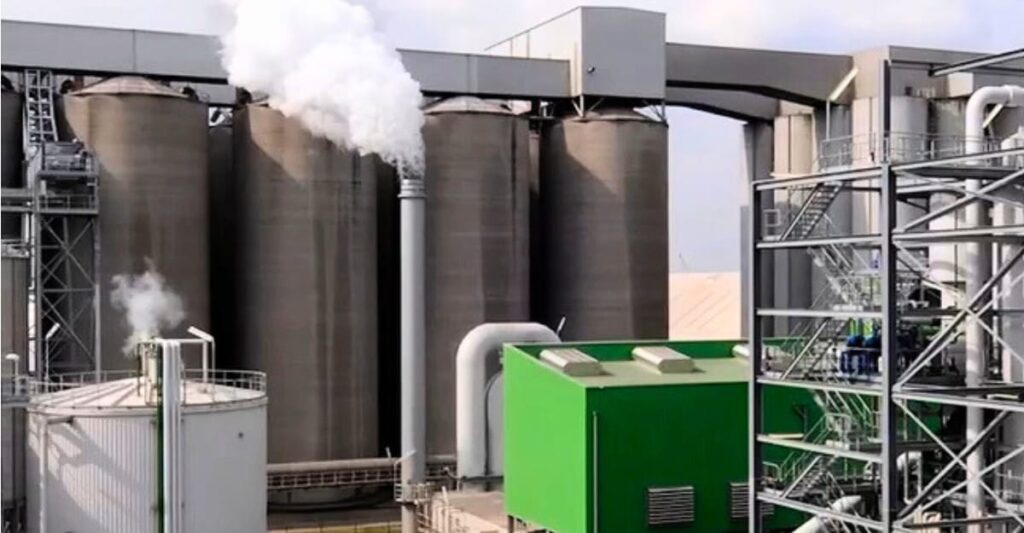
Under the visionary leadership of Chief Minister Himanta Biswa Sarma and supported by the central government’s Act East Policy, Assam is witnessing accelerated growth. Union Home Minister Amit Shah recently highlighted that in the next five years, Assam will emerge as the industrial hub of eastern and northeastern India. This shift is not just aspirational it is backed by concrete projects, policy reforms, and impressive economic indicators.
From Traditional Economy to Diversified Industrial Growth
For decades, Assam’s economy revolved around tea (accounting for over 50% of India’s production) and hydrocarbons. While these sectors remain strong, the state is aggressively diversifying into high-potential areas:
- Electronics and Semiconductors: A flagship ₹27,000 crore Tata semiconductor assembly and testing (OSAT) unit is coming up in Jagiroad, expected to create over 15,000 direct jobs and thousands more indirectly. This marks one of the largest private investments in the state’s history.
- Petrochemicals and Refining: Expansion of the Numaligarh Refinery (₹28,000 crore project), Bongaigaon Refinery capacity enhancement, and the ₹10,600 crore Namrup Ammonia-Urea Fertiliser Project.
- Green Energy and Biofuels: World’s first bamboo-based 2G bio-ethanol plant and upcoming green energy initiatives, including bamboo-to-methanol projects.
- Food Processing, Plastics, and Logistics: Investments from companies like PepsiCo (first Northeast food manufacturing plant) and development of plastic parks and agro hubs.
Advantage Assam 2.0 Investment Summit and targeted industrial policies have already attracted MoUs worth thousands of crores, with commitments crossing ₹5 lakh crore in recent years
Infrastructure Revolution Powering Industrial Momentum
Connectivity was once Assam’s biggest bottleneck. Today, it is becoming its greatest strength.
The state boasts nearly 3,882 km of National Highways and over 46,000 km of rural roads, with ambitious targets to build 13 km of roads daily. Iconic projects like the Bogibeel Bridge, Bhupen Hazarika Setu, and the upcoming 19-km Dhubri-Phulbari Bridge are slashing travel times and freight costs dramatically.
Railway modernization is equally impressive, with over 2,435 km of network undergoing electrification and doubling. The Northeast’s first Vande Bharat Express symbolizes this progress. Inland waterways and logistics hubs are being strengthened to leverage Assam’s strategic location along the Brahmaputra.
Urban resilience is also a priority. The Asian Development Bank’s $125 million support for flood management, modern drainage, and water treatment infrastructure ensures sustainable industrial expansion in a flood-prone region.These developments are reducing logistics costs, improving supply chain efficiency, and making Assam highly attractive for manufacturers seeking reliable connectivity to mainland India and beyond.
Investor-Friendly Policies and Incentives
Assam’s Industrial and Investment Policy (Amended) 2023 offers customized incentives for mega projects (₹100 crore+ investment), including:
- Capital investment and production-linked subsidies
- Power tariff subsidies
- Land and stamp duty reimbursements
- Employment generation incentives
- SGST reimbursement for eligible units
Additional support comes through the North East Industrial Development Scheme (NEIDS), single-window clearances, and ease of doing business reforms. The upcoming Assam Industrial Policy 2026-31 will further focus on electronics, defence, textiles, and food processing, along with Special Economic Zones (SEZs) to boost exports and FDI.
Competitive land prices, a young workforce, and improving law-and-order situation have made Assam a preferred destination for both domestic giants and international players.
Assam offers a unique combination: abundant natural resources, strategic geopolitical location as India’s gateway to Southeast Asia, improving infrastructure, and proactive governance. From semiconductors to green energy and logistics, the state is building a multi-layered industrial ecosystem.
For investors, Assam represents untapped potential with strong government backing. For the people of Assam, it promises employment, reduced migration, and inclusive growth.As India focuses on regional manufacturing and supply chain resilience, Assam is no longer on the periphery it is emerging at the center of the narrative.
The signs are clear: Assam is rewriting its economic story. With continued focus on execution and sustainability, the phrase “Assam Emerges as India’s New Industrial Hub” will soon become an established reality rather than just an ambitious vision
FAQ
1.Is Assam moving beyond tea and oil?
Yes. While both remain important, manufacturing, logistics, and infrastructure-led sectors are expanding.
2.Why are bridges across the Brahmaputra so important?
They reduce travel time, cut logistics costs, and improve inter-regional trade connectivity.
3.Is foreign funding involved?
Yes, the Asian Development Bank is supporting urban resilience projects.
Conclusion
Assam’s transformation is no longer limited to policy speeches.Operational bridges, expanding highways, electrified rail lines, and climate-focused urban upgrades point toward structural change.
Whether this momentum sustains will depend on execution and environmental balance. But for now, the signs are clear: Assam is steadily repositioning itself in India’s industrial narrative.current trends continue, the phrase Assam Emerges as India’s New Industrial Hub may soon describe a new economic reality not just an ambition.

Leave a Reply