
Writer by sanjoy gorh 20.02.2026 Time 10,30 am Published
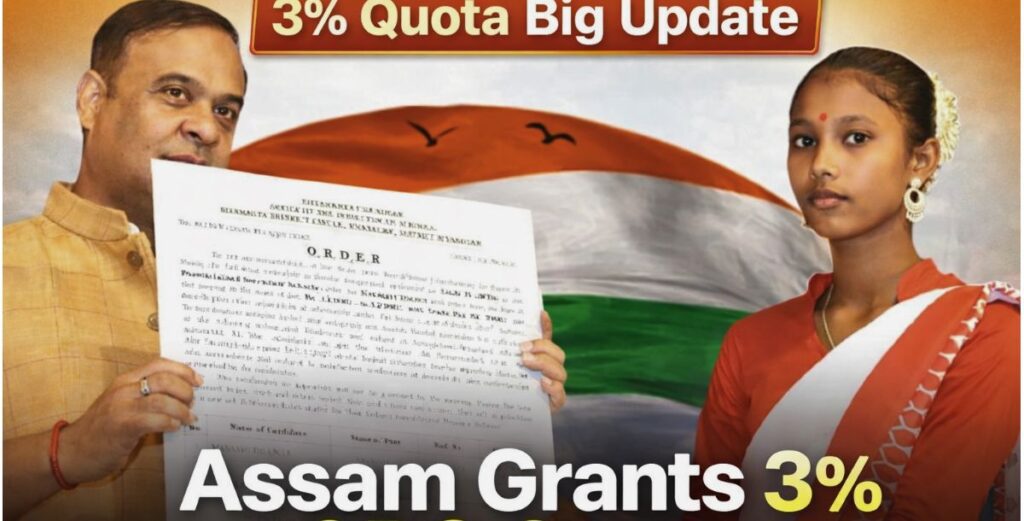
Assam Grants 3% OBC Quota for Tea Tribes In a landmark decision that could reshape opportunities for one of Assam’s most significant yet historically marginalised communities, the Assam Cabinet has approved a 3% reservation for Tea Tribes and Adivasi communities in Grade I and Grade II government jobs. Announced by Chief Minister Himanta Biswa Sarma, this move extends the existing 3% quota previously limited to lower Grade III and IV posts into the higher echelons of state administration, including prestigious services like the Assam Civil Service (ACS) and Assam Police Service (APS).
For the nearly 40 lakh people belonging to Assam’s tea tribes, this is more than a policy announcement. It is a beacon of hope, a recognition of their immense contribution to the state’s economy, and a promise of greater representation in the corridors of power where decisions are made. 
The Human Story Behind the Tea Gardens
Walk through the lush green tea estates of Upper Assam Dibrugarh, Tinsukia, Jorhat, or Sonitpur and you will meet families whose ancestors were brought by the British in the 19th century to build what is today the world’s largest tea-producing region. Assam produces over 50% of India’s tea, and these hardworking communities form the backbone of this iconic industry.
Yet, for generations, their role has largely remained that of pluckers and daily-wage labourers. Educational access has been limited, coaching for competitive exams scarce, and representation in higher government services minimal. Talented young men and women from tea garden areas often clear preliminary rounds of exams but struggle at the interview stage or due to lack of resources.
Take the story of a young aspirant like Priya Munda from a tea estate near Mariani. Her parents work long hours in the fields so she can study under a dim bulb after helping with household chores.“We have always been told to work hard in the gardens,” she says. “Now, for the first time, we feel the government is opening doors to become decision-makers, not just workers.” Stories like Priya’s are common across hundreds of tea gardens, where dreams of becoming an ACS officer or a senior police official once seemed distant.
What the New Quota Actually Means
Grade I posts include top-tier administrative roles district-level officers, department heads, and policy advisors. Grade II covers mid-level supervisory positions that implement schemes on the ground. Earlier, the 3% reservation for tea tribes and Adivasis (within the OBC category) was restricted mainly to clerical and support staff roles (Grade III & IV), offering stability but little influence over policy or governance.
With this extension, qualified candidates from these communities will now compete for a dedicated 3% share in higher services through the Assam Public Service Commission and other recruitment bodies. The quota operates within the existing OBC framework and does not alter the overall reservation structure. It is expected to apply immediately to ongoing advertisements where possible, and fully from the next recruitment cycle. 
Chief Minister Sarma had first announced this intent in October 2025 during the biennial conference of the Assam Tea Tribe Students’ Association (ATTSA) in Jorhat. He emphasised: “If we cannot bring the 40 lakh people of the tea community into the mainstream of society, Assam as a whole will never progress.” The Cabinet’s approval on February 17, 2026, fulfils that promise ahead of the state assembly elections.
Assam’s Future
This decision goes beyond jobs. When people from tea garden backgrounds occupy senior positions, governance gains fresh perspectives. Policies on education in remote areas, healthcare in garden labour lines, skill development, and women’s empowerment can become more grounded and effective. It reduces “policy blind spots” and builds greater trust between the administration and a vital community.
For the youth, it sends a powerful psychological message: your background is no longer a barrier to reaching the top. Increased participation in civil services coaching and competitive exams is already anticipated in Upper Assam districts. Education mentors report rising enthusiasm among students who now see a clearer pathway.
At the same time, success will depend on complementary efforts awareness campaigns, better schooling in tea estates, affordable coaching support, and proper implementation guidelines to prevent misuse. Without these, the quota risks remaining underutilised, as seen in some other affirmative action programmes.
Balancing Aspirations and Merit
Critics may argue that reservations in higher posts could affect administrative efficiency, but proponents highlight that the 3% slice is modest and targeted at communities that have contributed enormously yet remained underrepresented. India’s reservation policy has historically aimed at social justice while maintaining standards through minimum eligibility criteria.
This step also keeps the demand for Scheduled Tribe (ST) status alive at the national level, while providing immediate relief within the OBC framework. It reflects a pragmatic approach: deliver tangible benefits now while pursuing larger constitutional recognition.
A Step Towards Inclusive Assam
Assam’s strength lies in its diversity its tea gardens, its rivers, its vibrant communities. True progress happens when every section feels ownership in the state’s growth story. By opening higher government jobs to tea tribes and Adivasis, the government is investing in human capital and long-term social mobility.
For a young girl plucking tea leaves today, this policy could mean her child one day sits in a district collector’s office shaping policies that improve life in the very gardens she works in. For parents who sacrificed comfort so their children could study, it brings validation and pride.
The real test lies in implementation. Clear guidelines, transparent recruitment, and supportive ecosystem measures will determine whether this becomes a true turning point or just another announcement.
As Assam moves forward, this decision stands as a reminder that development is not only about infrastructure or industry—it is about lifting people, honouring their labour, and ensuring every hardworking hand has a fair shot at shaping the future.
The tea tribes have watered Assam’s economy with their sweat for over 150 years. Now, with doors opening to the highest levels of service, they can help steer the state towards greater equity, prosperity, and unity.
In the words of countless tea garden families: “We don’t want sympathy. We want opportunity.” With this 3% quota in Grade I and II jobs, Assam is finally giving them just that.
FAQs
1.What is the new reservation percentage?
3% under the OBC category for Tea Tribes and Adivasi communities.
2.Which jobs are covered?
Grade I and Grade II government posts.
3.Were these communities already receiving reservation?
Yes, mainly in Grade III and IV positions.
4.When will implementation begin?
Detailed government guidelines are expected soon.
5.Does this grant ST status?
No. The policy operates within the existing OBC framework.
Conclusion
The decision that Assam Grants 3% OBC Quota for Tea Tribes marks a visible shift in the state’s social justice architecture.It opens pathways to leadership, not just employment.But the announcement is only the first chapter.
If supported by transparent recruitment, educational infrastructure, and sustained monitoring, this reform could redefine administrative diversity in Assam. not, it risks becoming a headline without depth.For now, however, one fact stands clear: Assam has expanded the conversation about who gets to lead and that alone makes this moment historic.




Leave a Reply