
By a Political Correspondent | Dibrugarh, Assam | May 2026
On a humid afternoon in Dibrugarh — a city that has long served as the commercial and political heartbeat of Upper Assam — a room filled with party presidents, secretaries, and senior leaders of the Assam Jatiya Parishad (AJP) sat down not to make noise, but to listen. To each other. To local workers. To the districts they represent.
What unfolded in that room was more than a routine party meeting. It was a signal — one that Assam’s political watchers have been tracking with growing interest — that the AJP is quietly and deliberately building something district by district, handshake by handshake, conversation by conversation.
And at a time when political parties across India often chase national headlines, the AJP’s choice to focus on ground-level organizational strength in Upper Assam says something important about where the party believes its future lies.
What Happened in Dibrugarh
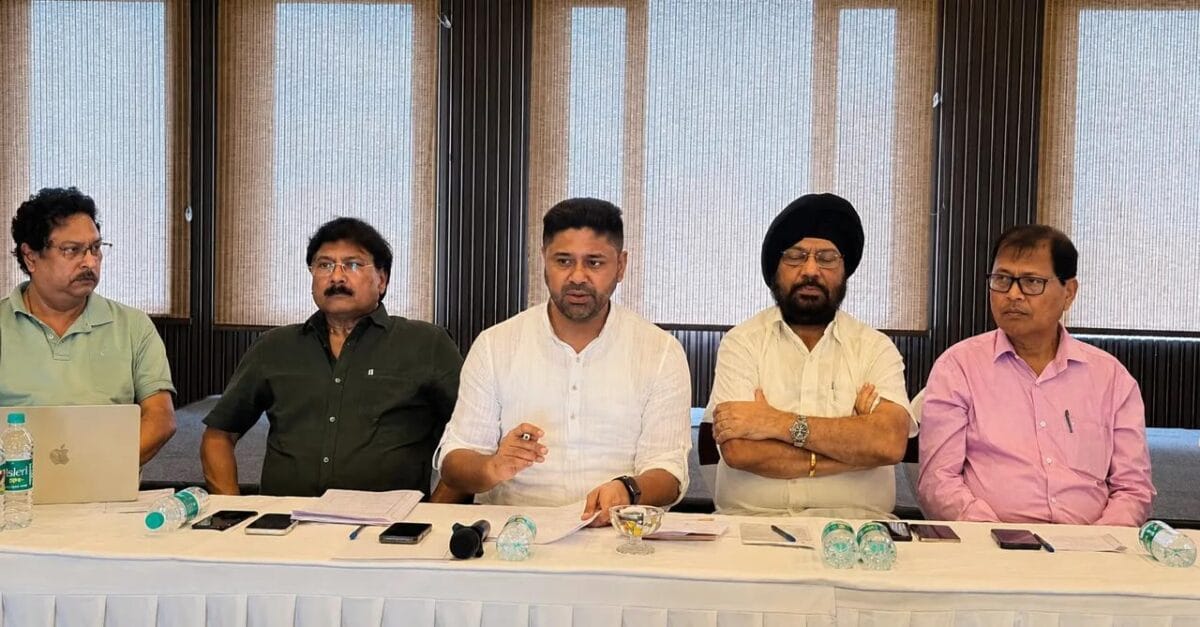
The Assam Jatiya Parishad convened a significant organizational meeting in Dibrugarh, drawing together senior party representatives from six Upper Assam districts: Tinsukia, Dibrugarh, Charaideo, Sivasagar, Jorhat, and Golaghat.
The gathering included district presidents, executive presidents, and secretaries — in other words, the people who actually run things at the ground level. These are not the faces you see on television or the names trending on social media. These are the people who hold booth-level meetings in village community halls, who knock on doors during floods, who show up at local grievance hearings. Their presence at this meeting was deliberate.
Senior AJP leader and Member of the Legislative Assembly (MLA) Lurinjyoti Gogoi — one of the most recognizable faces of the Assam Jatiya Parishad — attended the meeting and addressed party workers directly. His message was focused: the organization needs to be stronger, faster, and more connected across Upper Assam’s diverse terrain and communities.
Lurinjyoti Gogoi’s Message
Lurinjyoti Gogoi has earned a reputation in Assamese politics for being direct. His political identity is closely tied to Assam’s indigenous rights movement, and his presence in AJP reflects a broader commitment to protecting Assamese identity, land rights, and political self-determination.
At the Dibrugarh meeting, Gogoi stressed the urgency of building a more active and responsive organizational network. The core of his message was this: a political party is only as strong as its district units, and district units are only as strong as their connection to the people they serve.
This isn’t just party strategy — it is a philosophy of political engagement that stands in contrast to top-down political models where central leadership dictates messaging and local units simply execute orders. The AJP, under Gogoi’s guidance, appears to be pushing for something more organic: local leaders who understand local problems and have the authority and support to act on them.
Six Districts, One Direction: What the Participation Tells Us
The inclusion of representatives from Tinsukia, Dibrugarh, Charaideo, Sivasagar, Jorhat, and Golaghat was not incidental. These six districts together form a geographic and cultural corridor that runs through the length of Upper Assam — an area rich in Assamese cultural tradition, with significant communities of indigenous peoples, tea garden workers, and riverine communities.
Why Upper Assam matters politically:
Historically, Upper Assam has been central to political movements around land rights, indigenous identity, and the rights of Assamese-speaking communities. The AJP was born from a political tradition that traces its roots to movements like the All Assam Students’ Union (AASU) and the Assam agitation of the 1980s. For a party with that lineage, Upper Assam is not just a vote bank — it is the ideological home ground.
By convening district leaders from across this belt in a single room, the AJP was also sending a message to political rivals: this territory is being organized, not just contested.
What Was Discussed: A Ground-Level Agenda
Party leaders were clear that the meeting was not ceremonial. The agenda was concrete and action-oriented. Discussions covered:
1. Strengthening District and Local Committees The meeting acknowledged that in several districts, local committees have been functioning below their potential. Gaps in leadership at the block and mandal levels were identified as areas requiring urgent attention. Party leaders agreed on a plan to identify and activate capable local organizers.
2. Improving Communication Between Leadership and Workers One recurring theme was the gap between what the party leadership in Guwahati knows and what district workers experience on the ground. Leaders called for regular structured communication — not just during elections, but as an ongoing organizational practice. WhatsApp groups and informal networks were acknowledged, but more formal channels were discussed as well.
3. Expanding Public Outreach Programs The AJP’s outreach strategy will focus on direct community engagement — reaching people where they live, through public awareness campaigns, cultural programs, and participation in local social issues. Leaders emphasized that the party must be visible not just during elections but throughout the year.
4. Promoting the Party’s Vision and Policies District-level leaders committed to more actively communicating the AJP’s core platform to citizens — particularly on issues of land rights, indigenous identity, and Assam’s political autonomy. Several leaders noted that in many villages, residents still have limited awareness of what the AJP specifically stands for beyond general opposition politics.
5. Preparing for Upcoming Political and Social Initiatives The meeting concluded with a forward-looking discussion on planned programs in the coming months. While specific events were not disclosed publicly, party leaders indicated that major public-facing initiatives are being planned that will require coordination across all six districts.
The Grassroots Reality: Why This Matters for Ordinary Assamese Citizens
Political meetings are easy to dismiss as internal party housekeeping. But this one carries real significance for ordinary people across Upper Assam, and here’s why:
The Assam Jatiya Parishad represents a political voice that specifically advocates for the rights and identity of indigenous Assamese communities. For villages in Charaideo where questions of land encroachment remain unresolved, for families in Tinsukia dealing with the aftermath of floods that receive little sustained governmental attention, for tea garden workers in Dibrugarh navigating difficult labor conditions — the existence of an organized and active local political structure that takes their concerns seriously is not a small thing.
When district-level party leaders meet and coordinate, the downstream effect is a party machinery that can respond faster to local issues, mobilize more effectively during crises, and hold elected officials more accountable. A stronger AJP district unit in Jorhat means more organized voices at the district level speaking on behalf of local communities.
That is the human impact buried inside what might appear to be a routine organizational meeting.
Public-Centric Politics: AJP’s Stated Philosophy
Throughout the discussions, a consistent theme emerged that deserves attention: the importance of maintaining close, genuine contact with the public.
In contemporary Indian politics, “public contact” often becomes a media-friendly phrase with little substance. Leaders hold rallies, post videos, and call it engagement. What the AJP leadership described in Dibrugarh was different — a return to the tradition of party workers being embedded in their communities, present at local events, available to constituents, and trusted as community figures rather than seasonal visitors.
This approach — sometimes called “cadre-based politics” — is harder and slower than media-driven politics. It requires sustained investment in human relationships rather than advertising. But it produces a different kind of political loyalty: one built on trust and lived experience, not just messaging.
Upper Assam’s Strategic Weight in Assam’s Political Future
Assam is in a period of political realignment. The dominance of the BJP in the 2021 state elections reshaped the competitive landscape, and regional parties like the AJP are recalibrating their strategies for the next electoral cycle.
Upper Assam is a critical piece of that puzzle. The region’s demographics, cultural character, and historical political consciousness make it both an opportunity and a challenge for any party seeking to build durable support.
The AJP’s investment in organizational depth across Upper Assam — rather than just high-profile public events — reflects a mature strategic calculation: elections are won in the years before polling day, not in the weeks before it.
By strengthening district structures now, the party is laying groundwork that could prove decisive in future state assembly elections and local body elections. The six districts represented in Dibrugarh collectively encompass dozens of assembly constituencies where marginal shifts in organization and voter mobilization can change outcomes.
What Party Leaders Said: Confidence Tempered by Realism
Party officials who attended the Dibrugarh meeting expressed genuine confidence in the direction being set. There was, by multiple accounts, a spirit of seriousness and purpose in the room — not the hollow optimism of a party that doesn’t believe its own talking points, but the focused determination of people who understand the work ahead.
At the same time, leaders were realistic about the challenges. Building strong district committees requires finding capable people willing to invest time without immediate reward. It requires navigating local political rivalries within the party. It requires resources. And it requires sustained attention from senior leadership even after the meeting ends and the cameras (such as they were) turn away.
These challenges are not unique to the AJP. They are the universal challenges of political organization. What matters is whether the commitment made in Dibrugarh translates into action in Tinsukia, Sivasagar, Golaghat, and the hundreds of towns and villages in between.
Conclusion
The Assam Jatiya Parishad’s organizational meeting in Dibrugarh will not make national headlines. It will not trend on social media. The people in that room were not celebrities or controversies.
But politics — real politics, the kind that shapes communities and lives — is built in rooms like that one. It is built by people like the district secretaries from Charaideo and the executive presidents from Jorhat who showed up, sat through a long meeting, and committed to going home and doing the hard work of political organization.
For the Assam Jatiya Parishad, this meeting in Dibrugarh represents a bet: that organized, people-connected, ground-level political work will prove more durable than any shortcut. That in Upper Assam — a region with deep political memory and strong community identity — the party that earns trust at the village level will ultimately be the party that earns votes at the ballot box.
Whether that bet pays off remains to be seen. But the meeting happened. The conversations were had. The commitments were made. And in Assam’s evolving political landscape, that is where futures are shaped.
This article covers political developments in Assam and Upper Assam. For more coverage of regional politics, grassroots movements, and community issues across Northeast India, follow our regional desk.