
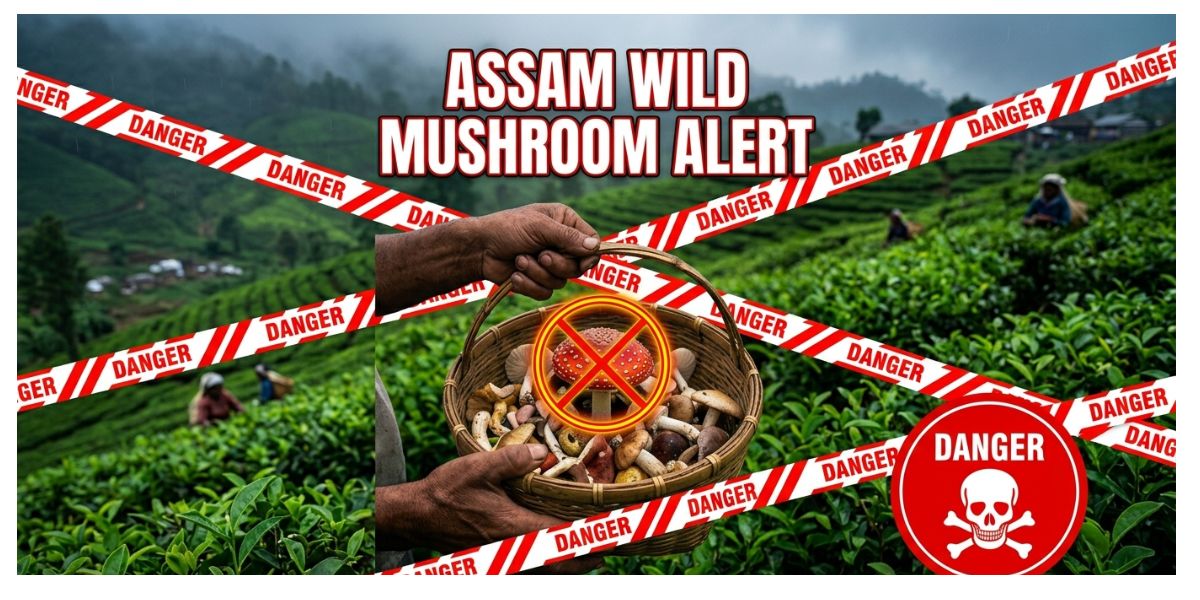
The National Health Mission (NHM), Government of Assam, has issued a strong public advisory: do not eat wild mushrooms. Even a single mistake can lead to severe poisoning, organ failure, or death. This isn’t just another seasonal alert it’s a life-saving message backed by repeated cases across the state, especially during the current post-rainy period when mushrooms sprout rapidly in forests, fields, and tea gardens.
For generations, many Assamese families, especially in rural and tribal areas, have foraged wild mushrooms as a free, traditional source of food. But health experts now warn that the risks have grown dangerously high due to climate shifts, new fungal species, and the impossible task of telling safe from toxic varieties by eye alone.
If you live in Assam or have family here this guide gives you everything you need: official symptoms, debunked myths, exact action steps, and why choosing only cultivated mushrooms is the smartest decision you’ll make this season.
Why Assam’s Wild Mushroom Advisory Matters Right Now (April 2026)
Wild mushrooms thrive after heavy rains in the Brahmaputra Valley, hills, and tea estates. Recent incidents, including multiple hospitalizations in Sadiya and other districts, show how quickly things can turn fatal. NHM Assam’s official document on mushroom poisoning stresses that no home test, colour check, or traditional knowledge can guarantee safety.
Key fact: Toxic mushrooms often grow right next to edible ones. One wrong pick in the basket can poison an entire family meal.
Mushroom Poisoning Symptoms in Assam: Act Within Hours
Symptoms can appear anywhere from 30 minutes to 24 hours after eating. Don’t wait for them to “settle down.”
Early Warning Signs (First Few Hours):
- Severe abdominal pain and cramps
- Repeated vomiting
- Loose motions or diarrhoea (sometimes bloody)
- Headache and dizziness
- Fever and chills
- Extreme weakness and fatigue
Severe Stage (If Untreated):
- Liver and kidney damage
- Jaundice
- Organ failure
- Coma or death
Doctors report that delays beyond 24 hours dramatically reduce survival chances. Certain toxins (like amatoxins found in deadly species common in Northeast India) specifically destroy liver cells and cannot be reversed once advanced.
Emergency Numbers You Must Save:
- 104 – Health advice helpline
- 108 – Ambulance service
Call immediately even if symptoms feel mild. Carry any leftover mushrooms to help doctors identify the toxin faster.
Dangerous Myths That Still Kill People in Assam
The NHM advisory directly calls out these common but false beliefs:
- “Bright colours mean poison; dull ones are safe” → Many deadly mushrooms are plain white or brown.
- “If animals eat it, it’s safe for humans” → Toxins that kill people often don’t affect animals.
- “Cooking, boiling, or drying removes toxins” → Heat-stable poisons survive all kitchen methods.
- “Traditional family knowledge protects us” → Even experienced foragers have been hospitalized.
These myths have caused preventable tragedies for years. The advisory is blunt: stop guessing.
Proven Safety Guidelines: What You Should Do Today
- 1. Completely avoid wild mushrooms from forests, fields, roadsides, or tea gardens.
- 2. Buy only commercially cultivated mushrooms from trusted markets, supermarkets, or licensed vendors. Button mushrooms, oyster mushrooms, and paddy straw mushrooms are widely available and 100% safe.
- 3. Educate your entire family—especially children, elders, and rural relatives.
- 4. Never accept “fresh jungle mushrooms” as gifts or from local vendors.
- 5. Spread the message in WhatsApp groups, village meetings, and schools.
Real Benefit: Following this simple rule eliminates the risk entirely while still letting you enjoy delicious, nutritious mushrooms year-round.
What to Do If Someone Has Eaten Wild Mushrooms
- 1. Stop eating more immediately.
- 2. Do NOT try home remedies, milk, or charcoal.
- 3. Rush to the nearest hospital or dial 108.
- 4. Inform doctors exactly when and what was eaten.
- 5. Quick treatment (within hours) can save lives and prevent permanent organ damage.
Facts & Data
- Mushroom poisoning cases spike every rainy and post-rainy season in Assam and Northeast India.
- Certain species contain toxins that target the liver and kidneys directly.
- Children under 10 and adults over 50 face significantly higher fatality risk.
- Cultivated mushrooms available in markets follow strict safety standards—no such guarantee exists for wild ones.
These aren’t scare tactics. They are the reason NHM Assam keeps repeating the same urgent message every season.
This Advisory Is a Game-Changer for Assam Families
In rural households where foraging was once a survival skill, this warning offers freedom from fear. Safe, affordable cultivated mushrooms are now easily available in local haats and stores. One informed choice protects your loved ones, reduces hospital bills, and prevents heartbreaking losses.
Community leaders, ASHA workers, and teachers are actively spreading the message in local languages. The goal is simple: zero preventable deaths this season.
FAQs
1. Are ALL wild mushrooms in Assam poisonous?
Not every single one, but many are—and telling them apart without lab testing is nearly impossible. The risk far outweighs any benefit.
2. Does proper cooking make wild mushrooms safe?
No. Many deadly toxins remain active even after boiling, frying, or drying.
3. What if I already ate wild mushrooms and feel fine?
Seek medical help anyway. Some toxins have delayed effects that appear later.
4. Which mushrooms sold in markets are safe?
Commercially cultivated varieties (button, oyster, milky) from reliable sources are completely safe.
5. Why is NHM issuing this advisory now?
Post-rainy conditions have triggered massive wild mushroom growth, leading to fresh cases across the state.
6. Can I trust traditional identification methods passed in my family?
Unfortunately, no. Even elders have fallen ill. Official advice is clear: avoid wild ones entirely.
Conclusion
The message from Assam’s health authorities is loud and clear: wild mushrooms are not worth the risk. One plate can change or end—a life forever. The good news? Safe, tasty alternatives are available right now in your local market.Share this guide with your family, neighbours, and community.Talk about it over dinner. Make “only cultivated mushrooms” the new family rule.
Your health, your children’s safety, and your peace of mind are too precious to leave to chance.Stay informed. Stay safe. And remember—when it comes to wild mushrooms in Assam, the only right choice is to say no.