
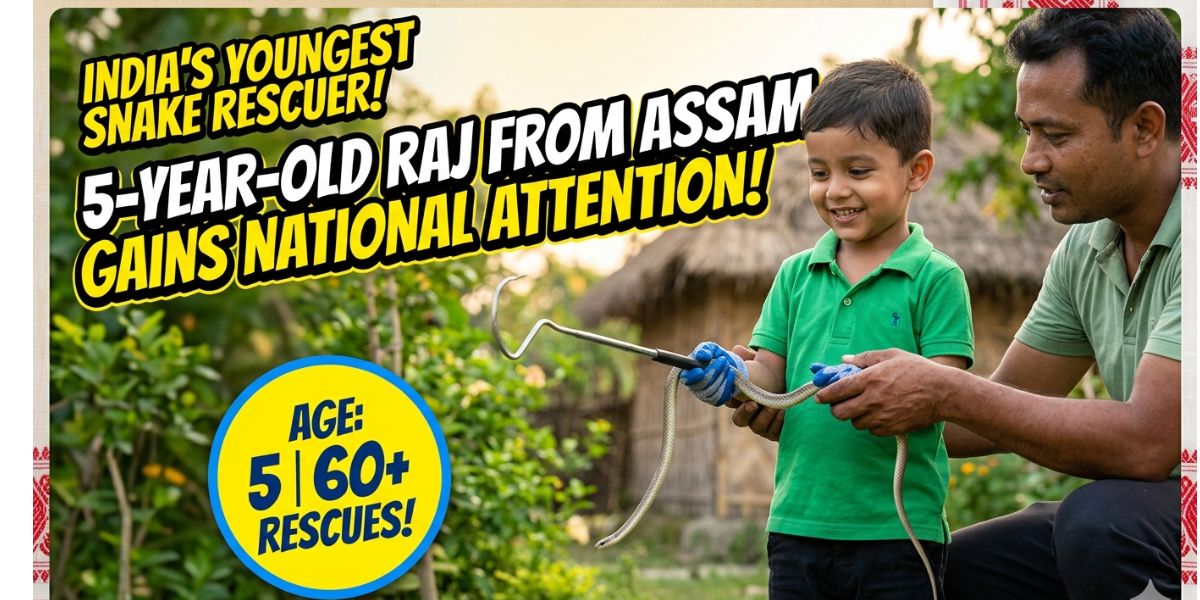
the heart of Assam’s lush Sonitpur district,a five-year-old boy is redefining the boundaries of courage and environmental stewardshipWhile most children his age are navigating the basics of primary school and playground games,Raj Saurabh Borkotoky has captured the national imagination as India’s youngest snake rescuer.
His story, which recently went viral following a public felicitation in Tezpur, is more than just a “viral moment”—it is a profound look at how early education can bridge the gap between human fear and wildlife conservation.
The Genesis of a Young Conservationist: Who is Raj Saurabh Borkotoky?
Raj Saurabh Borkotoky is not your typical kindergarten student. Born into a family where wildlife awareness is a way of life, Raj’s journey began not in a classroom, but in the field.
His father,Sourav Borkotoky, is a renowned wildlife activist and snake expert in Assam.for years, the elder Borkotoky has been the first point of contact for residents of Sonitpur when a slithering visitor enters their homes.Raj grew up watching his father handle some of nature’s most misunderstood creatures with a blend of respect and scientific precision.He doesn’t see them as monsters; he sees them as part of our world that needs help,” locals often remark when watching Raj assist his father during non-venomous rescues.
Turning Point: National Recognition in Tezpur
While Raj was already a known figure in his local village,his fame transcended regional borders during the 60th Luit Par Rongali Bihu Sanmilan in Tezpur.This prestigious cultural event, which celebrates the spirit of Assam, chose to honor Raj for his contribution to wildlife awareness.
The images of a small boy standing confidently on a stage, receiving accolades for a skill that intimidates most adults, struck a chord on social media.From X (formerly Twitter) to Instagram, the “Snake Boy of Assam” became a symbol of a new generation that is far more attuned to ecological balance than those before them.
The Science of Coexistence
Why is a five-year-old rescuing snakes such a significant story for India? To understand this, we must look at the data surrounding human-snake conflict in South Asia.
1. The Snakebite Crisis: India accounts for a significant portion of global snakebite fatalities. Most of these occur because of accidental encounters in rural areas and, unfortunately, a lack of awareness leads people to kill snakes preemptively.
2. Ecological Imbalance: Snakes are nature’s pest control. By hunting rodents, they protect nearly 20% of India’s grain stocks from being destroyed. Killing them leads to a surge in pests and diseases.
3. The Fear Factor: Ophidiophobia (fear of snakes) is one of the most common phobias. Raj’s calm demeanor challenges this deep-seated psychological barrier.
A Lesson in Responsible Stewardship
It is vital to address the “safety” aspect of Raj’s story.Wildlife experts and the Borkotoky family emphasize that Raj is not sent into dangerous situations alone.
- Supervised Learning: Every interaction Raj has with wildlife is strictly monitored by his father.
- Identification Skills: Part of his training involves identifying different species—knowing the difference between a non-venomous Rat Snake and a venomous Cobra is a life-saving skill he is mastering early.
- Ethical Handling: The focus is never on “performing” with the animal, but on safely relocating it from human habitats back into the wild.
- Regional Significance: Assam is a global biodiversity hotspot, making its wildlife stories inherently valuable.
- Education over Sensationalism:”stunt” videos, Raj’s story is rooted in the lineage of expert conservationists.
The Ripple Effect: Inspiring a Greener Future
Raj’s story is a catalyst for conversations in households across India. It prompts parents to ask: Are we teaching our children to fear nature, or to respect it?
In Assam, where the Brahmaputra floods often drive wildlife into human settlements, having a community that understands rescue over retaliation is a matter of survival for both species. Raj Saurabh Borkotoky may be small in stature, but he is standing tall as a pioneer for a future where humans and wildlife don’t just inhabit the same land—they coexist.
(FAQs)
Q1: Is Raj Saurabh Borkotoky professionaly trained?
While not “certified” in a formal sense due to his age, he is receiving hands-on training from his father, a veteran in the field, ensuring he follows traditional and safety-first rescue protocols.
Q2: What should I do if I find a snake in my house?
Never attempt to handle it yourself. Like Raj’s father, you should contact local forest department officials or a certified snake rescuer in your area.
Q3: Are all snakes in Assam venomous?
No. A large majority of snakes found in residential areas, like the Common Rat Snake, are non-venomous and harmless if left alone.
Q4: How can I support wildlife conservation like Raj?
Education is the first step. Learning about your local ecosystem and supporting organizations that focus on “Rescue and Release” rather than “Capture and Exhibit” makes a world of difference.
Conclusion
As Raj continues his journey, his story serves as a gentle reminder: Environment conservation doesn’t require a degree; it requires a change in heart. By replacing the stick with a rescue hook and fear with fascination, this five-year-old from Assam is teaching India that the most dangerous thing in nature isn’t a snake—it’s ignorance.