
Writer by Sanjoy gorh
Finding the best indoor plants for dark apartments can be challenging when your home has small windows, shaded rooms, or very little natural sunlight. The good news is that some houseplants can tolerate low-light conditions much better than others.
However, “low light” does not usually mean complete darkness. Plants still need some light to stay healthy. A room with indirect daylight is very different from a room with no natural light at all.If you’re looking for plants that can survive in a bedroom, hallway, office, bathroom, or apartment with limited sunlight, these low-light options are among the easiest to consider.
What Are the Best Indoor Plants for Dark Apartments?
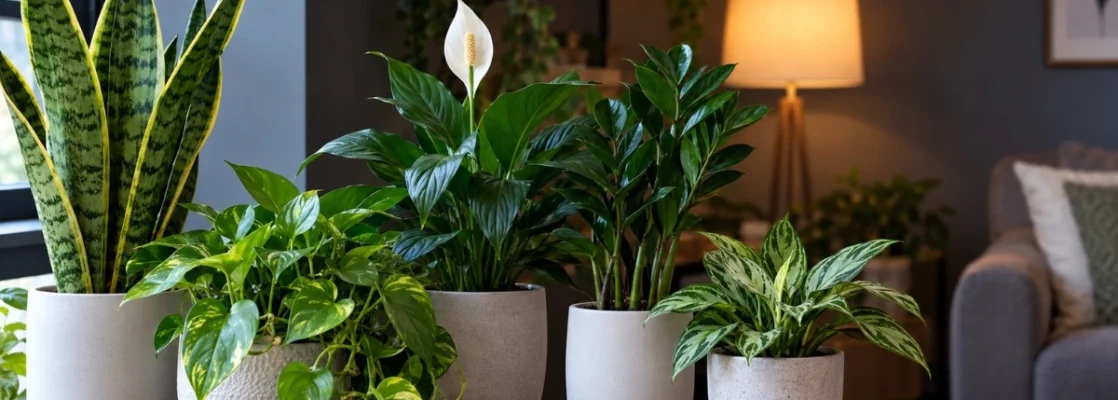
Some of the best choices include snake plant, ZZ plant, pothos, cast iron plant, heartleaf philodendron, Chinese evergreen, peace lily, and parlor palm.For beginners, the snake plant and ZZ plant are particularly useful because they tolerate low light and generally don’t require frequent watering.
room receives almost no daylight, however, even low-light plants may eventually struggle. In that situation, a small grow light can make a major difference.
1. Snake Plant
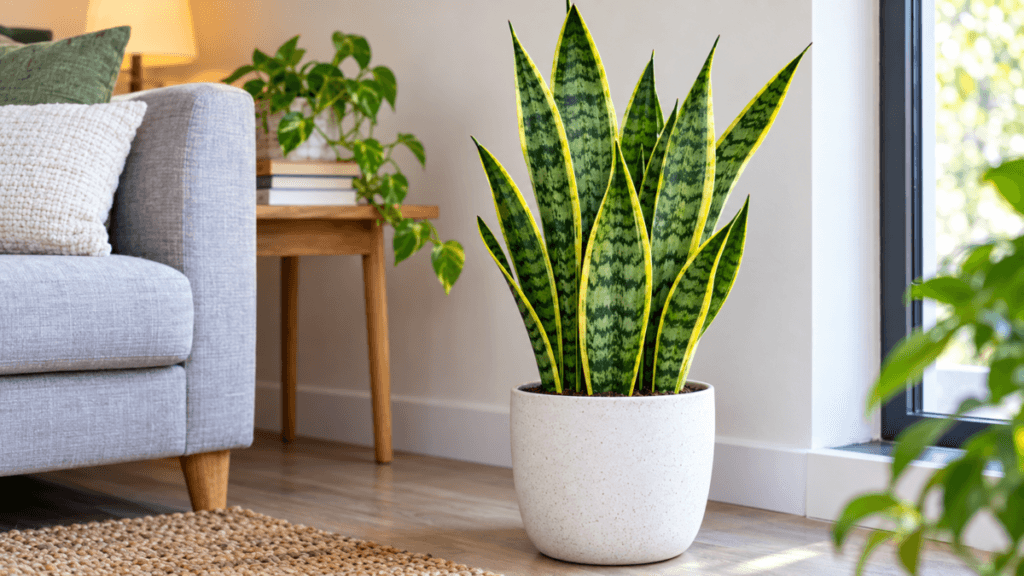
The snake plant is one of the most popular choices for apartments with limited natural light.Its upright leaves take up very little floor space, making it suitable for bedrooms, corners, hallways, and small apartments. It can tolerate low-light conditions and doesn’t need frequent watering.
One of the biggest mistakes beginners make is watering it too often. Allow the potting mix to dry substantially between waterings and make sure the container drains properly.Best for: Beginners, bedrooms, offices and small spaces.
2. ZZ Plant
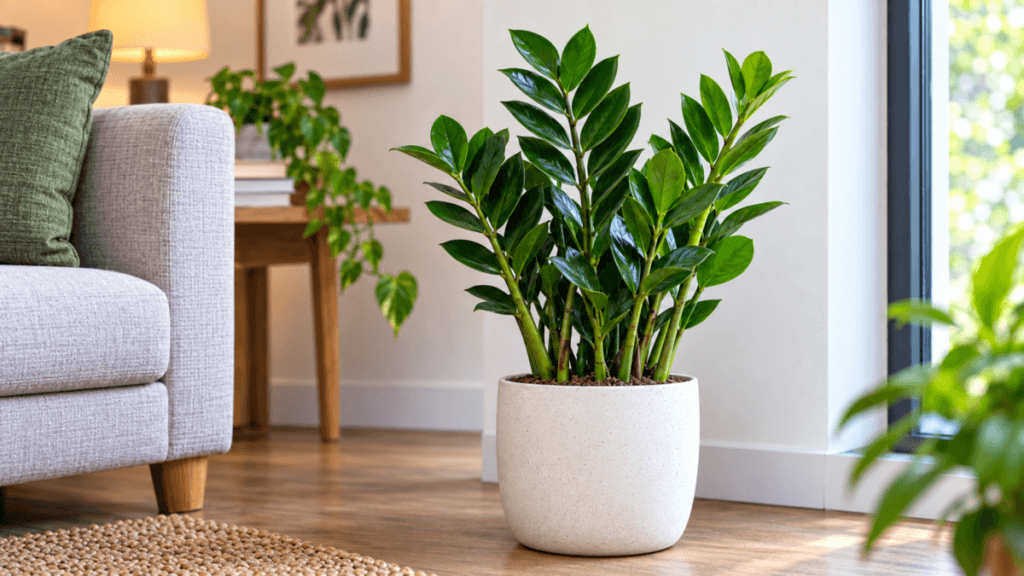
The ZZ plant is another excellent option when you need a low-maintenance houseplant.It can tolerate relatively low light and periods of dryness because its thick underground rhizomes store water. This makes it particularly useful for people who sometimes forget to water their plants.
Keep it away from constantly wet soil. Overwatering can cause root problems.Best for: Darker rooms, offices and people who want an easy-care plant.
3. Pothos
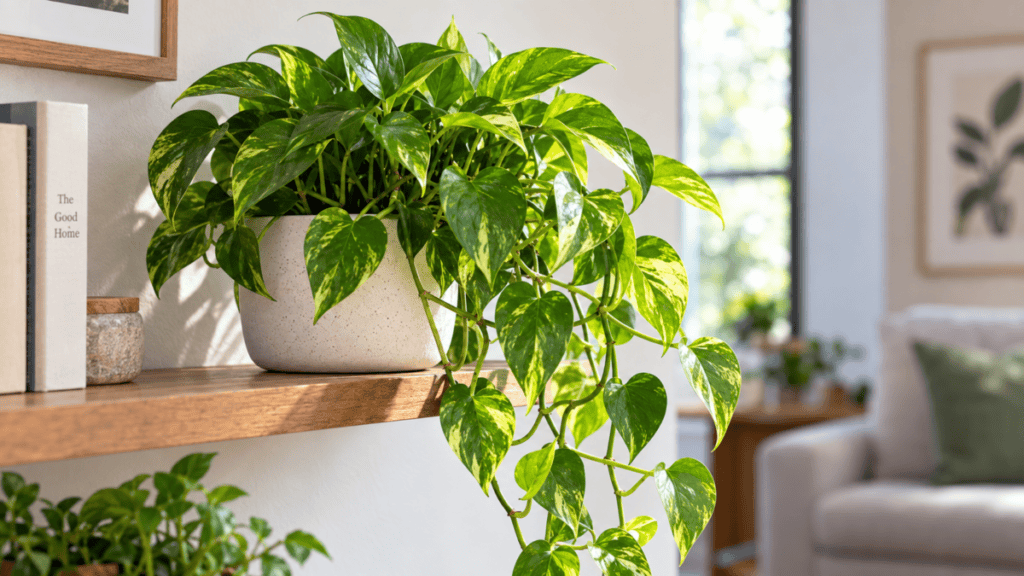
Pothos is a versatile trailing plant that can adapt to a range of indoor lighting conditions.It looks especially attractive when placed on a shelf or allowed to trail from a hanging planter. While pothos can tolerate low light, brighter indirect light can help maintain stronger growth and more attractive variegation in certain varieties.
Water when the upper portion of the potting mix has dried rather than following a rigid daily schedule.Best for: Shelves, hanging baskets and apartments.
4. Cast Iron Plant
As its name suggests, the cast iron plant is known for being tough.It can tolerate lower-light environments better than many decorative houseplants and is relatively forgiving when indoor conditions aren’t perfect.
Its broad green leaves can add a natural look to darker corners without requiring intense sunlight.Best for: Low-light corners and beginners.
5. Heartleaf Philodendron
Heartleaf philodendron is a popular trailing houseplant with attractive heart-shaped leaves.It can grow in moderate to low indirect light and works well on bookshelves, desks, or hanging planters.
Avoid placing it in a completely dark location. If the plant receives too little light for an extended period, growth can become weak and sparse.Best for: Shelves, desks and hanging planters.
6. Chinese Evergreen
Chinese evergreen, commonly called aglaonema, is another houseplant worth considering for low-light interiors.Different varieties have different leaf colors and patterns. Darker green varieties are generally a safer choice for lower-light locations than highly variegated types.
Keep the soil from remaining constantly soggy and provide a container with drainage.Best for: Bedrooms, living rooms and offices.
7. Peace Lily
Peace lilies are attractive indoor plants with dark green foliage and distinctive white flowers.They can tolerate lower light, although flowering is generally better when the plant receives adequate indirect light.
One useful feature is that a peace lily may visibly droop when it needs water. However, don’t allow it to remain severely wilted repeatedly.Best for: Rooms with indirect light and people who like flowering houseplants.
8. Parlor Palm
If you want to give a dark apartment a softer, tropical appearance, consider a parlor palm.It can adapt to indoor conditions and prefers bright to moderate indirect light but can tolerate lower-light environments better than many other palms.
Keep it away from harsh direct sunlight, which can damage the foliage.Best for: Living rooms, bedrooms and decorative corners.
9. Dracaena
Several dracaena varieties can work well in indoor environments with indirect or relatively low light.They offer a vertical shape that can fill an empty corner without taking up too much floor space.
Allow the soil to dry somewhat between waterings and avoid keeping the roots continuously wet.Best for: Empty corners and modern apartments.
10. Lucky Bamboo
Lucky bamboo is commonly grown indoors and can tolerate lower-light conditions.Despite its name, it isn’t actually bamboo; it is a species of Dracaena.
It can be grown in water or soil, depending on the setup. If grown in water, keep the water clean and monitor the plant’s condition.
Best for: Desks, shelves and small apartments.
11. Prayer Plant
Prayer plants are known for their attractive patterned leaves.They prefer indirect light and higher humidity and can tolerate moderate indoor lighting conditions. They are generally more demanding than snake plants or ZZ plants, so they may not be the first choice for someone looking for the easiest possible plant.
Best for: Bathrooms and humid indoor spaces with indirect light.
12. Boston Fern
Boston ferns can add a lush appearance to an apartment, but they are not as tolerant of neglect as snake plants or ZZ plants.They prefer indirect light and consistent moisture. Dry indoor air can also make them more difficult to maintain.
If your dark apartment has a humid bathroom with suitable indirect daylight, a fern can be worth considering.
Best for: Humid rooms with indirect light.
13. Spider Plant
Spider plants are adaptable houseplants that can grow successfully indoors under suitable indirect lighting.
They are particularly attractive in hanging baskets because mature plants can produce long stems with small plantlets.Avoid placing them in intense direct sunlight for long periods.Best for: Hanging baskets, bedrooms and offices.
14. Rubber Plant
Rubber plants are popular for their large, glossy leaves.They generally prefer bright indirect light, but they can sometimes adapt to somewhat lower-light indoor environments. Growth may be slower when light levels are low.
If you have a room that is dim but still receives some daylight, a rubber plant may work better than in a completely dark room.Best for: Living rooms with some indirect daylight.
15. English Ivy
English ivy can be grown indoors in suitable conditions and is especially attractive as a trailing plant.It generally performs better with bright indirect light and good airflow, so it isn’t the strongest choice for extremely dark rooms.
Consider it when your apartment has limited but usable natural light.Best for: Hanging baskets and bright low-light areas.
Can Indoor Plants Survive Without Direct Sunlight?
Yes. Many indoor plants can grow without direct sunlight because they can use indirect daylight.This distinction is important.A room doesn’t necessarily need a beam of sunlight hitting the leaves. Bright or moderate indirect daylight can be enough for many houseplants.
However, a room with absolutely no natural light is different.If you cannot comfortably see during the daytime without turning on an artificial light, the space may be too dark for long-term plant growth.
What Plants Thrive in Dark Rooms?
For genuinely low-light rooms, start with plants known for their tolerance rather than plants that require strong sunlight.
Good options include:
- Snake plant
- ZZ plant
- Cast iron plant
- Pothos
- Chinese evergreen
- Heartleaf philodendron
Remember that “low-light tolerant” doesn’t mean “no-light tolerant.”Plants need light for photosynthesis.
Can You Keep Plants in a Room With No Windows?
You can keep plants in a room with no windows, but you’ll generally need an artificial light source if you want them to remain healthy for the long term.A simple indoor grow light can provide the additional light needed for photosynthesis.
Instead of leaving a grow light on continuously, follow the manufacturer’s guidance and observe how the plant responds.
How to Care for Indoor Plants in Dark Apartments
Low-light plants have one major advantage: they often use water more slowly than plants growing in brighter conditions.That means you should be careful about watering.
Check the soil first
Don’t water automatically every few days.Insert your finger into the potting mix or use another appropriate method to check moisture. Water according to the plant’s needs and the condition of the soil.
Use drainage holes
A decorative pot without drainage can trap excess water around the roots.
Whenever possible, use a container with adequate drainage.
Rotate the plant
If one side of the plant receives more light, rotate the pot occasionally so growth remains more balanced.
Watch for warning signs
Yellowing leaves, weak growth, leaf drop, or unusually long gaps between leaves can indicate that the plant isn’t receiving suitable conditions.
Don’t immediately assume that every problem is caused by a lack of water.
Which Plant Is Best for a Dark Room?
If you want the simplest answer, snake plant or ZZ plant is a strong starting point.A snake plant is particularly useful when you want an upright plant that takes up little space. A ZZ plant is another excellent choice for people who want a low-maintenance option.
For a trailing appearance, choose pothos or heartleaf philodendron.For a fuller leafy appearance, consider Chinese evergreen or cast iron plant.
Best Low-Light Plants at a Glance
| Plant | Low-Light Tolerance | Maintenance | Best Use |
| Snake Plant | High | Low | Bedrooms |
| ZZ Plant | High | Low | Offices |
| Pothos | High | Low | Shelves |
| Cast Iron Plant | High | Low | Dark corners |
| Chinese Evergreen | High | Low–Medium | Living rooms |
| Heartleaf Philodendron | Medium–High | Low–Medium | Hanging planters |
| Peace Lily | Medium | Medium | Indoor décor |
| Parlor Palm | Medium | Medium | Living rooms |
| Spider Plant | Medium | Low–Medium | Hanging baskets |
| Boston Fern | Medium | High | Humid rooms |
Do Indoor Plants Really Remove “Negative Energy”?
Some people choose houseplants because they believe plants can improve the atmosphere or remove negative energy.There isn’t a scientific basis for claiming that a particular houseplant literally removes supernatural or negative energy.
However, plants can make indoor spaces feel more natural and visually pleasant, and caring for plants can be an enjoyable hobby.Choose a plant primarily according to its lighting, watering, temperature, and space requirements
Final Takeaway
Choosing the best indoor plants for dark apartments is less about finding a plant that can live in complete darkness and more about finding one that can tolerate the amount of light your home actually provides.For the easiest starting point, consider a snake plant or ZZ plant. If you want a trailing plant, pothos and heartleaf philodendron are useful options. For a fuller appearance, Chinese evergreen and cast iron plant are worth considering.
Most importantly, don’t overwater plants simply because the room is dark. Low-light conditions often mean slower growth and slower water use. Give your plant suitable drainage, observe its leaves and soil, and add a grow light when natural light is insufficient.
The best indoor plant is ultimately the one that matches your apartment’s light level, humidity, available space, and your ability to care for it consistently.