
Writer by finbuzzindia 16.04.2026 Time 3.15 PM Published
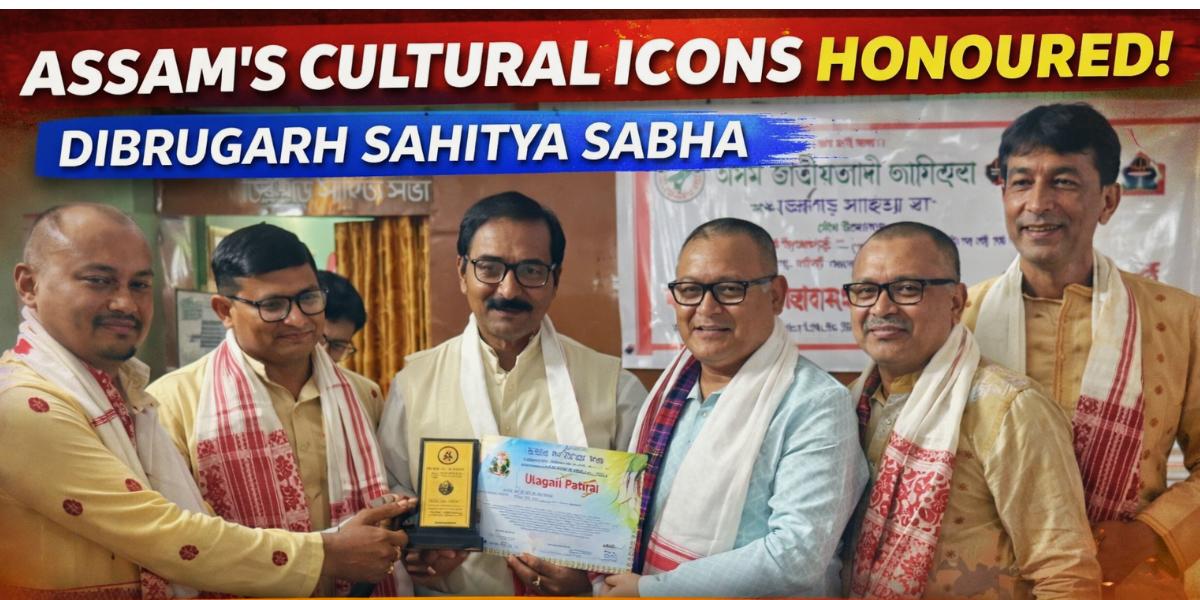
the culturally vibrant city of Dibrugarh,often called the gateway to upper Assam,the air filled with pride and nostalgia as the Dibrugarh Sahitya Sabha came together to observe Asom Sahitya Sabha Day.The event,held just yesterday, transformed into a warm celebration of Assam’s rich literary heritage, community service, and enduring cultural identity.
Far from being a routine gathering, this programme radiated genuine emotion. Attendees witnessed the public honouring of individuals who have quietly shaped the region’s literary, educational, and social fabric for decades.In a world increasingly driven by digital trends and global influences, such local initiatives remind us why preserving Assamese language, literature, and traditions remains vital.
The Significance of Asom Sahitya Sabha Day
Asom Sahitya Sabha, founded on December 26,1917,in Sivasagar by visionaries like Padmanath Gohain Baruah, stands as one of India’s oldest and most respected literary organisations. Its primary mission has always been to promote the Assamese language, foster creative writing,and safeguard the cultural essence of Assam. Over more than a century,the Sabha has organised annual sessions, published works, and championed writers who captured the soul of the land from its lush tea gardens and mighty Brahmaputra to its folk tales and freedom struggles.
Asom Sahitya Sabha Day serves as an annual reminder of this legacy.Local units like the Dibrugarh Sahitya Sabha align their celebrations with the broader state-level observance, ensuring that recognition reaches grassroots contributors rather than remaining confined to big-city limelight. This year’s event in Dibrugarh beautifully embodied that spirit simple, sincere, and deeply rooted in community values.
A Ceremony Steeped in Respect and Tradition
The programme unfolded with cultural warmth typical of Assamese gatherings.Respected local figures, community elders, and enthusiasts filled the venue. Among the notable attendees was Hemchandra Sonowal, a retired Head Constable from the Railway Protection Force (RPF),whose presence added a touch of cross-generational respect.
The highlight was the formal presentation of ‘Ulgani Patra’elegant Letters of Appreciation signed by the President and Secretary of the central Asom Sahitya Sabha.These honours carried official weight while feeling intensely personal,celebrating not celebrity but consistent,meaningful contributions.
The Honoured Icons: Lives Dedicated to Assam
The Dibrugarh Sahitya Sabha chose five remarkable individuals whose work spans literature, education,social service, and cultural activism:
- Mahananda Gogoi,a renowned lyricist whose words have enriched countless Assamese songs.His poetic expressions often capture the emotions of everyday life in Assam love, nature, and seasonal rhythms making him a favourite among music lovers across the state.
- Jogen Kumar Dutta, a dedicated social worker and retired government officer. Through his career and post retirement efforts,he has touched many lives by addressing community needs and fostering social harmony.
- Kripal Phukan,a passionate cultural activist who has worked tirelessly to keep traditional Assamese arts and practices alive in local communities.
- Dr.Khanindra Misra Bhagawati,former Principal of DHSK Commerce College, Dibrugarh. As an educator and administrator,he shaped generations of students and contributed significantly to academic excellence in the region.
- Biren Baruah,former Vice Principal of Dibru College.His long association with higher education and literary activities has left a lasting imprint on Dibrugarh’s academic and cultural scene.
Each recipient represents a different facet of Assamese society. Together, they illustrate how literature, education, and social commitment interconnect to strengthen community bonds. Many attendees shared personal anecdotes how Mahananda Gogoi’s lyrics moved them during Bihu celebrations, or how Dr.Bhagawati’s guidance helped students navigate challenging times.
What made the occasion memorable was its blend of formality and heartfelt emotion.The ceremony included traditional cultural performances that evoked Assam’s heritage perhaps soulful Bihu rhythms, recitations of classic Assamese poetry,or folk songs that resonated with the audience.The atmosphere felt intimate, like an extended family reunion where achievements are celebrated collectively.
As someone familiar with Assam’s literary scene (and having witnessed similar events in nearby areas), I find these moments profoundly inspiring.They cut through the noise of modern life and reconnect people with their roots. One could sense the quiet pride on the faces of the honourees and their families. For younger attendees, it served as a living lesson: real impact often comes from consistent,unglamorous work rather than fleeting fame.
No disruptions or controversies marred the event. Instead,it concluded on a high note of unity,with participants discussing ways to involve more youth in literary activities.
In an era dominated by short form digital content and dominant global languages, regional languages like Assamese face real challenges in retaining younger audiences.Events like this counter that trend by publicly valuing contributors who have kept the language vibrant through songs, teaching, activism,and writing.
These honours do more than reward the past; they inspire the future.When young people see respected elders being celebrated for their literary or social work, it plants seeds of cultural confidence.It shows that preserving heritage and pursuing progress are not opposites they complement each other.
Moreover,in a diverse state like Assam, such inclusive recognitions strengthen social fabric.By honouring individuals from different walks of life lyricists, educators, social workers, and activists the Sabha reinforces the message that every contribution to Assamese identity counts.
The Dibrugarh Sahitya Sabha plays a crucial bridging role here.While the central Asom Sahitya Sabha provides vision and structure, local branches ensure the movement remains grounded and accessible. This decentralised approach has helped the organisation stay relevant for over 108 years.
Carrying the Legacy Forward
The Dibrugarh event was a small but significant chapter in Assam’s ongoing cultural story.It reminded everyone that literature is not just about books on shelves it lives in songs sung at festivals,lessons taught in classrooms, and quiet acts of community service.
As Assam navigates rapid modernisation, tea industry shifts, and digital transformations, initiatives that celebrate “real heroes” become even more essential. hey ensure that while the state embraces the future, it does so with its cultural roots firmly intact.
For residents of Dibrugarh and beyond, this celebration was a source of joy and motivation. It encourages each of us whether writer,teacher, student, or ordinary citizen to contribute in our own way to the rich tapestry of Assamese life.
In the words of many who attended: these are not just awards; they are affirmations that Assam’s language, literature, and people continue to thrive.
FAQs
1. What is Asom Sahitya Sabha Day?
It is an annual observance dedicated to celebrating the founding ideals of the Asom Sahitya Sabha and promoting Assamese literary heritage.
2. What does ‘Ulgani Patra’ mean?
It is a formal Letter of Appreciation awarded to honour outstanding contributions in literature, culture, education, and society.
3. Who organises these events locally?
Local units like the Dibrugarh Sahitya Sabha organise programmes in coordination with the state-level Asom Sahitya Sabha.
4. Why are grassroots honours important?
They recognise unsung contributors, motivate younger generations, and help preserve regional identity amid global influences.
5. Is this event held every year?
Yes, Asom Sahitya Sabha Day is observed annually across Assam, with local variations adding unique community flavour.
Conclusion
The Dibrugarh Sahitya Sabha’s celebration of Asom Sahitya Sabha Day was far more than a formal ceremony it was a heartfelt reaffirmation of Assam’s living cultural heritage. In a quiet yet powerful gathering,the Sabha honoured five dedicated souls lyricist Mahananda Gogoi,social worker Jogen Kumar Dutta,cultural activist Kripal Phukan, educationist Dr.Khanindra Misra Bhagawati,and Biren Baruah with the prestigious Ulgani Patra.These Letters of Appreciation, signed by the President and Secretary of the central Asom Sahitya Sabha, recognised years of silent, sincere service to Assamese literature,education, and society.
Sources of Reference
This article is based on the following primary and secondary sources:
• AIR News Guwahati (Official report on the event) “Along with the rest of the state, Dibrugarh Sahitya Sabha celebrated Asam Sahitya Sabha Day.” Posted on Instagram (@airnews_guwahati) and X (@airnews_ghy), April 2026. Direct coverage detailing the Ulgani Patra honours awarded to Mahananda Gogoi, Jogen Kumar Dutta, Kripal Phukan, Dr. Khanindra Misra Bhagawati, and others.
• Asom Sahitya Sabha Official Communications Certificates and Ulgani Patra signed by the President and Secretary of the central Asom Sahitya Sabha, presented during the Dibrugarh programme.