EPFO Member Portal 2026: New Rules Every PF Member Must Know
Published: July 3, 2026 | Finance Desk
Nearly eight crore EPF members woke up this week to the biggest change in their provident fund in over seventy years. The EPF Scheme 1952 is gone. In its place stands the EPF Scheme 2026, and it changes how much you contribute, how much you can withdraw, and how you use the EPFO member portal.
If you have ever struggled to access your PF money during an emergency, this update directly affects you.
Key Highlights
- EPF Scheme 2026 replaces the 1952 scheme, effective June 29, 2026
- Members can now withdraw up to 100% of their PF balance
- A mandatory 25% minimum balance must stay in the account
- PF contribution is compulsory only up to ₹1,800 a month (on ₹15,000 wage ceiling)
- 13 old withdrawal categories are now merged into just 3
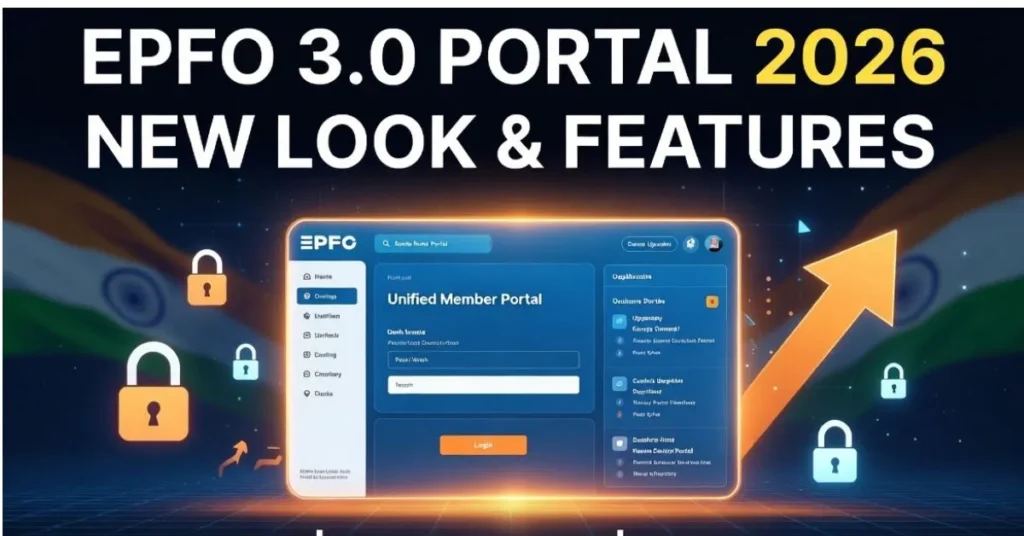
- EPFO member portal services resumed July 3 after a five-day system upgrade
- Passbook section still temporarily unavailable during the EPFO 3.0 migration
What We Know So Far
The Portal Is Back, But Not Fully
The EPFO member portal went offline for scheduled maintenance in late June. The organisation had promised a return by June 29, but the upgrade took longer than expected.
Full access to UAN services, profile updates, and employer functions returned on July 3. However, the passbook feature is still marked unavailable while backend upgrades continue.
Withdrawals Get Simpler
The earlier system had 13 separate withdrawal categories, each with its own paperwork and rules. This often confused members and caused claim rejections.
Under the new scheme, all reasons fall under three heads: Essential Needs, Housing, and Special Circumstances. Education withdrawals are now allowed up to ten times, and marriage-related withdrawals up to five times.
Your Salary Slip May Not Change Automatically
A common question this week has been whether take-home pay will rise. The answer is: not automatically.
The 12% PF contribution is compulsory only on the first ₹15,000 of basic salary, which comes to ₹1,800. Employers may continue deducting more as a voluntary contribution unless an employee formally requests otherwise.
A New Digital Backbone: EPFO 3.0
Alongside the scheme change, EPFO is rolling out EPFO 3.0, a cloud-based platform meant to speed up claim processing for over 30 crore members.
New features include Passbook Lite for quick balance checks, face authentication through the UMANG app, and faster automated claim settlements for smaller withdrawal amounts.
Why This Matters Now
This is not a minor policy tweak. It touches take-home salary, retirement planning, and how quickly people can access their own savings during emergencies.
For salaried employees, understanding the ₹1,800 cap could mean a real conversation with HR about payroll structuring. For anyone who has faced delays withdrawing PF during a medical or family emergency, the simplified categories and higher withdrawal limits are a direct, practical relief.
The timing also matters. With the portal only just back online, millions of members are logging in this week to check what has changed in their own accounts.
Frequently Asked Questions
What is the EPF Scheme 2026?
It is the new legal framework for provident fund rules in India, replacing the 1952 scheme, and it took effect on June 29, 2026.
Can I withdraw my entire PF balance now?
You can withdraw up to 100%, but you must keep at least 25% of your total corpus in the account at all times.
Is the ₹1,800 PF cap compulsory for everyone?
The mandatory contribution applies only up to the ₹15,000 wage ceiling. Anything beyond that is voluntary and depends on your employer’s payroll policy.
Why can’t I see my EPF passbook right now?
The passbook section is still under a system upgrade tied to the EPFO 3.0 migration. Other portal services have already resumed.
What is Passbook Lite?
It is a simplified balance-check feature built directly into the member portal, so you don’t need a separate passbook login for a quick summary.
Conclusion
The EPF Scheme 2026 marks the biggest overhaul of India’s provident fund system in decades. The core promise of EPF remains the same, but how you contribute, withdraw, and check your account has changed for good.
If you haven’t logged into the EPFO member portal this week, it’s worth checking your account status, contribution rate, and nomination details under the new rules.

Sanjoy Gorh – Founder & Editor, FinBuzz India
Sanjoy Gorh is the founder and editor of FinBuzz India (finbuzzindia.com), an independent digital news platform delivering accurate, clear, and timely news to readers across Assam, Northeast India, and beyond.
Driven by a deep passion for digital journalism, Sanjoy launched FinBuzz India with a clear mission: to give grassroots stories the attention they deserve and bring local voices to a national stage. Hailing from Assam, he brings hands-on, on-ground experience in news reporting, content creation, and digital media management.
His editorial focus spans Assam local news, Northeast India developments, government schemes and exam updates, finance, technology and AI, business and startups, sports, and national affairs — always with an emphasis on making important topics simple, relevant, and accessible to everyday readers.
At the heart of his work lies an unwavering commitment to factual, unbiased reporting. Sanjoy believes journalism’s greatest responsibility is building reader trust, and every story published on FinBuzz India reflects that belief.
With a vision to grow FinBuzz India into the most trusted digital news voice of Northeast India, Sanjoy continues to raise the bar, one story at a time.
Connect with Sanjoy: [Twitter/Xhttps://x.com/amolgorh84648?s=11 ] | [https://www.linkedin.com/in/finbuzz-india-6b0a00307?utm_source=share_via&utm_content=profile&utm_medium=member_ios]