

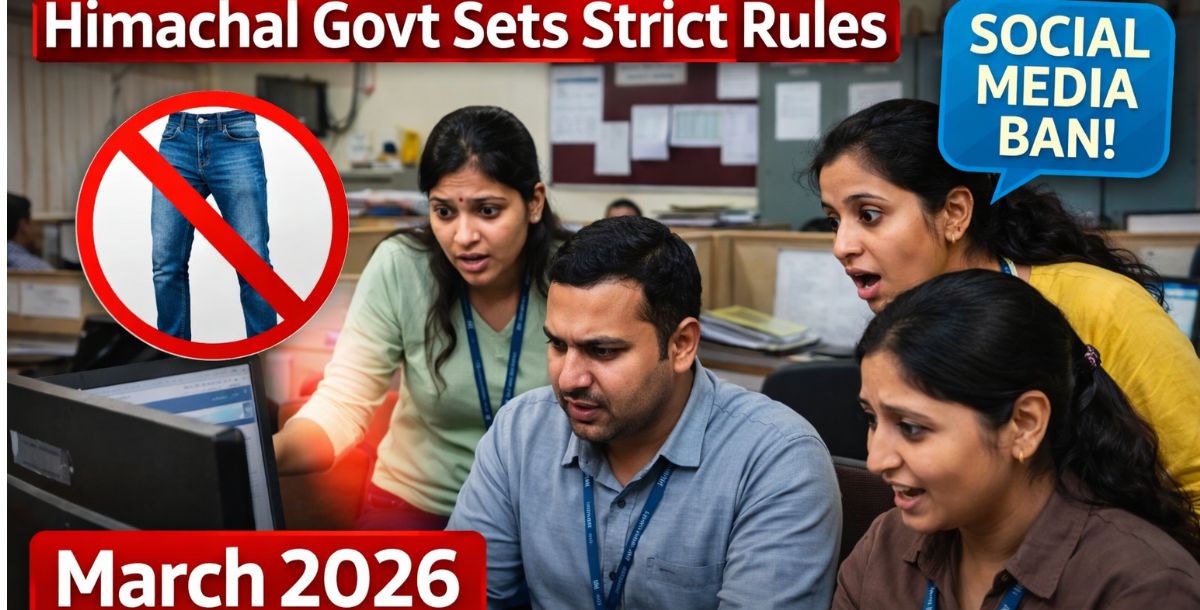
The Himachal Govt bans casual wear order has quickly become one of the most talked-about administrative decisions this week and for good reason. Issued on March 16, 2026, the circular doesn’t just change how government employees dress; it reshapes how they behave both inside offices and online.
At a time when public trust in institutions is under constant scrutiny, the Himachal Govt bans casual wear move signals a broader push toward discipline, neutrality, and accountability in public service.
Why the Himachal Govt Bans Casual Wear Order
Across India, expectations from government employees are rising. Citizens want efficiency, professionalism, and transparency.
The Himachal Govt bans casual wear directive comes amid this shift, aiming to standardize conduct and improve the public image of government offices. Officials believe that even small changes—like dress and online behavior can significantly impact public perception.
Inside the New Dress Code Rules
Under the new policy, the Himachal Govt bans casual wear in all government offices, leaving no room for ambiguity.Employees are now required to follow strict formal dress guidelines:
- Men must wear shirts and trousers
- Women are advised to wear sarees, suits, or formal/traditional attire
- Jeans, T-shirts, and casual outfits are strictly prohibited
The circular also stresses grooming and hygiene, reinforcing that how employees present themselves reflects the seriousness of their roles.For many offices, this marks a visible cultural shift from relaxed workplace norms to a more structured environment.
The Himachal Govt bans casual wear order goes beyond physical appearance it extends into the digital lives of employees.New restrictions include
- No public comments on government policies
- No sharing of political or religious opinions
- No posting official information without prior approval
Employees can still express personal views, but only if they clearly state that those opinions are their own.This reflects growing concerns over how social media can influence public opinion and potentially create conflicts of interest.
Focus on Neutrality and Discipline
Officials say the Himachal Govt bans casual wear decision is rooted in maintaining neutrality.In an era where a single social media post can go viral within minutes, governments are increasingly cautious. By limiting public expression, authorities aim to prevent controversies and ensure that employees remain unbiased representatives of the state.
This is especially important in administrative roles where perception often shapes trust.
Government Employees
For employees, the Himachal Govt bans casual wear directive introduces immediate changes to daily work life.
- Wardrobes need to shift toward formal attire
- Online activity will require more caution
- Professional boundaries are now more clearly defined
While some employees may see this as restrictive, others view it as a necessary step toward improving workplace discipline.
The Himachal Govt bans casual wear move is not happening in isolation.Across India, multiple state governments and institutions are tightening workplace norms. From stricter attendance rules to digital conduct policies, there is a clear trend toward formalizing public service behavior.
Experts note that social media has blurred personal and professional boundaries, forcing administrations to update old rulebooks for a new era.
Public Reaction: Support and Concern
The response to the Himachal Govt bans casual wear order has been mixed.
Some citizens support the move, arguing that government offices should reflect professionalism and discipline. They believe formal attire can improve public confidence.Others, however, raise concerns about personal freedom—especially regarding restrictions on social media expression.
Despite the debate, officials maintain that the rules are essential for preserving the dignity of public service.While the Himachal Govt bans casual wear circular does not clearly outline penalties, departments are expected to enforce the rules internally.
The coming weeks will likely determine how strictly these guidelines are implemented and whether other states follow suit.For now, all eyes are on Himachal Pradesh as it tests a stricter model of administrative conduct.
FAQs
1. What does the Himachal Govt bans casual wear rule include?
It prohibits jeans, T-shirts, and other casual outfits in government offices.
2. What should employees wear now?
Men should wear shirts and trousers; women can opt for sarees, suits, or formal attire.
3. Are social media activities restricted?
Yes, employees cannot comment on government policies or share political or religious views publicly.
4. Can employees still express personal opinions?
Yes, but they must clearly state that the views are personal.
5. When did the rule come into effect?
The circular was issued on March 16, 2026, and is expected to be implemented immediately.
Conclusion
The Himachal Govt bans casual wear decision is more than a dress code update it reflects a deeper shift in how governments want to be seen and trusted.By regulating both appearance and online behavior, the state is attempting to build a more disciplined, neutral, and professional administrative system.
Whether this becomes a model for other states or sparks wider resistance will depend on how it plays out on the ground. But one thing is certain: the conversation around professionalism in public service has just intensified.

Leave a Reply