

Writer by sanjoy 24.02.2026 TIME 12.01 PM Published
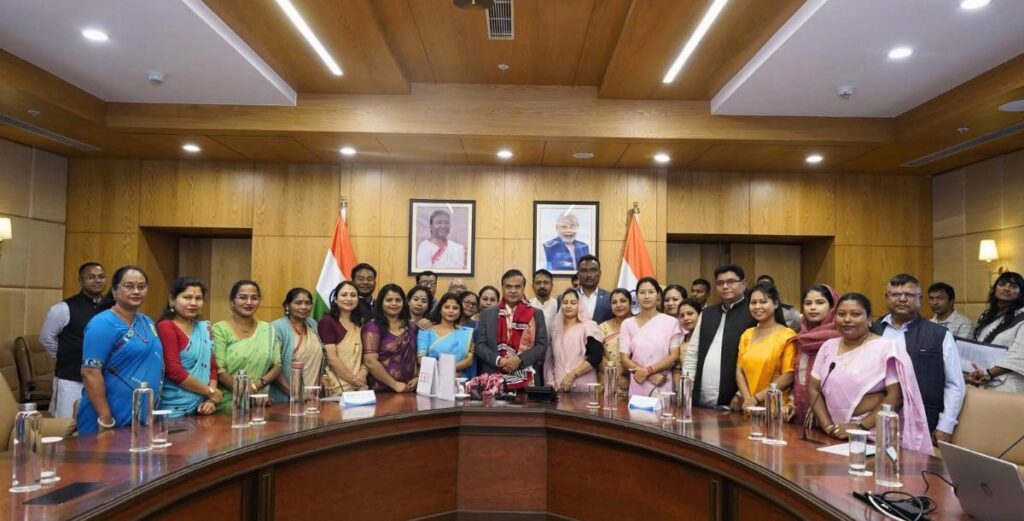
a strategic move to strengthen grassroots governance, Assam Chief Minister Himanta Biswa Sarma chaired an important review meeting with Zila Parishad Presidents from across all districts at Lok Sewa Bhawan in Guwahati. This high-level interaction signals a clear shift from announcing big schemes to ensuring their swift and effective implementation at the village level.
With Assam rapidly advancing in infrastructure and welfare delivery, this meeting underscores the government’s focus on accountability, removing bottlenecks, and delivering tangible results to rural households from better roads and clean drinking water to improved housing and sanitation.
From Announcements to Action:
Assam’s rural landscape covering vast areas of villages, tea gardens, and riverine (char) regions presents unique challenges in governance. While state-level policies are often robust, the real impact depends on how efficiently they reach the last mile. Zila Parishads, as the crucial link between the state government and Gram Panchayats, play a pivotal role in coordinating rural works, monitoring fund utilisation, and resolving local issues.
The Chief Minister’s direct engagement with Zila Parishad chiefs highlights a maturing governance model: less emphasis on optics and more on execution, performance tracking, and outcome-based delivery. Instead of launching new flagship programmes, the meeting concentrated on reviewing ongoing rural initiatives and accelerating stalled projects.
Key Discussions: Speed, Coordination, and Transparency
During the meeting, officials conducted a district-wise review of key rural development sectors. Major focus areas included:
- Rural Road Connectivity: Ensuring all-weather roads that improve access to markets, schools, and healthcare facilities. Timely completion before the monsoon season remains a top priority to prevent disruptions for students, farmers, and emergency services.
- Housing Schemes: Accelerating sanction and construction of houses to provide dignity and better living conditions for rural families.
- Drinking Water and Sanitation: Enhancing coverage of safe drinking water projects and sanitation facilities, which directly impact public health in remote and flood-prone areas.
- Inter-Departmental Coordination: Removing administrative hurdles and improving synergy between various departments for smoother project execution.
- Monitoring and Accountability: Strengthening digital tracking, regular reporting mechanisms, and performance evaluation of rural works.
The emphasis was on data-backed oversight and reducing communication gaps between district-level bodies and the state government. Chief Minister Himanta Biswa Sarma urged the Zila Parishad presidents to act decisively on pending projects and ensure transparency in implementation.
Unique Angle: Building a Performance-Driven Rural Governance Ecosystem
What sets this meeting apart is its quiet yet powerful focus on implementation discipline rather than new announcements. In many states, high-profile launches often grab headlines, but ground-level delivery lags. Assam’s approach under Himanta Biswa Sarma appears to prioritise fixing the “last-mile delivery” engine making Zila Parishads more responsive, accountable, and result-oriented.
This review mechanism can create a multiplier effect:
- Faster rural roads mean lower transportation costs for farmers and safer commutes for children.
- Timely housing projects improve living standards and reduce vulnerability during floods.
- Better water and sanitation facilities contribute to healthier communities and lower disease burden.
- Stronger coordination minimises wastage of public funds and builds greater public trust in governance.
For rural Assam, where a large population still depends on agriculture, tea gardens, and allied activities, efficient local governance directly translates into economic resilience and improved quality of life.
Strengthening the Panchayati Raj System in Assam
Zila Parishads serve as the backbone of decentralised governance. By engaging their presidents directly, the Chief Minister is reinforcing their role as effective coordinators between state schemes and village-level needs. This includes better utilisation of funds, quicker grievance redressal, and proactive identification of local bottlenecks.
The meeting also sends a strong message about accountability. Regular performance reviews and digital monitoring are expected to discourage delays and encourage proactive problem-solving at the district level. Governance observers believe such interactions can have a more lasting impact than standalone schemes because they institutionalise a culture of timely execution.
Broader Impact on Rural Assam’s Development Trajectory
Assam has witnessed significant progress in rural infrastructure in recent years. However, challenges like seasonal flooding, difficult terrain in riverine areas, and coordination issues sometimes slow down outcomes. This high-level review aims to address these systemic gaps.
Expected outcomes from the meeting include:
- Accelerated completion of rural road projects
- Smoother rollout of housing and water supply initiatives
- Enhanced transparency and reduced delays in welfare delivery
- Stronger feedback loop from districts to the state government
For ordinary villagers, these improvements mean more reliable basic services, better economic opportunities, and greater confidence in government functioning.
A Forward-Looking Governance Strategy
This meeting aligns with Chief Minister Himanta Biswa Sarma’s broader vision of responsive and result-oriented administration. By prioritising execution over announcements, the government aims to ensure that development benefits reach every corner of Assam from bustling market towns to remote char villages and tea garden communities.
As implementation picks up pace following the review, residents in rural areas can look forward to visible progress on the ground. The real success will be measured not by the number of meetings held, but by the number of completed projects, improved access to services, and enhanced living standards in villages.
In an era where citizens demand quicker and more efficient governance, such direct reviews with district-level leaders reflect a commitment to bridging the gap between policy and practice. The Guwahati meeting with Zila Parishad chiefs may appear low-key, but its potential to reshape rural Assam’s development story is substantial.
With stronger accountability mechanisms and focused execution, Assam is steadily moving towards a model where rural governance delivers real, measurable change for millions of families.
FAQs
1.Where did the meeting take place?
It was held at Lok Sewa Bhawan in Guwahati.
2.Who attended?
Zila Parishad Presidents from across Assam’s districts participated.
3.What was discussed?
Rural governance reforms, infrastructure progress, welfare scheme implementation, and accountability mechanisms.
4.Were new policies announced?
No new schemes were publicly announced. The focus was on improving implementation.
5.Why is this significant?
Because district-level execution determines whether development schemes actually improve rural lives.
Conclusion
The headline “Himanta Biswa Sarma Meets Zila Parishad Chiefs” may appear administrative, but its implications are practical and immediate.By prioritising district-level accountability and hands-on review, the Assam government is reinforcing a performance-based governance model.
For rural Assam, that could translate into smoother project execution, stronger infrastructure, and more reliable service delivery.In the end, governance is not measured in meetings but in outcomes. The coming months will reveal how effectively this renewed focus transforms plans into progress.

Leave a Reply