

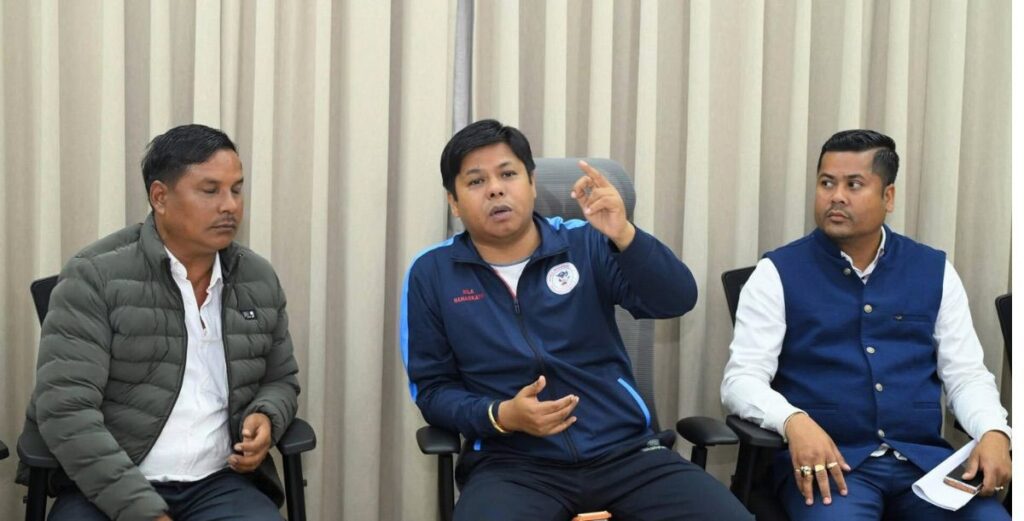
political activity intensifying across Assam, Chief Minister Himanta Biswa Sarma personally reviewed preparations for the upcoming Jan Blessing Yatra in Naharkatiya, signaling that the March 6 outreach event carries strategic weight.The high-level meeting, attended by local party leaders and grassroots coordinators, reflects a clear message: organizational discipline and booth-level strength will define the coming political phase in Upper Assam.
In today’s climate of constant voter engagement, such direct supervision from the top leadership is rarely symbolic. It is tactical.
The review session brought together key coordinators, mandal presidents, district council members, and panchayat representatives. Among those closely involved in preparations is Naharkatiya MLA Taranga Gogoi, who has been coordinating constituency-level mobilization.
Sources present at the meeting described the tone as structured and detail-oriented. The emphasis was not merely on turnout, but on coordination ensuring that every booth committee understands its role.
Political campaigns today hinge less on large rallies and more on precision management. That appears to be the guiding principle behind the Jan Blessing Yatra planning in Naharkatiya.
What the Jan Blessing Yatra Represents
The Jan Blessing Yatra is positioned as a public outreach initiative designed to directly engage citizens. It typically includes interactions with local communities, feedback collection, and communication of government initiatives.
conventional rallies, the Jan Blessing Yatra format is designed to build sustained contact. It strengthens booth networks while reinforcing political messaging at the grassroots level.
Assam has consistently recorded high voter participation in recent elections, reflecting deep political awareness. Outreach initiatives like the Jan Blessing Yatra aim to maintain that engagement rather than activate it only during polling season.
Naharkatiya, located in Dibrugarh district, holds strategic importance in Upper Assam’s political landscape. The constituency has seen administrative upgrades and infrastructure development in recent years, adding to its relevance.Upper Assam often shapes statewide political momentum. Programs executed successfully here tend to influence broader narratives.
By reviewing the Jan Blessing Yatra plan directly in Naharkatiya, the Chief Minister has reinforced the constituency’s significance in the larger political framework.Modern Indian political campaigns rely heavily on booth management systems. Each polling booth represents a defined voter segment, often ranging between 1,000 and 1,200 voters.
During the Jan Blessing Yatra review, coordination between district units and mandal-level teams was reportedly stressed. Leaders were instructed to ensure clarity in responsibilities, disciplined execution, and seamless communication.
Political analysts often note that booth strength translates directly into electoral performance. The Naharkatiya meeting indicates that this model is being applied with seriousness.When a Chief Minister personally oversees local-level preparation, it signals accountability within party ranks. It also conveys confidence to supporters that the leadership is invested in on-ground organization.
The timing is equally important. As political conversations intensify nationally and regionally, visible grassroots mobilization becomes essential.The Jan Blessing Yatra in Naharkatiya is not being treated as a routine outreach drive. It appears to be part of a sustained engagement plan aimed at reinforcing voter connection.
Across India, political yatras have evolved into powerful communication platforms. They serve as a bridge between leadership and citizens while energizing local cadres.
In Assam, Upper Assam remains politically influential. Events organized here often attract statewide attention and set the tone for subsequent initiatives.Observers will closely monitor how the Jan Blessing Yatra unfolds not only for crowd strength, but for organizational coherence.
What to Watch on March 6
Three indicators will be critical
- Public participation levels
- Coordination among booth and mandal units
- Clarity and consistency of messaging
If executed smoothly, the Jan Blessing Yatra could consolidate grassroots networks in Naharkatiya and beyond.logistical challenges surface, they will offer insights into areas needing refinement before larger statewide mobilizations.
FAQs
1.When is the Jan Blessing Yatra scheduled?
March 6 in Naharkatiya.
2.Who reviewed the preparations?
Chief Minister Himanta Biswa Sarma led the strategy meeting.
3.What is the goal of the Jan Blessing Yatra?
To strengthen public outreach, reinforce grassroots networks, and maintain direct voter engagement.
4.Why is booth-level planning important?
Booth committees manage localized voter communication and turnout a decisive factor in electoral success.
Conclusion
The review of the Jan Blessing Yatra in Naharkatiya underscores the growing importance of structured grassroots engagement in Assam’s political landscape.With senior leadership directly monitoring preparations and local representatives actively coordinating at the booth level, the March 6 event carries weight beyond symbolism.
For Naharkatiya, this is more than an outreach program. It is a reflection of how modern political strategy is executed from the booth upward.

Leave a Reply