

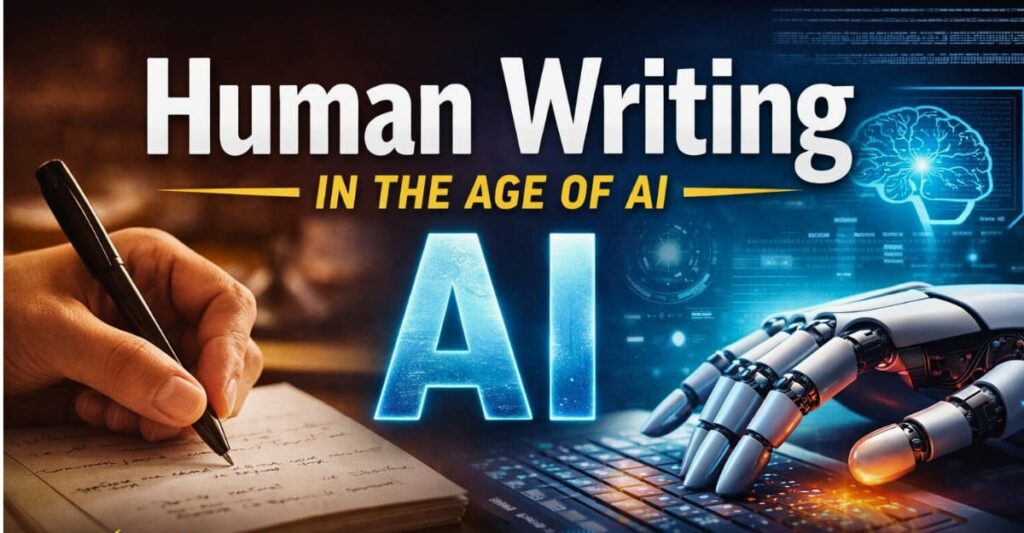
In 2026, the digital content landscape has changed dramatically. Artificial intelligence can now generate articles in seconds, create outlines instantly, and produce large volumes of text with minimal effort. For many bloggers, news publishers, and marketers, AI has become a daily tool.
But as AI-generated content spreads rapidly across the web, a new reality is emerging: readers can sense the difference between automated text and authentic human writing. And increasingly, they prefer the latter.
Platforms like Google Discover, which rely heavily on engagement signals such as reading time, user interest, and trust, are indirectly rewarding content that feels real, thoughtful, and written with human intent.This shift is forcing creators to rethink how they produce articles in the AI era.
Artificial intelligence is incredibly efficient at summarizing information. However, writing is not only about arranging words it is about understanding people, context, and emotion.Human writing carries subtle elements that machines struggle to replicate naturally. These include lived experience, cultural awareness, and the ability to connect ideas in meaningful ways.
Readers often notice the difference immediately. AI-heavy articles frequently feel repetitive or overly structured. Human writing, on the other hand, flows more naturally and often includes insight that goes beyond surface-level information.This difference is becoming critical for websites that depend on reader trust and long-term audience loyalty.
The Trust Factor: Why Readers Value Authentic Content
Trust has become one of the most important currencies on the internet.With thousands of new articles published every minute, readers must quickly decide which sources are worth their time. Content that feels generic or overly automated often fails to hold attention.Human writing tends to perform better because it includes elements such as
- Clear reasoning and thoughtful explanations
- Unique viewpoints or interpretations
- Awareness of real-world impact
- A natural storytelling rhythm
These qualities help readers feel that there is a real person behind the article, not just a machine producing text.For news publishers, bloggers, and educators, this authenticity can make the difference between a casual reader and a loyal audience.
How Google Discover Encourages Human-Led Content
Google Discover has become a powerful traffic source for many websites, particularly news publishers and niche blogs. Unlike traditional search results, Discover focuses heavily on user behavior and interest signals.Articles that receive strong engagement such as longer reading times and higher click-through rates are more likely to appear in Discover feeds.
Human writing often performs better in this environment because it naturally encourages deeper engagement. When an article feels informative, relatable, and thoughtfully written, readers are more likely to continue scrolling.This does not mean AI tools cannot be used. Instead, it highlights the importance of human editing and creative oversight.
The Real Role of AI in Modern Writing
AI is not the enemy of good writing. In fact, many professional writers now use AI tools as assistants.AI can help with tasks like
- Organizing research
- Generating article outlines
- Suggesting alternative headlines
- Summarizing complex information
However, experienced creators rarely publish raw AI text. Instead, they treat AI as a starting point and then shape the content with their own knowledge, tone, and perspective.This hybrid approach allows writers to maintain authenticity while also improving productivity.
Practical Ways to Create Strong Human Writing
For bloggers and journalists who want to stand out in a crowded digital space, improving human writing is essential.Several simple practices can make a significant difference.
Write With Real Purpose
Before starting an article, ask a simple question: Why does this topic matter right now?When the purpose of the article is clear, the writing becomes more focused and meaningful.
Use Clear and Natural Language
Human writing rarely sounds overly formal or mechanical. Instead, it uses language that feels conversational and direct.Short sentences and clear explanations help readers stay engaged, especially on mobile devices.
Add Context and Insight
AI can summarize facts, but it often lacks deeper context.Human writers should explain why information matters, what it means for readers, and what developments might come next.
Avoid Overused AI Phrases
Many AI-generated articles repeat predictable phrases that reduce originality. Removing these expressions and replacing them with natural wording immediately improves readability.
Focus on Reader Experience
A well-written article guides readers smoothly from one idea to the next. Subheadings, short paragraphs, and logical structure help keep attention focused.Human editors play a key role in shaping this flow.
The Future of Content: Human Creativity + Smart Technology
The internet is unlikely to move away from AI-assisted writing. In fact, the technology will only become more advanced.However, the creators who succeed in the long term will be those who balance efficiency with authenticity.
Human creativity remains essential for storytelling, interpretation, and meaningful communication. AI can support that process, but it cannot replace the perspective and experience that real writers bring to their work.As digital audiences grow more selective about the content they consume, the value of thoughtful human writing is likely to increase rather than disappear.
Conclusion
The rise of artificial intelligence has transformed how content is produced, but it has also highlighted something important: authentic writing still matters deeply.
Readers are not simply searching for information. They want clarity, context, and a voice they can trust.In a world where machines can generate endless text, the true advantage belongs to writers who combine technology with human insight, originality, and genuine storytelling.The future of content will not belong solely to AI or humans.It will belong to those who know how to use both wisely.

Leave a Reply