
Writer by sanjoy 08.05.2026 Time 2.13 PM Published
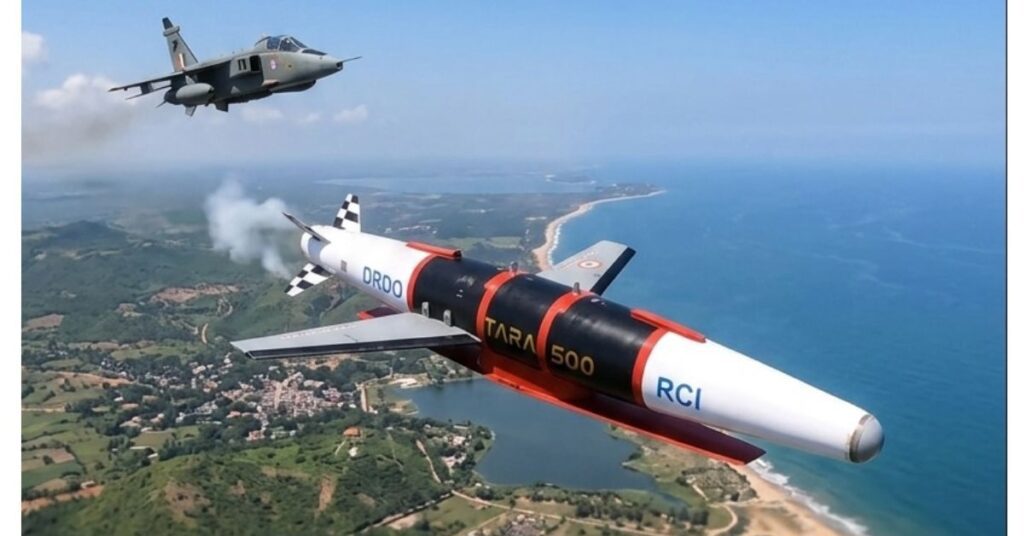
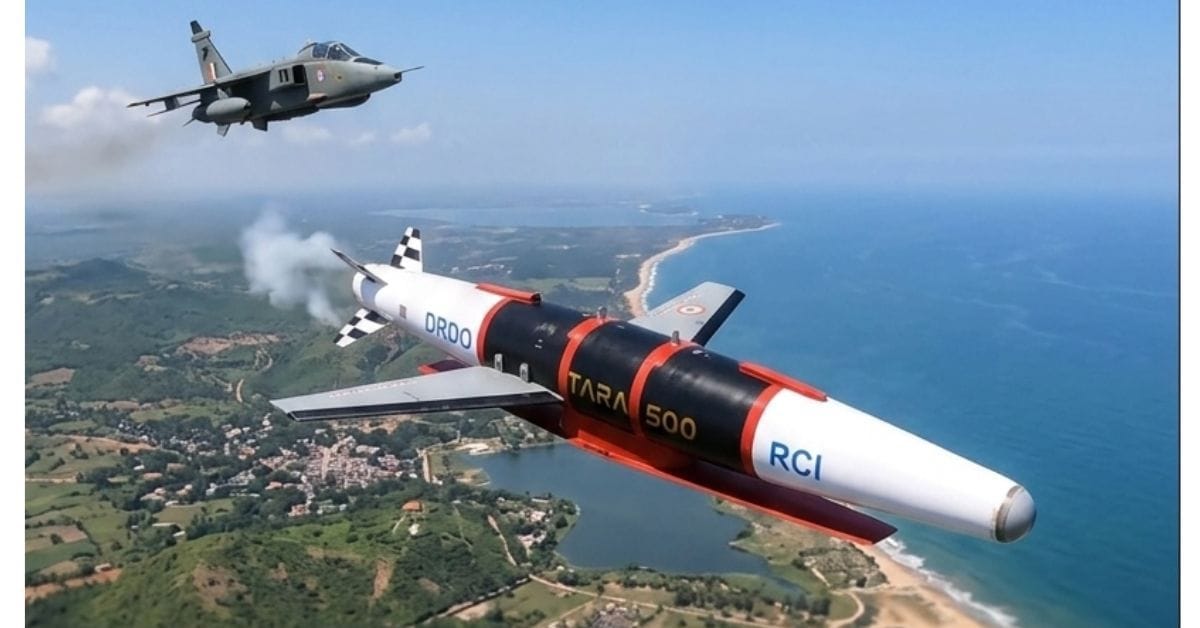
India’s defense sector, the Defence Research and Development Organisation (DRDO) and the Indian Air Force (IAF) successfully conducted the maiden flight trial of the Tactical Advanced Range Augmentation (TARA) weapon system on Thursday, May 7, 2026. The announcement, made officially by the Ministry of Defence on Friday morning, signals a paradigm shift in India’s air-to-ground strike capabilities. The trial, conducted off the coast of Odisha, demonstrated the seamless integration of indigenous technology with frontline fighter platforms, specifically the IAF Jaguar, which served as the launch vehicle for this historic test.
The Science of Precision: What is TARA?
At its core, TARA (Tactical Advanced Range Augmentation) is a modular Range Extension Kit (REK). It is not just a bomb; it is a “smart” upgrade designed to convert conventional, unguided warheads—often referred to as “dumb bombs”—into precision-guided munitions (PGMs).
Developed by the Research Centre Imarat (RCI) in Hyderabad in collaboration with other DRDO laboratories, TARA is the first indigenous system of its kind to utilize state-of-the-art, low-cost guidance and navigation systems. By attaching a wing kit and a guidance unit to existing High-Speed Low Drag (HSLD) warheads, the IAF can now strike targets with surgical accuracy while keeping aircraft out of the range of enemy surface-to-air missiles.
Technical Breakdown of the TARA System
One of the most critical aspects of the TARA flight trial is the “stand-off” range it provides. In modern warfare, entering enemy airspace to drop gravity bombs is a high-risk mission due to sophisticated Integrated Air Defence Systems (IADS).
With TARA, an IAF pilot can release the weapon from over 100 kilometers away. Once released, the kit’s aerodynamic wings deploy, allowing the bomb to glide toward its target. During the mid-course phase, it uses an Inertial Navigation System (INS) corrected by GPS. As it nears the target, its advanced seekers ensure it hits within a few meters of the designated coordinates.
The “Aatmanirbhar”Cost and Industry
Defense Minister Rajnath Singh lauded the success, noting that TARA is a prime example of the “Make in India” initiative. Historically, India has relied on expensive imported kits, such as the Israeli SPICE or the American JDAM, to provide precision strike capabilities.
TARA changes the economic equation. By utilizing indigenous components and involving Development cum Production Partners (DcPP) from the private sector, India can now produce these kits at a fraction of the cost of international alternatives. This ensures that in a high-intensity conflict, the IAF will have a sustainable and massive stockpile of precision weapons without being dependent on foreign supply chains.
The successful maiden trial of TARA is a significant development in advancing India’s indigenous defence capabilities. It proves our ability to develop world-class technology within the country,” said Raksha Mantri Rajnath Singh in his official statement.
Success on the Anniversary of Operation Sindoor
Interestingly, the test coincided with the first anniversary of Operation Sindoor, the multi-dimensional strike carried out on May 7, 2025, which targeted terror infrastructure. Experts suggest that the development of TARA was fast-tracked following the lessons learned during that operation, where the need for high-volume, low-cost precision munitions became evident.
Production and Deployment Roadmap
According to DRDO Chairman Dr. Samir V. Kamat, production activities have already been initiated by Indian industry partners. Following the successful maiden flight, the system will undergo a few more “user trials” by the IAF in different weather conditions and terrains before being formally inducted into the inventory.
- 1. Sukhoi Su-30 MKI: The backbone of the IAF.
- 2. Mirage 2000: Renowned for its precision in the Kargil War and Balakot.
- 3. LCA Tejas: India’s homegrown fighter, further boosting the “all-Indian” weapon-platform synergy.
How TARA Enhances India’s Defense Posture
The introduction of TARA significantly shifts the balance of power in the region.
- Lethality: It allows for the neutralization of command centers, bridges, and hardened bunkers with minimal collateral damage.
- Flexibility: The modular nature means the same kit can be adjusted for different warhead sizes (250kg to 500kg).
- Sustainability: Domestic production ensures that supply is not cut off during international sanctions or crises.
Conclusion: A New Era of Indian Air Power
The successful flight trial off the Odisha coast is more than just a technical achievement; it is a statement of intent. As India continues to modernize its military, the shift toward indigenous smart weapons like TARA ensures that the Indian Air Force remains a formidable, high-tech force capable of protecting national interests with precision and pride.
For the global defense community, the TARA test is a signal that India is no longer just a buyer of defense technology—it is a creator.