

Writer By Finbuzzindia | March 30, 2026 time 4.30 Pm Published
India’s tea industry ended 2025 on a historic high but fresh geopolitical tensions in West Asia have introduced real uncertainty for 2026.Based on exclusive insights from the 37th Biennial General Meeting of the Tea Association of India (TAI), Assam Branch, Jorhat
Speaking yesterday at the TAI’s Assam Branch meeting in Jorhat, Shailja Mehta, President of the Tea Association of India, delivered a clear and measured message: while 2025 delivered record-breaking results, the industry cannot afford complacency. Ongoing instability around the Strait of Hormuz a critical shipping route for nearly 41% of India’s tea exports could directly impact volumes, costs, and grower livelihoods, especially in Assam.
This is not alarmism. It is a call for proactive strategy from one of the most experienced voices in Indian tea.
2025: A Landmark Year for Indian Tea Exports
Provisional data from the Tea Board of India confirms what industry leaders celebrated:
- Total exports: 280.40 million kg (up 9.5% from 256.17 million kg in 2024)
- Export value: ₹8,488.43 crore (up 18.4% from ₹7,167.41 crore)
- Average realisation crossed ₹300 per kg for the first time.
Key drivers? Strong demand for Indian Orthodox teas particularly from Assam in traditional West Asian markets:
- Iran
- Iraq
- United Arab Emirates
- China (which saw a sharp rise in offtake)
These markets rewarded the bold, malty flavour profile that Assam teas are famous for worldwide.
The Strait of Hormuz Risk: Why 2026 Looks Uncertain.Nearly 41% of India’s total tea exports (around 115 million kg) to the UAE, Iran, and Iraq travel through the Strait of Hormuz.
Shailja Mehta warned:Amidst reports of closure of the Strait of Hormuz, the prospect of Indian tea exports does look grim as of now. Given the industry’s growing dependence on these destinations in recent years, there is a genuine apprehension that India’s export performance in 2026 may face pressure if the situation persists.”
Potential impacts include
- Higher freight costs and shipping delays
- Slower payment cycles
- Weakened buyer confidence
- Pressure on prices and volumes
Global trade hates uncertainty and tea, being a perishable and price-sensitive commodity, feels the impact faster than most sectors.
Why Assam Stands at the Centre of This Story
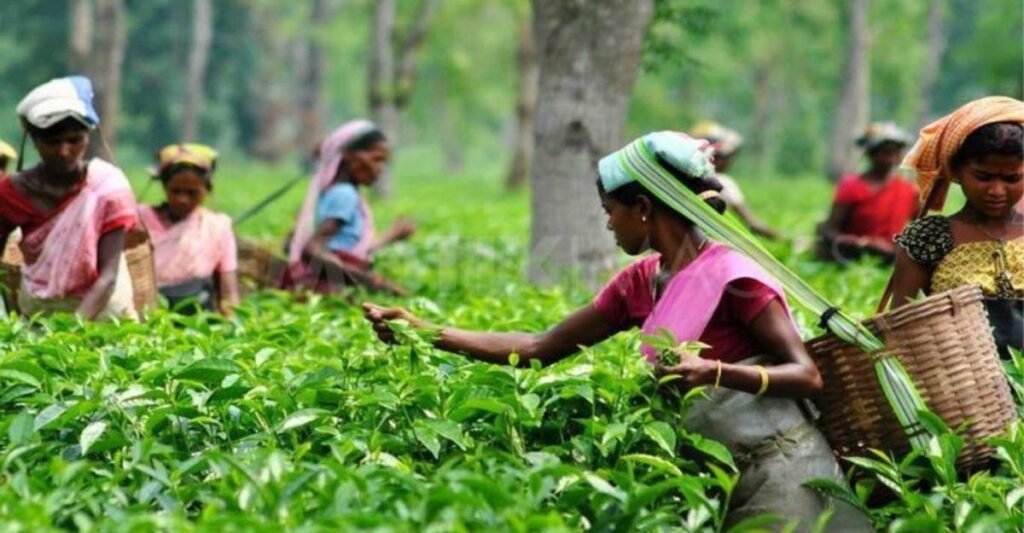
Assam produces some of the world’s most sought-after Orthodox teas. The state’s strong, brisk liquors have powered India’s export surge, especially in West Asia. Any slowdown here would directly affect:
- Over 10 lakh tea workers and their families
- Hundreds of tea estates and small growers
- Local economies across Upper Assam and the Brahmaputra Valley
This is not just numbers on a balance sheet it is about livelihoods in one of India’s most important agricultural regions.
Domestic Challenge: Land Pattas for Tea Garden Workers
The meeting also addressed a major policy shift in Assam the state government’s move to grant land rights (pattas) to tea garden workers living in labour lines.While TAI welcomed the intent to empower workers, Shailja Mehta highlighted practical and legal concerns that need urgent attention:
- Many estates have mortgaged land as collateral for bank loans transfer could create financial complications.
- The Land Ceiling Act applies only to land, not to company-built assets like labour quarters.
- Under the Occupational Safety, Health and Working Conditions Code 2020, management remains responsible for housing and welfare.
- Fair compensation must be ensured under the Right to Fair Compensation and Transparency in Land Acquisition, Rehabilitation and Resettlement Act 2013.
Mehta urged the Assam government to provide clear administrative guidelines so that good intentions do not unintentionally create new liabilities for estates or uncertainty for workers.The Smart Path Forward: Diversification + Policy Support.
Experts at the Jorhat meeting agreed on a practical roadmap:
- 1. Market Diversification Actively expand into Europe, North America, and emerging Asian markets to reduce dependence on any single region.
- 2. Strengthen Trade Routes Explore alternative shipping corridors and logistics solutions.
- 3. Continued Policy Support Maintain export incentives, improve trade facilitation, and provide logistics backing.
- 4. Legal Clarity on Land Rights Resolve administrative gaps quickly so workers gain security without disrupting estate operations.
A Balanced Outlook: Caution, Not Panic
India’s tea sector enters 2026 with proven strength record production, rising global preference for quality Indian teas, and a resilient supply chain rooted in Assam’s heritage.The risks from West Asia are real, but they are manageable with timely action. As Shailja Mehta and the TAI have shown, the industry is already thinking ahead.
For Assam’s tea communities, the message is clear: 2025 proved what is possible. 2026 will reward those who prepare wisely — through diversification, policy partnership, and careful execution of worker welfare reforms.
Tea is more than a beverage in India it is culture, economy, and thousands of families. With the right mix of vigilance and vision, the industry can keep the momentum brewing strong.
Sources & References
Tea Board of India provisional export data (Jan-Dec 2025)
- Statements by Shailja Mehta, President, Tea Association of India at 37th Biennial General Meeting, Jorhat (March 29, 2026)
- Assam Tribune, Business Standard, The Economic Times, and PTI reports
- Land Acquisition Act 2013 & Occupational Safety, Health and Working Conditions Code 2020
India’s Tea Exports at Risk in 2026? West Asia Crisis Triggers Big Warning from Industry
- Tea Industry Alert: Why India’s ₹8,488 Crore Export Boom Could Slow in 2026
- West Asia Crisis May Hit India’s Tea Exports Hard in 2026, Industry Issues Warning
- After Record Growth, India’s Tea Exports Face New Threat in 2026 Here’s Why
- Assam Tea Exports Under Pressure? 2026 Outlook Turns Uncertain Amid Global Crisis

Leave a Reply