
writer by finbuzzindia.02.03.2026 time 10.30 Published
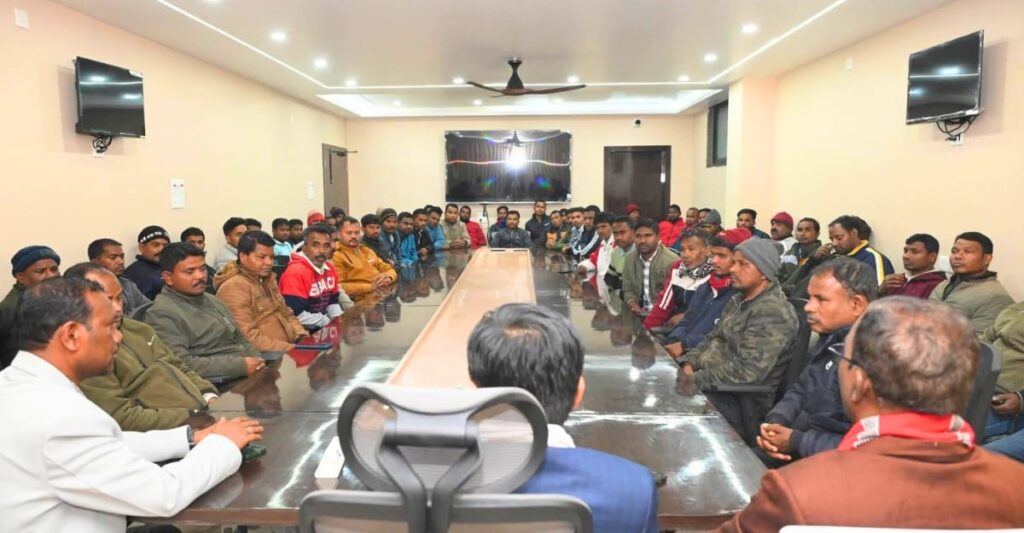
the heart of Assam’s tea belt, where generations of workers have toiled on lush plantations without owning even a small patch of the land they nurtured, a pivotal meeting in Naharkatiya is rewriting the script of economic justice. Naharkatiya MLA Taranga Gogoi recently held high-stakes discussions with leaders of the Assam Chah Mazdoor Sangha (ACMS) and representatives from the Tea Garden Association. The focus? Transforming long-standing “labour line” arrangements into legal land ownership rights through pattas. This isn’t just another political conversation — it’s a potential game-changer for over 3.33 lakh tea tribe families across the state, offering dignity, financial security, and a pathway out of generational dependency.
Assam’s tea industry, one of India’s oldest and most iconic, employs lakhs but has historically left its backbone the tea garden workers on the margins. These communities, often from Adivasi roots, have lived in company-provided quarters on estate land they could never call their own. Disputes, estate closures, or natural calamities left them vulnerable. But the winds of change are blowing stronger than ever. The 2025 amendment to land management policies has opened the door for converting these arrangements into full ownership rights. During the Naharkatiya meeting, Gogoi stressed the urgency of fast-tracking this process, ensuring that workers finally receive documented titles to their homes and small plots.
“Land ownership is not charity it is justice,” sources close to the discussions echoed Gogoi’s sentiment. For the first time, families could leverage these pattas for bank loans, home improvements, education funding, or even small businesses. Policy experts view this as one of the most transformative reforms in Assam’s plantation history, far beyond short-term doles. It promises structural equity in a sector that contributes heavily to the state’s economy and cultural identity.
Government’s Multi-Pronged Push: From Wages to Welfare
The meeting didn’t stop at land rights. It highlighted a coordinated government strategy under Chief Minister Himanta Biswa Sarma to uplift tea communities. In January 2026, the Mukhyamantri Ati Koli Duti Pat Scheme was launched, providing eligible workers a one-time ₹5,000 financial assistance. While modest, this direct support arrives when families need it most — covering school fees, medical emergencies, and daily essentials amid rising costs.
Wage revisions have also brought immediate relief. The daily wage for Assam tea garden workers has risen from ₹251 to ₹281, with an additional increment. Labour unions have long demanded fair pay, and this adjustment, though incremental, signals responsiveness to ground realities. Economists note that even small hikes ease pressure on household budgets strained by inflation in food and healthcare.
Adding to this momentum is the landmark 3% reservation in government jobs for tea tribe youth. This policy opens doors to stable public sector careers, breaking the cycle where plantation work was often the only option. Education activists hail it as a step toward social mobility, empowering young men and women to aspire beyond the tea estates.
During the talks, MLA Taranga Gogoi delivered a powerful message to the youth of Naharkatiya: embrace sports and physical activities. As Chairman of the Assam State Youth Commission and a strong advocate for holistic development, Gogoi urged boys and girls to build discipline, health, and confidence through sports. In a region where traditional plantation life shapes identities, this call promotes diversification turning potential into opportunity. It aligns perfectly with the job reservation push, creating not just workers, but confident, skilled citizens ready for modern India.
A Unique Lens on Empowerment in Upper Assam
What makes this Naharkatiya dialogue stand out is its timing and grassroots focus. Ahead of key political developments in Assam, it underscores a shift from symbolic promises to actionable reforms. Naharkatiya, nestled in Dibrugarh district, is a microcosm of the larger tea belt’s challenges and potential. Here, tea estates define daily life, yet development lagged for decades. Gogoi’s engagement with ACMS leaders reflects a proactive, community-first approach — listening to unions, aligning with state policies, and pushing for faster implementation.
Experts caution that success hinges on execution: clear eligibility under the 2025 amendment, transparent patta distribution timelines, and strict wage monitoring across estates. If delivered effectively, these measures could impact every aspect of life —from better housing and credit access to reduced vulnerability during crises. For over a lakh families in the Naharkatiya region alone, this could mean owning a home, not just occupying one.
This reform also carries deeper cultural significance. Assam’s tea tribes have sustained the industry through generations of hard work. Granting land rights acknowledges their contribution, fostering a sense of belonging and pride. It moves beyond welfare to empowerment, aligning with national goals of inclusive growth and financial inclusion.
Challenges Ahead and the Road to Real Change
While optimism is high, challenges remain. Timely issuance of pattas, awareness campaigns for workers, and integration with schemes like the job reservation will be critical. Monitoring bodies must ensure benefits reach the most marginalised women, single-parent families, and remote estates.
Yet, the momentum is undeniable. The convergence of land rights, wage hikes, cash assistance, and youth opportunities paints a picture of holistic progress. MLA Taranga Gogoi’s leadership in these talks positions Naharkatiya as a model for the rest of Assam’s tea belt.
For Assam’s tea garden workers, the message is clear: the era of living without roots is ending. A home to truly own, a future to shape, and opportunities beyond the lines this is the promise taking shape in Naharkatiya today. As implementation unfolds in the coming months, thousands will watch closely. If delivered, it won’t just be policy success it will be a silent revolution in dignity and economic freedom for one of India’s most vital communities.
FAQ
1.How many families are expected to benefit from land ownership reform?
More than 3.33 lakh families could benefit if the conversion process is fully implemented.
2.What is the amount provided under the Mukhyamantri Ati Koli Duti Pat Scheme?
Eligible workers receive a one-time financial assistance of ₹5,000.
3.What is the new daily wage rate?
The daily wage has increased to ₹281, along with an additional 2% increment.
4.What is the purpose of the 3% job reservation?
It aims to create government employment opportunities for members of the tea garden community.
Conclusion
For decades, Assam tea garden workers have sustained one of the state’s most valuable industries without secure land rights.
The recent discussions in Naharkatiya signal a transition from temporary welfare measures to structural reform. If effectively implemented, land ownership could provide long-term dignity, economic stability, and opportunity.For over lakh families, the promise is simple yet powerful: a home not just to live in but to truly own.