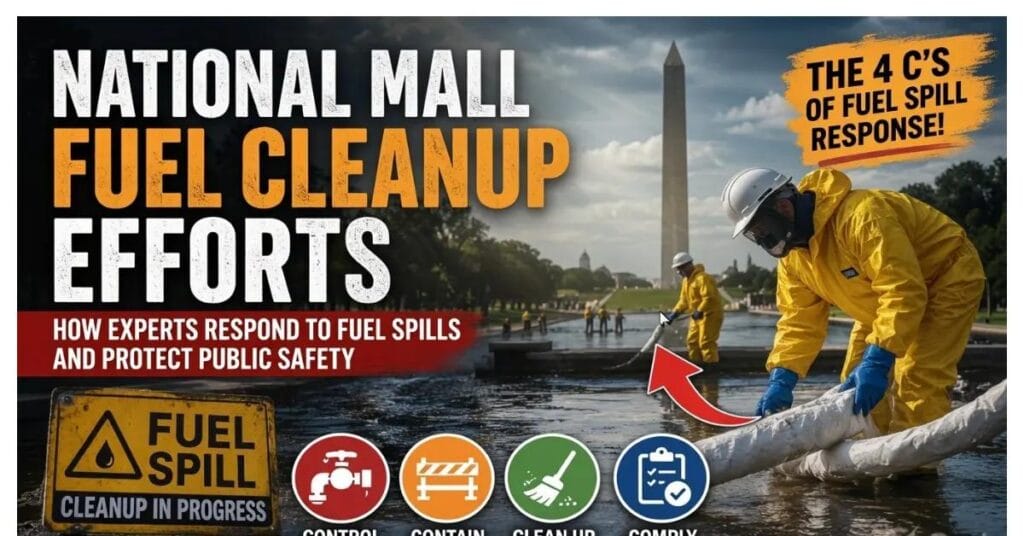
National Mall Fuel Cleanup Efforts: How Experts Respond to Fuel Spills and Protect Public Safety
Fuel spills can create serious environmental and safety risks, especially in high-traffic public areas such as the National Mall. When a fuel leak or spill occurs, emergency response teams must act quickly to prevent contamination, protect visitors, and minimize damage to nearby ecosystems.
Recent discussions about National Mall fuel cleanup efforts have highlighted the importance of proper spill response procedures. From stopping the source of the leak to safely removing contaminated materials, fuel spill cleanup requires a coordinated effort involving trained professionals, environmental agencies, and safety experts.
In this article, we explain how fuel spills are cleaned up, the four C’s of fuel spill response, and the critical first steps responders take during an emergency.
What Is a Fuel Spill?
A fuel spill occurs when gasoline, diesel, aviation fuel, or other petroleum products accidentally leak into the environment. Spills can happen due to damaged vehicles, faulty storage tanks, equipment failures, transportation accidents, or construction activities.
Even small fuel spills can contaminate soil, groundwater, and nearby waterways. Larger spills may pose fire hazards and create health risks for people exposed to toxic fumes.
Because of these dangers, immediate action is essential whenever a fuel spill occurs.
How Do You Clean Up a Fuel Spill?
Cleaning up a fuel spill involves several carefully planned steps designed to contain the contamination and restore the affected area.
1. Identify the Source
The first priority is determining where the fuel is coming from. Emergency teams locate the leak and stop it if possible. This may involve shutting off equipment, closing valves, or repairing damaged fuel lines.
2. Secure the Area
Safety personnel establish a secure perimeter around the spill zone. This helps keep the public away from potential fire hazards and harmful fumes.
Warning signs and barriers may be installed to restrict access until cleanup operations are complete.
3. Contain the Spill
Responders use absorbent materials, booms, barriers, and spill pads to prevent fuel from spreading further.
Containment is especially important near storm drains, waterways, and environmentally sensitive areas where fuel could cause significant damage.
4. Recover the Fuel
Specialized equipment is used to collect free-standing fuel from the surface. Vacuum trucks, absorbent materials, and recovery systems help remove the spilled product efficiently.
5. Remove Contaminated Materials
If fuel has soaked into soil, gravel, or other materials, those contaminated substances may need to be excavated and disposed of according to environmental regulations.
6. Environmental Testing
After cleanup, environmental experts test the area to ensure contamination levels are within safe limits. Additional remediation may be required if fuel residues remain.
7. Site Restoration
Once cleanup is complete, the affected area is restored. This may involve replacing soil, repairing landscaping, or reopening public spaces after safety inspections.
What Are the Four C’s of Fuel Spill Response?
Emergency responders often follow a simple framework known as the Four C’s of Fuel Spill Response.
1. Control
Control the source of the spill as quickly as possible. Stopping the leak prevents additional fuel from entering the environment.
2. Contain
Containment measures stop the fuel from spreading. Spill kits, absorbent booms, and barriers help keep contamination limited to a manageable area.
3. Clean Up
The cleanup phase involves recovering fuel, removing contaminated materials, and reducing environmental impacts.
4. Comply
Responders must comply with environmental laws, safety regulations, and reporting requirements throughout the cleanup process.
The Four C’s provide a straightforward framework that helps emergency teams respond effectively to fuel spill incidents.
What Should Be Done First When a Fuel Spill Occurs?
The most important first step when a fuel spill occurs is ensuring safety.
Before cleanup begins, responders must:
- Assess the situation.
- Identify potential fire hazards.
- Protect people in the area.
- Stop the source of the spill if it can be done safely.
After safety measures are in place, containment efforts begin immediately to prevent the fuel from spreading.
In public locations like the National Mall, crowd control and public safety become especially important due to the large number of visitors who may be present.
Why Fuel Spill Cleanup Matters
Fuel spills can have long-lasting environmental consequences if not addressed quickly.
Potential impacts include:
- Soil contamination.
- Groundwater pollution.
- Damage to wildlife habitats.
- Fire and explosion risks.
- Health concerns from fuel vapors.
Professional cleanup efforts help reduce these risks while protecting public spaces and natural resources.
National Mall Fuel Cleanup Efforts and Public Safety
The National Mall is one of the most visited public spaces in the United States. Any fuel spill in such a location requires a rapid and coordinated response.
Cleanup teams focus on:
- Protecting visitors and workers.
- Preventing fuel from reaching waterways.
- Minimizing environmental damage.
- Restoring affected areas as quickly as possible.
These efforts demonstrate the importance of emergency preparedness and environmental stewardship in public spaces.
Conclusion
Fuel spills require immediate action to protect people, property, and the environment. Effective cleanup begins with stopping the source, securing the area, containing the spill, and removing contaminated materials.
The Four C’s of fuel spill response—Control, Contain, Clean Up, and Comply—provide a practical framework for managing incidents safely and efficiently.
As National Mall fuel cleanup efforts demonstrate, rapid response and professional environmental management play a critical role in maintaining public safety and preserving important public spaces for future generations.
FAQs
1.How do you clean up a fuel spill?
Fuel spill cleanup involves stopping the source, containing the spill, recovering fuel, removing contaminated materials, testing the site, and restoring the affected area.
2.What are the Four C’s of fuel spill response?
The Four C’s are Control, Contain, Clean Up, and Comply.
3.What should be done first when a fuel spill occurs?
The first priority is safety. Responders secure the area, assess risks, and stop the source of the spill if it can be done safely.
4.Why is fuel spill cleanup important?
Proper cleanup prevents environmental contamination, protects public health, and reduces fire and safety risks.
5.Can fuel spills contaminate groundwater?
Yes. Fuel can seep into soil and reach groundwater if spills are not contained and cleaned up promptly.