
writer by sanjoy gorh/04.02.2026/10.14 AM Published
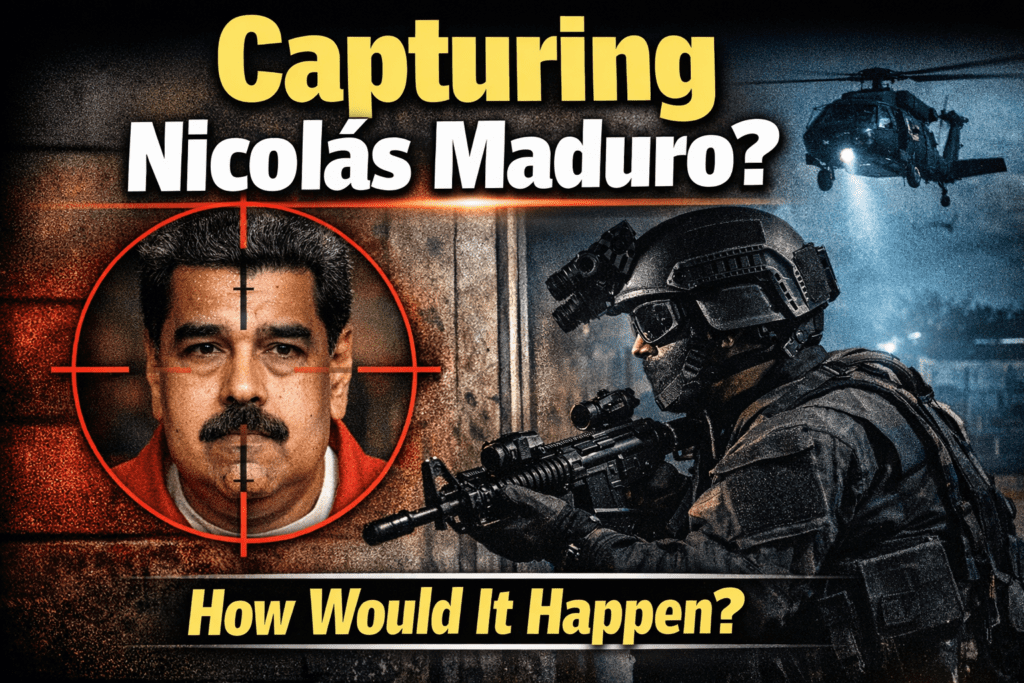
How the US Captured Nicolás Maduro: The January 2026 Operation Explained
On January 3, 2026, US military forces carried out a high-risk operation in Caracas that resulted in the capture of Venezuelan President Nicolás Maduro and his wife, Cilia Flores. The mission, part of Operation Absolute Resolve, has become one of the most controversial events in recent international politics.
President Donald Trump announced the operation, describing it as a strike against alleged drug trafficking networks. Maduro and Flores were flown to the United States, where they now face serious federal charges.
What Happened on January 3, 2026?
In the early morning hours, US special operations forces (including Delta Force) conducted a targeted raid on Maduro’s residence in Caracas.Key elements of the operation included
- Precision airstrikes to suppress air defenses and military targets
- Cyber and electronic warfare support
- Ground insertion by special forces
- Swift extraction of Maduro and his wife to the USS Iwo Jima, followed by transfer to New York
The entire action was completed within a few hours. Maduro and Flores were later detained at the Metropolitan Detention Center in Brooklyn and have pleaded not guilty to the charges.
Why Did the US Carry Out This Operation?
The US government cited long-standing allegations against Maduro, including
- Narco-terrorism and leading a cocaine trafficking conspiracy with groups like FARC
- Drug trafficking charges from a 2020 indictment (later expanded)
- Possession of weapons and other related offenses
The Trump administration framed the operation as necessary to combat organized crime and stabilize the region. Critics, however, argue it violated international law and constitutes an act of aggression against a sovereign nation.
Global Reactions
The operation has divided the world:
- Condemnation: Many countries, the United Nations, and international law experts called it an illegal abduction and a dangerous precedent.
- Support: Some nations and Venezuelan opposition voices welcomed the removal of Maduro, citing years of economic crisis, human rights concerns, and alleged corruption under his rule.
- Mixed views: Several Latin American countries expressed concern over sovereignty while calling for a peaceful transition.
Current Situation in Venezuela (March 2026 Update)
- Former Vice President Delcy Rodríguez is serving as acting president and has shown willingness to cooperate with the US on oil and economic matters.
- Some political prisoners have been released, and limited reforms are being discussed.
- Venezuela remains politically divided, with protests from both pro-Maduro supporters and those hoping for democratic change.
- Maduro’s trial in the US is ongoing, with court dates continuing into March 2026
Regional Pressure Beyond the Battlefield
Long before any tactical move, pressure would likely intensify across the Caribbean. A Nicolás Maduro capture operation would almost certainly be preceded by expanded maritime interdictions, financial crackdowns, and visible U.S. naval deployments.Aircraft carriers, surveillance aircraft, and joint exercises serve a dual purpose: readiness and messaging. They signal capability without triggering immediate conflict.Naval analysts often describe this phase as “strategic pressure without fingerprints
Why This Event Matters
This operation highlights:
- The reach of US special forces and intelligence capabilities
- Shifting dynamics in US foreign policy under the current administration
- Ongoing debates about sovereignty, international law, and intervention in the 21st century
- Venezuela’s uncertain future, including its vast oil resources and regional stability
The capture of Nicolás Maduro is a historic and polarizing moment. While it has removed a long-ruling leader facing serious accusations, it has also raised deep questions about the limits of military power and the future of democracy in Venezuela.
The coming months will be critical in determining whether this leads to genuine stability or further instability in the region.
The Risks That Could Derail Everything
Even a perfectly planned Nicolás Maduro capture operation would carry enormous risks. Urban combat increases the chance of civilian casualties, equipment loss, and political backlash.
Potential consequences include
- Rapid internal instability in Venezuela
- Armed resistance from loyalist forces
- Regional diplomatic fallout
- Escalation involving global powers
Experts caution that success on the battlefield does not guarantee stability afterward.
From Detention to the Courtroom.Maduro has already been charged in U.S. federal courts on narcotics and corruption-related offenses. Legal scholars say that if a Nicolás Maduro capture operation ever became reality, judicial proceedings would move swiftly under U.S. jurisdiction.
However, the geopolitical reaction would be immediate. Responses from Russia, China, Iran, and Latin American nations would shape the long-term outcome as much as the operation itself
FAQs
Q1. When and how was Nicolás Maduro captured?
On January 3, 2026, during a US military operation in Caracas known as Operation Absolute Resolve.
Q2. Where is Maduro now?
He and his wife Cilia Flores are in US custody in New York, facing federal charges including narco-terrorism and drug trafficking.
Q3. Who is leading Venezuela now?
Acting President Delcy Rodríguez is in charge and has engaged with the US administration.
Q4. Is the operation legal under international law?
Many international law experts and the UN have strongly criticized it as a violation of sovereignty, while the US justifies it on national security and criminal grounds.
Q5. What charges does Maduro face?
Narco-terrorism, conspiracy to import cocaine into the US, and weapons-related offenses.
conclusion
The capture of Nicolás Maduro is a historic and polarizing moment. While it has removed a long-ruling leader facing serious accusations, it has also raised deep questions about the limits of military power and the future of democracy in Venezuela.
The coming months will be critical in determining whether this leads to genuine stability or further instability in the region.




Leave a Reply