
By FinbuzzIndia News Desk Tinsukia, Assam | May 13, 2026
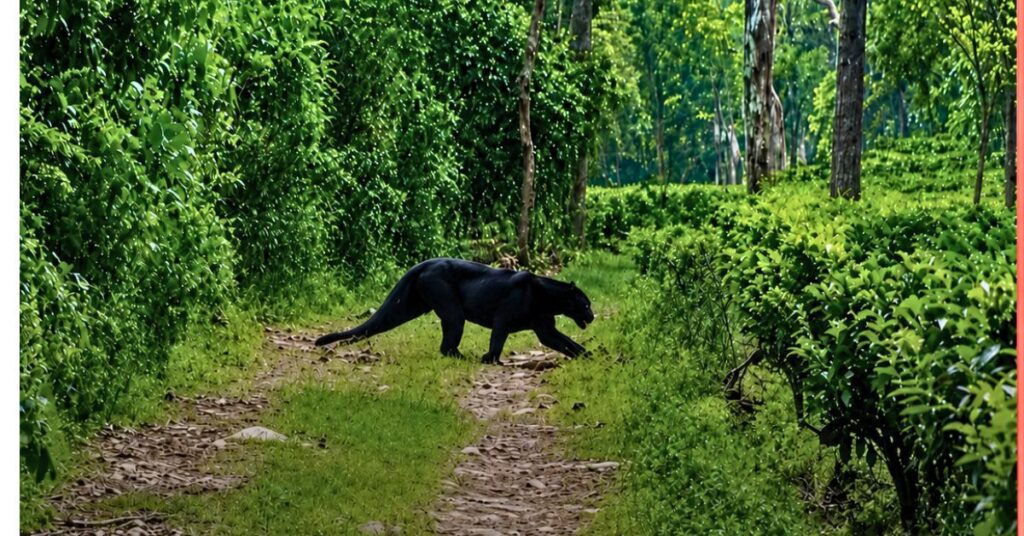
Residents of Assam’s Tinsukia district woke up to an extraordinary and unexpected sight on Tuesday morning after a rare black panther was reportedly seen roaming through the Hansara Tea Garden near Doomdooma.
The elusive wild cat, believed to be a melanistic leopard, was spotted moving quietly through the dense tea bushes during the early hours of May 12. Videos captured by local workers quickly spread across social media, turning the incident into one of the most talked-about wildlife sightings in Assam this year.
While many people were fascinated by the rare appearance of the animal, the sighting has also raised safety concerns among tea garden workers and nearby residents.
A Sudden Encounter in the Tea Garden
According to local workers, the animal appeared unexpectedly inside the plantation area while labourers were preparing for routine work in the morning.Eyewitnesses described the moment as both “beautiful” and “terrifying.”
“It moved very silently. At first, we thought it was a shadow inside the bushes,” said a local worker who claimed to have seen the animal from a distance.
Several residents said the panther disappeared within minutes into nearby green cover, making it difficult for people to track its movement afterward.Soon after the videos surfaced online, the sighting attracted widespread attention from wildlife enthusiasts and social media users across the state.
What Exactly Is a Black Panther?
Despite being commonly called a black panther, the animal is not a separate species. Wildlife experts explain that it is actually a melanistic Indian leopard (Panthera pardus).
Melanism is a rare genetic condition that causes the animal’s fur to appear black because of excess dark pigmentation. However, under sunlight or certain lighting conditions, the leopard’s natural spotted patterns can still be faintly visible.
Black panthers are considered extremely rare and are known for their secretive behaviour, which makes sightings uncommon in the wild.
Why Wildlife Is Entering Human Areas
Experts believe increasing human-wildlife interaction in Upper Assam is linked to habitat loss and shrinking forest cover.Tea gardens in Assam often act as temporary shelters and movement corridors for animals because of their thick vegetation and connection to nearby forest patches.
Wildlife conservationists say
- * Rapid urban expansion
- Deforestation
- Habitat fragmentation
are forcing animals to move closer to populated areas in search of food and safe passage.The latest incident reportedly comes just days after another leopard was rescued and relocated from a nearby region, indicating rising wildlife movement across the district.
Fear Among Workers and Villagers
The sighting has created anxiety among tea garden workers, many of whom enter plantation areas during early morning hours.Parents in nearby villages have also expressed concern for children and livestock.
“We are scared because workers spend long hours inside the gardens,” one resident said.Local authorities are reportedly advising people to avoid isolated plantation routes during dawn and evening hours when wild animals are usually more active.
Forest Officials Monitoring the Situation
Forest department officials are believed to be closely monitoring the area after reports of the sighting emerged online.Authorities are expected to
- Track the animal’s movement
- Prevent public panic
- Ensure the safety of residents
- Protect the leopard from harm
Officials have also urged people not to crowd the area or attempt to approach the animal for videos or photographs.leopards are protected under India’s Wildlife Protection laws, harming or disturbing the animal is a punishable offence.
Social Media Flooded With Reactions
As videos and images circulated online, many social media users described the sighting as a rare glimpse into Assam’s rich wildlife heritage.Some users called the animal:
- “The ghost of the forest”
- “A majestic shadow”
- “Nature’s hidden beauty”
Wildlife photographers and conservation groups also highlighted the importance of protecting natural habitats to reduce human-animal conflict in the future.
Assam’s Wildlife Richness Once Again in Focus
Assam is globally recognised for its biodiversity and wildlife population. The state is home to iconic species such as:
- One-horned rhinoceroses
- Royal Bengal tigers
- Asian elephants
- Clouded leopards
However, melanistic leopards are rarely seen, making the Hansara Tea Garden sighting especially significant.Experts believe such encounters are reminders that wildlife conservation and habitat protection must remain a priority across Northeast India.
(FAQ)
Q1What was spotted in Assam’s Tinsukia district?
A rare black panther, believed to be a melanistic Indian leopard, was reportedly spotted inside Hansara Tea Garden near Doomdooma in Assam’s Tinsukia district on May 12, 2026.
Q2Is a black panther a separate animal species?
No. A black panther is not a separate species. It is usually a leopard or jaguar with a rare genetic condition called melanism, which causes dark black fur.
Q3 are leopards entering tea garden areas in Assam?
Wildlife experts say habitat loss, shrinking forests, and fragmented wildlife corridors are forcing animals to move closer to human settlements and tea plantations in search of shelter and movement paths.
Conclusion
The rare black panther sighting in Assam’s Tinsukia district has captured public attention across the region, blending fascination with concern.While the majestic animal’s appearance has amazed wildlife lovers, the incident also reflects the growing challenges of coexistence between humans and wildlife as natural habitats continue to shrink.
For many residents, the image of the mysterious black panther silently walking through the tea garden will remain unforgettable — a powerful reminder that the wild still survives in the heart of Assam.