Published: May 27, 2026 | Food Safety Alert | Verified with FDA & USDA Sources
The Blackstone Parmesan Ranch Seasoning Recall: What Happened and Why It Matters
This recall did not happen because someone got sick. It happened because the system worked — and that distinction matters for your peace of mind, even as it reinforces why you need to act now.
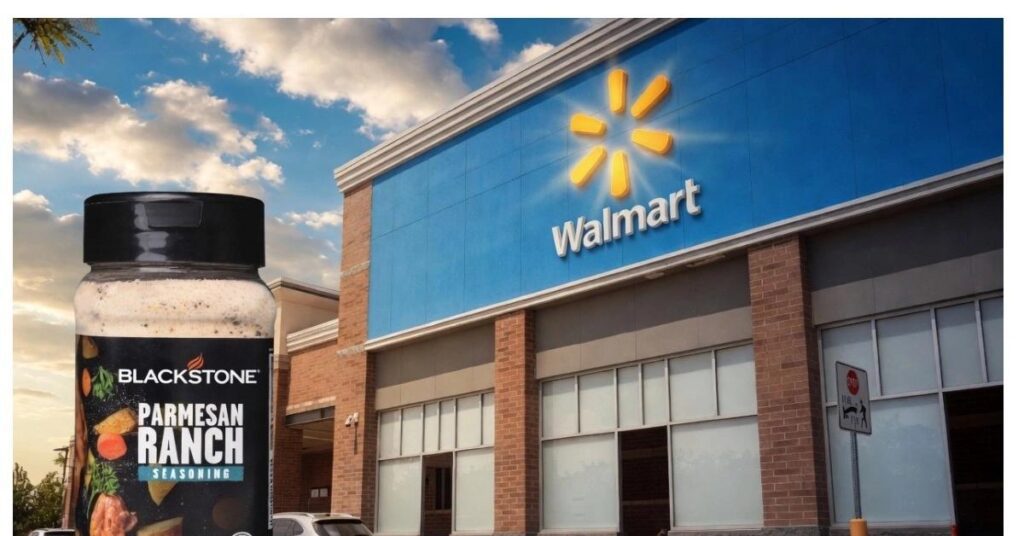
Blackstone Products, based in Providence, Utah, is the maker of the popular griddle seasonings sold exclusively at Walmart stores nationwide. In May 2026, the company voluntarily initiated a recall after one of its ingredient suppliers — California Dairies, Inc. — flagged their dry milk powder as potentially contaminated with Salmonella. That milk powder was used as an ingredient in Blackstone’s Parmesan Ranch seasoning blend.
According to a statement published by the FDA on May 15, 2026, the recall was initiated after California Dairies Inc. recalled dry milk powder that may have been contaminated with Salmonella. The contamination concern is upstream — at the ingredient level — which is precisely why the FDA takes it seriously even before finished product testing flags a problem.
No illnesses have been reported from the affected seasoning products, but the FDA warns Salmonella can cause serious and sometimes fatal infections in young children, frail or elderly people, and others with weakened immune systems.
That last sentence deserves your full attention. Salmonella is not just a stomach bug. For vulnerable people — the elderly, babies, pregnant women, anyone on immunosuppressive medications — it can be fatal.
Exactly Which Products Are Recalled: Check Your Jar Right Now
The Walmart Blackstone Parmesan Ranch recall affects specific 7.3-ounce containers of Blackstone Parmesan Ranch seasoning bearing product number #4106.
Check the bottom of the container for the lot number and best-by date. The three affected lot numbers are:
- Lot 2025-43282 — Best If Used By: July 2, 2027
- Lot 2025-46172 — Best If Used By: August 5, 2027
- Lot 2026-54751 — Best If Used By: August 12, 2027
If your container matches any of these, do not use it. Do not try to cook it at high temperatures thinking that will neutralize the bacteria. Dispose of it immediately or contact the company.
Customers seeking replacement products can contact Blackstone Products at 1-888-879-4610 between 8 a.m. and 5 p.m. EST Monday through Friday.
One important context: other items included in the broader California Dairies recall wave involved Ghirardelli Chocolate Powders, Zapp’s chips, trail mix, and more. This is a supply-chain recall with a long reach.
What Salmonella Actually Does to Your Body
Understanding the real risk helps you take this seriously without unnecessary panic.Blackstone Parmesan Ranch salmonella
Salmonella is a bacteria found in animal products — eggs, poultry, dairy — that can contaminate food at any point in the production chain. When it enters a dry powder like milk, it can survive for months. Unlike on a raw chicken breast, you cannot simply look at a spice blend and know something is wrong.
Salmonella is an organism that can cause fever, diarrhea, nausea, vomiting, and abdominal pain in otherwise healthy people. In rare cases, the infection can enter the bloodstream and cause more severe illnesses, including arterial infections, endocarditis, and arthritis.
Symptoms typically appear 6 hours to 6 days after exposure. Most healthy adults recover without medical treatment. However, the people who use griddle seasonings like Parmesan Ranch are often cooking for families — including children and grandparents — who face much higher risk.
Aldi Pizza Recall 2026: Mama Cozzi’s Is Affected Too
The California Dairies dry milk powder contamination reached far beyond one seasoning brand. Frozen pizzas at Aldi are also caught in this recall wave.
Aldi recalled Mama Cozzi’s Biscuit Crust Sausage & Cheese Breakfast Pizza and Biscuit Crust Sausage, Bacon, Peppers & Onion Breakfast Pizza, both carrying best-by dates of October 15, October 21, October 22, October 23, or October 24, 2026, from products made between February 17–26, 2026.
The Aldi products were issued under a public health alert by the USDA’s Food Safety and Inspection Service (FSIS) on April 30, 2026. The FSIS urges consumers not to eat any affected products, even if they are cooked thoroughly. That last detail is critical: unlike some bacterial contaminants, authorities are not telling you that thorough cooking makes the food safe. Throw it away.
Other products included in this specific health alert were Pork King Good pork rinds in 1.75 oz and 7 oz bags in onion and sour cream flavor, and Culinary Circle 16.4 oz ultra-thin crust chicken bacon ranch pizza.
At Walmart specifically, Great Value Thin Crust Chicken Bacon Ranch Pizza with best-by dates of either October 9, 2026 or November 7, 2026 and Great Value Stuffed Crust Chicken Bacon Ranch Pizza with best-by dates of October 25, October 26, November 8, and December 9, 2026, are all part of the alert.
If you have any of these in your freezer right now, check the label.
What Vegetable Was Recalled from Walmart?
Multiple vegetable recalls have touched Walmart in the recent period, and it is important to know which ones are most relevant.
The most prominent recent recall affecting Walmart’s vegetable section was tied to carrots. The FSIS traced a contamination issue to a vegetable ingredient — carrots — believed to be the source of glass contamination in a wide range of frozen meals, including chicken and pork fried rice, ramen, and shu mai dumplings produced under brands including Ajinomoto, Kroger, Ling Ling, Tai Pei, and Trader Joe’s, some of which were sold at Walmart stores and Sam’s Clubs nationwide.
In a separate issue, Walmart’s Marketside broccoli brand was at the center of a listeria-related recall. Braga Fresh issued a voluntary recall of its fresh vegetable products after listeria concerns were identified, affecting Marketside brand broccoli florets sold across 20 states.
For current and ongoing vegetable advisories, always check the FDA’s recall page at fda.gov or the USDA FSIS recall list at fsis.usda.gov, as fresh produce recalls can move quickly.
The practical advice from food safety experts is consistent: when in doubt, throw it out. The FDA’s explicit guidance for recalled leafy greens and produce is disposal, not washing.
Which Lettuce Was Recalled?
Lettuce is one of the produce categories with the most consistent recall history in the United States, and 2024 into 2026 has continued that trend.
Romaine and bagged leafy greens are the highest-risk fresh produce categories because they are consumed raw and go through centralized processing that can spread contamination across large batches. This is not an opinion — it is the FDA’s own assessment of risk concentration in fresh produce supply chains.
A sobering reality highlighted by food safety advocates: a multistate outbreak at the end of 2024 caused by E. coli-contaminated romaine lettuce distributed to schools, restaurants, catered events, and retail sickened 89 people, put seven in the hospital with hemolytic uremic syndrome, and killed one person. Despite identifying the company responsible through genetic sequencing, the FDA did not publicly name them — a policy that consumer advocacy groups are actively challenging.
The critical consumer takeaway: E. coli can attach to the surface of leafy greens and, in some cases, be taken up through the roots and into plant tissue, making washing ineffective. This is why lettuce recalls carry special urgency. You cannot clean your way to safety.
For the most current lettuce advisories, check cdc.gov/foodsafety and fda.gov/recalls in real time.
What Egg Brands Were on Recall at Walmart?
One of the most significant food safety events of 2025, carrying into 2026, was the August Egg Company recall — one of the largest egg recalls in recent American history.
On June 6, 2025, the FDA announced that August Egg Company of Hilmar, California, was recalling over 1,700,000 dozen brown cage-free and certified organic eggs — totaling over 20 million eggs — in response to an ongoing multistate Salmonella outbreak that had sickened 79 people and resulted in 21 hospitalizations.
The eggs reached Walmart under several brand names. Brands the recalled eggs were sold under include: Clover, First Street, Nulaid, O Organics, Marketside, Raley’s, Simple Truth, Sun Harvest, and Sunnyside.
The eggs were distributed from February 3, 2025, through May 6, 2025, with sell-by dates from March 4, 2025, to June 19, 2025, to Walmart locations in California, Washington, Nevada, Arizona, Wyoming, New Mexico, Nebraska, Indiana, and Illinois.
The key identifier: the recalled eggs have the plant code P-6562 or CA5330 and Julian dates between 32 and 126, printed on the fiber or plastic carton package.
If you find eggs in your freezer — people do freeze eggs — with these codes and sell-by dates, discard them. Freezing does not kill Salmonella.
How to Protect Your Family: A Practical Action Plan
Food recalls sound like bureaucratic notices. They are not. They are the result of a system designed to alert you before harm happens. Here is what to do, practically and immediately:
Step 1 — Check your spice cabinet today. Look at every Blackstone seasoning container you own. Check item number 4106 and the three lot numbers listed above.
Step 2 — Check your freezer. Look for Mama Cozzi’s breakfast pizzas from Aldi, Great Value Chicken Ranch pizzas from Walmart, and any Pork King Good pork rinds. Check the best-by dates.
Step 3 — Do not cook recalled food. Heat does not reliably neutralize all bacterial contamination, and in the case of the current alerts, the USDA has explicitly said cooking through is not sufficient. Throw the food away, sealed in a bag.
Step 4 — Contact the company for a refund. You do not lose money on recalled products. Blackstone can be reached at 1-888-879-4610. Walmart offers refunds on recalled items at customer service without requiring a receipt.
Step 5 — Bookmark your real-time recall sources. The FDA recall database (fda.gov/recalls) and the USDA FSIS list (fsis.usda.gov/recalls) are updated in real time. The CDC’s foodborne illness outbreak page (cdc.gov/foodsafety) is often the first place a problem surfaces, before a formal recall is even announced.
Why Recalls Keep Happening at Big Retailers
Understanding why Walmart, Aldi, and other large retailers keep appearing in food recall headlines helps you be a smarter, more resilient shopper.
Large retailers do not manufacture most of what they sell. They source from vast, complex supply chains involving dozens of ingredient suppliers, third-party manufacturers, and co-packers. The Blackstone recall was not Walmart’s fault, nor Blackstone’s in any direct sense — it originated with California Dairies’ dry milk powder. By the time that powder became a seasoning blend, it had passed through multiple hands.
This is precisely how a single contaminated dairy ingredient can ripple into seasonings, frozen pizzas, pork rinds, and chocolate powders all at once, across multiple major retailers, all traced back to one supplier.
The good news: the voluntary recall system is working. No illnesses have been linked to the Blackstone Parmesan Ranch seasoning. The system caught the problem at the supply chain level. The bad news: it means you need to be a proactive participant in your own food safety. Check recall lists. Read your product labels. When in doubt, throw it out.
Final Checklist: Items to Check Right Now
Here is a summary of every product discussed in this article that may be in your home:
THROW AWAY if you have these:
- Blackstone Parmesan Ranch 7.3 oz (#4106) — Lot numbers 2025-43282, 2025-46172, or 2026-54751
- Mama Cozzi’s Biscuit Crust Breakfast Pizzas (Aldi) — Best by dates Oct. 15, 21, 22, 23, or 24, 2026
- Great Value Thin Crust Chicken Bacon Ranch Pizza — Best by Oct. 9 or Nov. 7, 2026
- Great Value Stuffed Crust Chicken Bacon Ranch Pizza — Best by Oct. 25, Oct. 26, Nov. 8, or Dec. 9, 2026
- Pork King Good Sour Cream & Onion Pork Rinds — Check lot codes per FDA alert
- August Egg Company eggs (any brand: Clover, Marketside, O Organics, etc.) — Plant code P-6562 or CA5330, Julian dates 32–126 (sell-by dates have passed; discard if still in freezer)
Call if you need help:
- Blackstone Products: 1-888-879-4610
- FDA General Recall Line: 1-866-300-4374
- USDA Meat & Poultry Hotline: 1-888-674-6854
This article is based on official FDA and USDA recall announcements and verified news reporting. Food recall information can change rapidly. Always cross-check with fda.gov and fsis.usda.gov for the most current status of any recall.