Food Safety Desk | June 2026 | India
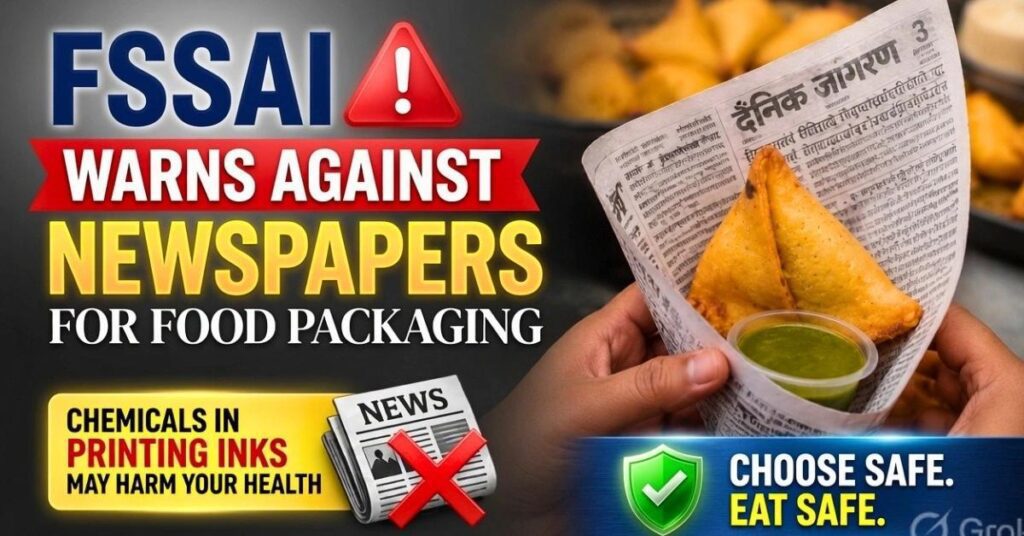
The next time a vendor hands you samosas wrapped in a sheet of newspaper, think twice before eating them. The Food Safety and Standards Authority of India (FSSAI) has once again issued a strong warning — using newspapers to wrap, serve, or package food is dangerous, and it must stop.
This practice is deeply rooted in everyday life across India. From roadside stalls to local sweet shops, newspapers are routinely used as cheap, convenient packaging. But what seems harmless is actually exposing millions of people to toxic chemicals every single day.
What FSSAI Is Saying
FSSAI has clearly directed all food vendors, street food sellers, restaurants, and food business operators to immediately stop using newspapers, magazines, and other printed materials for food packaging and serving. The food safety regulator has highlighted that printing inks contain chemicals, pigments, dyes, solvents, preservatives, and mineral oils that are formulated for publishing purposes — not for any contact with food.
When food comes into direct contact with these printed surfaces, harmful substances from the ink can migrate into the food. This is not a possibility — it is something that happens every time hot or oily food touches newsprint.
The risk increases significantly with freshly cooked and greasy foods. Heat and oil act as accelerants, pulling chemical compounds from the printed surface directly into what you are about to eat. The problem does not stop with ink alone. Newspapers pass through many hands — printing presses, delivery trucks, newsstands, and homes — before being reused for food. Dust, dirt, bacteria, and other residues accumulate at every stage. There is simply no way to guarantee hygiene.
Foods Most Commonly at Risk
In many parts of India, newspapers are still widely used to wrap or serve popular food items. These include samosas and pakoras, jalebis and Indian sweets, fried snacks, roasted peanuts, bread and bakery items, fruits and vegetables, and a wide range of street food.
Newspapers are also used as liners beneath food items or as wrapping for takeaway orders. FSSAI has made it clear that all such practices pose a contamination risk and must be replaced with safer alternatives.
The Health Risk You Cannot Ignore
Food safety experts point out that long-term exposure to chemicals found in printing inks can have serious adverse effects on human health. While eating newspaper-wrapped food once may not cause immediate illness, repeated consumption of such contaminated food builds up risk over time.
Certain chemical compounds found in inks — including mineral oils — have been associated with potential health concerns in studies conducted internationally. India’s food safety body has taken note and continues to push for stricter compliance among food businesses of all sizes.
FSSAI has also clarified that its standards apply stricter rules to food packaging because content is served directly to consumers without any further processing or safety check. Once the food is wrapped, the migration of chemicals cannot be undone.
What Consumers Must Do
Consumer awareness is one of the most powerful tools in improving food safety standards across India. FSSAI has urged consumers to take an active role in this issue.
If you are buying food from a vendor, refuse it if it is wrapped in newspaper. Politely ask them to use food-grade paper or an approved packaging alternative. When purchasing packaged snacks or street food, check whether the packaging looks clean and appropriate for food contact. Support food businesses that follow proper hygiene and packaging standards — your preference sends a direct market signal.
If you repeatedly encounter a vendor ignoring food safety norms, you can report the violation to your local food safety authority. Collective action by consumers is what drives real change on the ground.
Safe and Affordable Alternatives
The good news is that switching to safe packaging does not have to be expensive. Several affordable food-safe alternatives are readily available across India. These include food-grade paper, butter paper, parchment paper, food-safe paper bags, certified food containers, biodegradable trays, and eco-friendly packaging boxes.
These materials are specifically designed for food contact. They prevent contamination, maintain food quality, and are available in bulk at low cost for food businesses of all sizes. There is no valid reason to continue using newspapers when these alternatives exist.
The Bottom Line
Food safety is not a luxury — it is a basic right. FSSAI’s repeated advisory on newspaper packaging is a reminder that even the most ordinary daily habits can carry hidden health risks. Whether you are a vendor serving hundreds of customers or a consumer buying a quick snack, the choice of packaging matters.
Switching to food-grade materials is simple, affordable, and responsible. It protects customers, upholds hygiene standards, and supports a healthier food culture across India. The message from FSSAI is clear — it is time to let newspapers do what they were meant to do: be read, not eaten.
Source: Food Safety and Standards Authority of India (FSSAI)