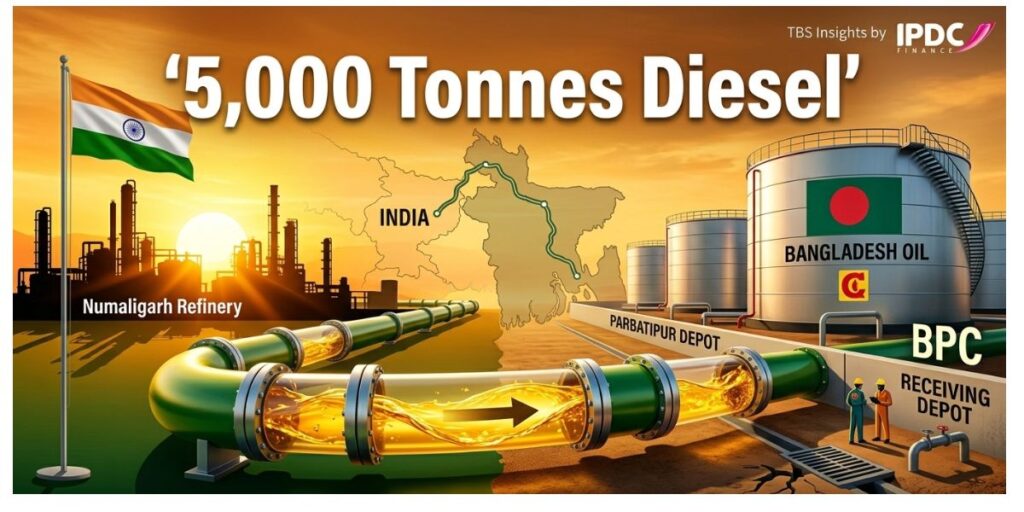
India has supplied an additional 5,000 tonnes of high-speed diesel to Bangladesh through the India-Bangladesh Friendship Pipeline.This delivery, confirmed by officials at Bangladesh’s Parbatipur Padma Oil depot,arrives at a critical time when global oil markets face pressure from ongoing West Asia tensions.
For everyday citizens in Bangladesh,this means more reliable fuel for transport,agriculture, and power generation. For India,it reinforces its role as a trusted regional partner.The move is not just about one shipment it’s part of a structured bilateral agreement designed for long-term stability.
Key Highlights
- 5,000 tonnes delivered: Latest consignment via the Friendship Pipeline to Parbatipur depot.
- April target: Bangladesh expected to receive around 25,000 tonnes total from India this month.
- Pipeline advantage: Faster, safer, and cheaper than road or rail transport.
- Annual scale: Part of a long-term deal with capacity up to 1 million metric tonnes per year.
- Source: Diesel pumped from Numaligarh Refinery Limited (NRL) in Assam, India.
This infrastructure project turns geography into an asset, delivering fuel directly where it’s needed most in northern Bangladesh.
How the Diesel Reaches Bangladesh: Pipeline in Action
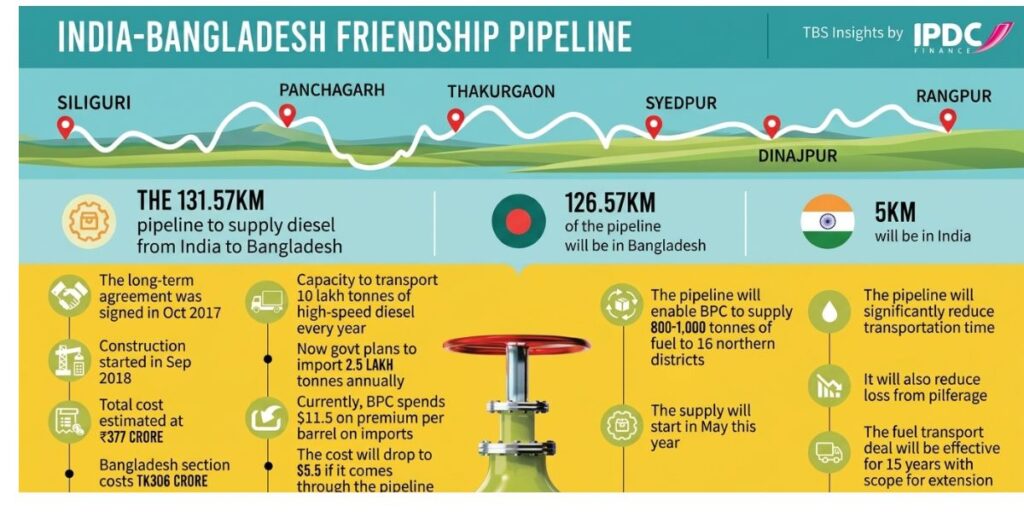
The diesel flows through the 131.57 km India-Bangladesh Friendship Pipeline 5 km on the Indian side and 126.57 km in Bangladesh. Construction began in 2018 after a 2017 agreement,and it was inaugurated in March 2023 by Prime Ministers Narendra Modi and Sheikh Hasina.
Pumping started from Numaligarh Refinery at a rate of approximately 113 metric tonnes per hour,with the full 5,000-tonne batch expected to reach Parbatipur depot in Dinajpur within about 44 hours.traditional tanker trucks or rail wagons the pipeline eliminates delays, reduces pilferage risks,and minimizes environmental spills.
Infographic showing the Friendship Pipeline route from Siliguri (India) through northern Bangladesh districts to Parbatipur/Rangpur.
This modern system has already proven its worth by resuming operations after a temporary halt in 2024, now providing consistent relief amid supply chain uncertainties.
Officials from the Bangladesh Petroleum Corporation (BPC) describe this as routine under a commercial agreement.The Parbatipur depot manager confirmed the latest inflow, noting steady deliveries to support national reserves.
Bangladesh aims to import up to 180,000 tonnes annually through this channel in the current phase, with expectations of scaling toward the pipeline’s full 1 million tonne capacity. The fuel supports key sectors: diesel powers irrigation pumps for farmers, trucks for logistics, and generators for industries.This isn’t emergency aid—it’s smart, proactive energy diplomacy that benefits both economies without straining India’s domestic needs.
Energy Security in a Volatile World
Global fuel prices and supply routes remain disrupted by geopolitical tensions in West Asia.Bangladesh,heavily reliant on imported petroleum,faces risks of shortages that could spike costs for commuters, businesses, and households.
India’s pipeline supply offers predictability.It reduces Bangladesh’s dependence on sea shipments (which are slower and costlier) and provides a buffer against international volatility.For readers in South Asia,this translates to potential price stability at petrol pumps and lower inflation pressure on food and goods.
From an Indian perspective, exporting refined diesel strengthens economic ties and showcases Northeast India’s refining capacity as a regional hub.
Economic and Strategic
- 1. Cost Savings: Pipeline transport slashes logistics expenses by up to 50% compared to road/rail, lowering import costs for Bangladesh and indirectly benefiting consumers.
- 2. Faster and Reliable Delivery: No traffic jams or weather delays—fuel arrives on schedule, preventing shortages that hit daily life.
- 3. Environmental Edge: Fewer trucks mean reduced emissions and less risk of accidents or spills.
- 4. Job and Industry Boost: Stable fuel supports agriculture (Bangladesh’s backbone), manufacturing, and transport, creating ripple effects for employment.
- 5. Stronger Bilateral Ties: Energy cooperation often opens doors to more trade, investment, and people-to-people links—good news for regional peace and growth.
For Bangladeshi businesses and farmers: This means uninterrupted operations.For Indian stakeholders: It highlights how infrastructure like this pipeline (built with shared investment) delivers real returns on diplomacy.
The Friendship Pipeline project traces back to a 2017-2018 MoU.Total cost was around ₹377 crore, with India funding the cross-border segment as a grant.It was designed specifically to serve northern Bangladesh’s 16 districts, where fuel shortages were acute.
Post-inauguration in 2023, operations faced interruptions due to political changes in 2024 but have now resumed fully.This resumption signals renewed trust between the neighbors and underscores the pipeline’s role as a symbol of “friendship” in practice.
Why Cross-Border Pipelines Are the Future
Worldwide, nations are shifting to pipelines for efficiency think Europe’s gas networks or Asia’s growing oil links.In South Asia, where infrastructure gaps meet rising demand, projects like this one cut costs, enhance security, and reduce carbon footprints versus tanker fleets.
India is positioning itself as a reliable energy supplier to neighbors, aligning with broader goals of regional connectivity.For Bangladesh, it diversifies sources beyond traditional Middle East imports.
FAQs
1. How much diesel is India supplying?
The latest batch is 5,000 tonnes, with April totals nearing 25,000 tonnes.
2. Where does the diesel come from?
Numaligarh Refinery in Assam, pumped directly via the Friendship Pipeline to Parbatipur depot.
3. What is the long-term plan?
Annual supplies under a 15-year agreement, scaling toward full pipeline capacity of 1 million tonnes/year.
4. Who benefits most?
Bangladeshi consumers and industries get stable, affordable fuel; both countries gain stronger economic and diplomatic bonds.
5. Any environmental gains?
Yes—pipelines are safer and greener than road transport, with lower pilferage and emissions.
Conclusion
India’s supply of 5,000 tonnes of diesel to Bangladesh via the Friendship Pipeline exemplifies how targeted cooperation solves real challenges.It delivers immediate relief amid uncertainty while laying foundations for sustainable growth.
For users reading this whether in India, Bangladesh, or beyond this story highlights the power of infrastructure and trust.Stable energy means stable economies, lower costs for you, and a more connected neighborhood.As supplies continue and ties deepen,expect more milestones like this in the years ahead.