Tunisia’s World Cup campaign nearly collapsed before it even began. After a brutal 5-1 humiliation against Sweden — the worst defeat in the nation’s World Cup history — the Tunisian Football Federation did something almost unheard of: they fired head coach Sabri Lamouchi just one match into the tournament. Now, with new boss Hervé Renard barely days into the job, Tunisia faces a make-or-break clash against Japan at Estadio BBVA in Monterrey, Mexico — a match that also happens to be the 1,000th game in World Cup history. Here’s everything you need to know about the venue, the chaos, and what’s at stake.
Where Is Tunisia vs Japan Being Played?
Tunisia and Japan meet in a pivotal Group F clash at Estadio BBVA (also called Monterrey Stadium) in Guadalupe, Mexico, part of the greater Monterrey metropolitan area. The match is one of the standout fixtures of the FIFA World Cup 2026 group stage, carrying extra weight as the 1,000th match in men’s World Cup history — a milestone that has pulled global attention toward a game that would otherwise have flown under the radar for casual fans.
Kickoff is scheduled for 10:00 p.m. local time in Monterrey, which translates to midnight ET / 9:00 p.m. PT in the United States. For fans across North America wondering exactly when and where to tune in, this is the single most important detail: a late-night Mexico kickoff in a city of fewer than one million residents that has quickly become one of the most football-mad host venues of the tournament.
If you’ve been searching “tunisia vs japan where are they playing,” the short answer is simple: Estadio BBVA, Monterrey, Mexico. But there’s a lot more context worth knowing before kickoff — from the stadium itself to the dramatic week both teams have just had.
Estadio BBVA: Venue Details Fans Should Know
Estadio BBVA is home to Liga MX giants Monterrey (Rayados) and is widely regarded as one of the most modern, architecturally striking stadiums in Mexican football. For World Cup 2026, the venue has been configured to hold more than 51,000 fans, with reported capacity figures ranging between 51,243 and 51,348 depending on the source — a number that reflects FIFA’s temporary World Cup seating adjustments.
The stadium’s opening World Cup match already drew a near-capacity crowd of nearly 51,000 when Tunisia faced Sweden, and organizers expect another packed house for this fixture. Both Tunisian and Japanese fans are known for traveling internationally in large numbers, and Monterrey’s passionate, soccer-obsessed local population is expected to add to the atmosphere regardless of which side they’re cheering for.
Weather conditions: Fans attending in person should prepare for typical Mexican summer conditions in Nuevo León — daytime temperatures in the high 20s to low 30s Celsius (roughly 82–86°F), high humidity, and a real chance of evening thunderstorms. The open-air design of the stadium means conditions on the pitch could play a factor in how both teams approach the game, particularly given the quick turnarounds between group-stage matches.
Beyond the location, what’s made this fixture explode in search interest is the dramatic context surrounding both teams heading into matchday two of Group F.
Tunisia’s Crisis Mode
Tunisia’s World Cup campaign has gotten off to the worst possible start. The Eagles of Carthage suffered a 5-1 defeat to Sweden in their opening match — the heaviest loss in the nation’s World Cup history. The result was so damaging that it triggered an almost immediate managerial change: head coach Sabri Lamouchi, who had only been in the role since January, was dismissed within days of the loss.
In his place, the Tunisian Football Federation moved quickly to appoint Hervé Renard, a 57-year-old Frenchman with an unusual claim to fame — this marks his third consecutive World Cup with a third different nation, having previously led Morocco at the 2018 tournament and Saudi Arabia in 2022, the latter producing one of the great World Cup upsets when his side beat Argentina.
Renard inherited the Tunisia job with almost no preparation time, and reports from the camp suggest he plans to abandon the back-five system used against Sweden in favor of a more disciplined 4-3-3, aiming to tighten up a defense that has now conceded ten goals across its last two matches (including a 5-0 pre-tournament friendly loss to Belgium).
Ranked 55th in the FIFA world rankings, Tunisia have won just one of their last eight matches across all competitions, and a defeat here would leave them needing a near-miracle result against the Netherlands in their final group match to have any realistic hope of reaching the knockout rounds.
Japan’s Steadier Path
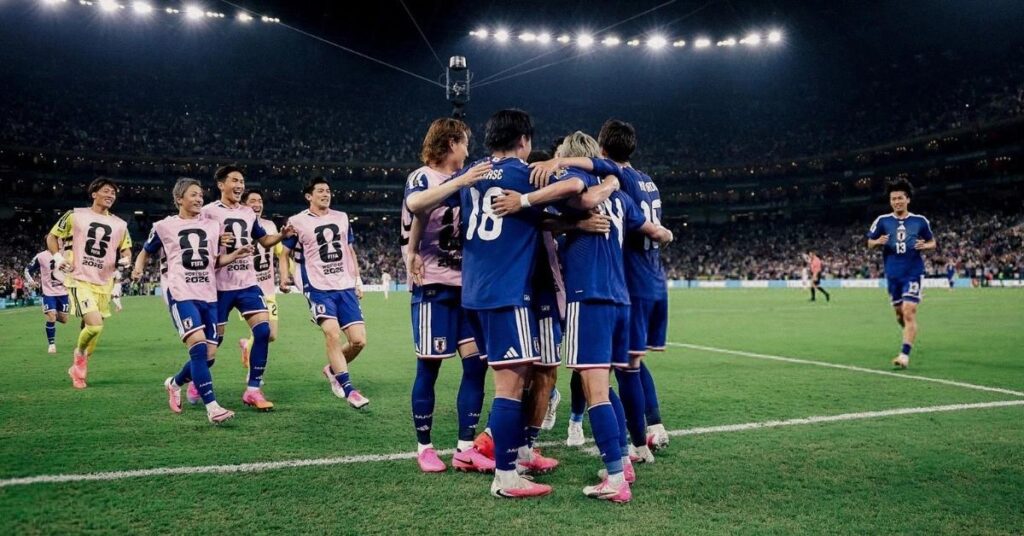
Japan, by contrast, arrive in much better shape both on the pitch and in terms of squad continuity. The Samurai Blue earned a gritty 2-2 draw against the Netherlands in their opener, coming from behind twice — first to a Virgil van Dijk header, then to a long-range strike from Crysencio Summerville — before goals from Keito Nakamura and a stoppage-time equalizer from Daichi Kamada rescued a point.
Manager Hajime Moriyasu, who has led the national team since 2018, brings a level of continuity and tactical familiarity that Tunisia simply cannot match right now. Japan does have one significant absence to manage: winger Takefusa Kubo will miss this match with a knee injury sustained against the Netherlands, putting extra creative responsibility on Kamada and Takumi Minamino.
Ranked 17th in the world, Japan enters this fixture as clear favorites, and a win would put them firmly in control of qualifying for the Round of 32 with one group match still to play.
Head-to-Head History: Japan’s Dominant Record
For fans searching for context on how these two nations have fared against each other historically, the numbers heavily favor Japan. The two sides have met four times since their first encounter in October 1996, when Japan won 1-0 in a friendly in Kobe.
| Date | Competition | Result |
|---|---|---|
| October 1996 | Friendly (Kobe) | Japan 1-0 Tunisia |
| June 2002 | FIFA World Cup Group H | Japan 2-0 Tunisia |
| 2022 | Kirin Cup Final | Tunisia 3-0 Japan |
| October 2023 | Kirin Challenge Cup (Kobe) | Japan 2-0 Tunisia |
Japan has won three of the four meetings, with Tunisia’s only victory coming in a 2022 friendly tournament rather than a competitive fixture. Notably, the only previous World Cup meeting between these two nations also took place in 2002, and Japan won that one too — a piece of history that adds extra weight to Sunday’s milestone clash as just the second-ever World Cup meeting between the sides, separated by 24 years.
Predicted Lineups
Tunisia (likely 4-3-3 under Renard): Goalkeeper: Aymen Dahmen/Chamakh Defenders: Yan Valery, Omar Rekik, Montassar Talbi, Ali Abdi Midfield: Ellyes Skhiri, Aissa Laidouni, Hannibal Mejbri Attack: Elias Saad, Firas Chaouat, Anis Ben Slimane
Japan (likely 4-2-3-1): Goalkeeper: Zion Suzuki Defenders: Yukinari Sugawara, Ko Itakura, Shogo Taniguchi, Yuto Nagatomo/Watanabe Midfield: Ao Tanaka, Kaishu Sano Attack: Keito Nakamura, Daichi Kamada, Takumi Minamino, Ayase Ueda
How and Where to Watch
The match will be broadcast across multiple global markets: Fox Sports / FS1 in the United States, BBC One and BBC iPlayer in the UK, Zee5 in India, and SBS in Australia. North American fans should plan for a very late kickoff — midnight Eastern time means West Coast viewers will be watching at 9:00 p.m., while East Coast fans will need to stay up well past midnight or catch the replay.
Betting and Prediction Outlook
With Japan considered the stronger, more settled side and Tunisia dealing with a chaotic week of managerial upheaval, bookmakers have installed Japan as clear favorites, with some markets pricing a Japan win at roughly 8/15. Tunisia’s lone bright spot in recent encounters — the 2022 Kirin Cup win — came in a non-competitive friendly format and is unlikely to carry much psychological weight given the current turmoil within the camp.
For Tunisia, anything less than a win likely ends their realistic hopes of advancing before their final group match against the Netherlands. For Japan, a positive result here all but secures a spot in the knockout stage with a game to spare.
FAQ
Q1: Why did Tunisia fire their manager?
Tunisia fired head coach Sabri Lamouchi after a heavy 5-1 defeat to Sweden in their opening 2026 World Cup match — the worst loss in the nation’s World Cup history. The Tunisian Football Federation acted within days, replacing him with Hervé Renard ahead of the Japan fixture.
Q2: Who is the coach of Tunisia in 2026?
Hervé Renard is Tunisia’s head coach for the 2026 World Cup, appointed on June 16, 2026 after Lamouchi’s dismissal. This marks Renard’s third consecutive World Cup with a third different nation, having previously coached Morocco (2018) and Saudi Arabia (2022).
Q3: Which World Cup coach was fired?
Sabri Lamouchi, Tunisia’s manager, was sacked mid-tournament after the team’s 5-1 loss to Sweden. It marked the first time in World Cup history that a national team fired its head coach after just one match of the tournament.
Q4: Did Tunisia sack their manager?
Yes. Tunisia sacked Sabri Lamouchi immediately following their 5-1 opening-match defeat to Sweden, replacing him with Hervé Renard for their remaining group-stage matches.
Final Word
Whether you’re trying to figure out exactly where this World Cup fixture is being played, brushing up on the history between these two nations, or looking for the latest on Tunisia’s dramatic coaching change, this Group F clash at Estadio BBVA in Monterrey has turned into one of the most-discussed matches of the tournament’s opening week — and for good reason. A 1,000th World Cup match milestone, a fired coach, an injury-hit Japan side, and a genuine knockout-stage implication for both teams make this fixture worth far more attention than its modest billing suggested just a week ago.