
By Reedhi Devi | Published June 2026 | Assam Art & Culture
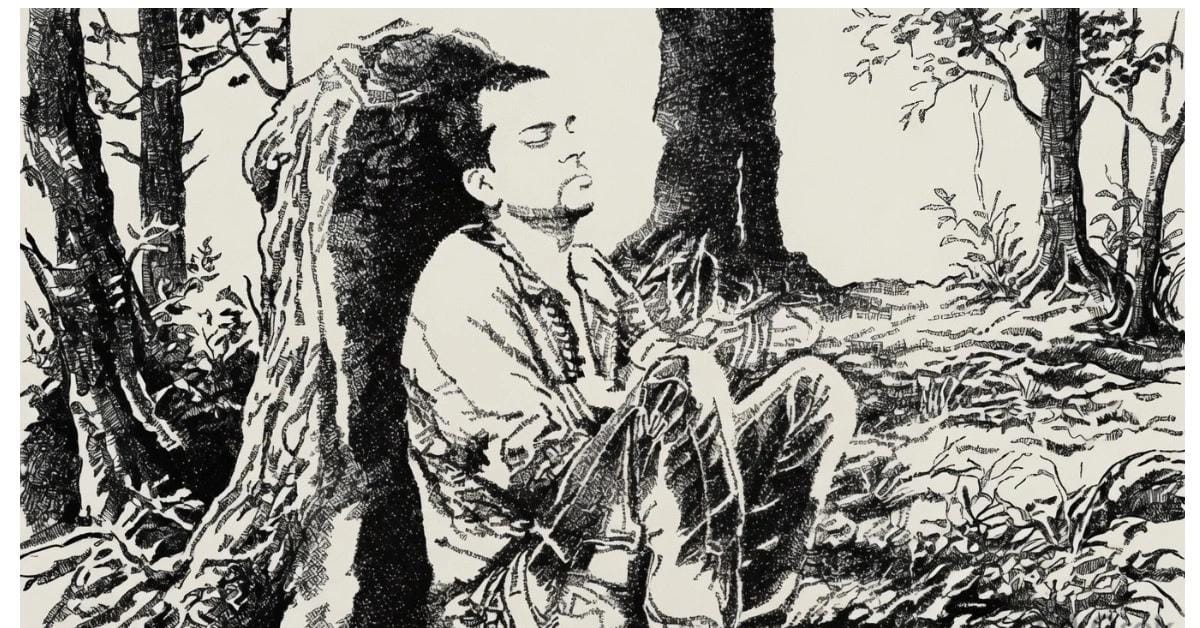
What does love for music look like when it takes the shape of a portrait made entirely of words? For Reedhi Devi, a young student from Digboi, Assam, it looks like 100,000 handwritten repetitions of the word “Mayabini” — the name of one of Zubeen Garg’s most beloved songs — carefully arranged to form the face of the man whose voice has defined a generation of Assamese music. This is not just art. This is devotion made visible, and it has moved thousands of hearts across social media.
The Story Behind the Portrait: From Passion to Paper
Reedhi Devi did not pick up a pencil and simply start drawing. She made a deeply intentional choice — to write. Specifically, to write the word Mayabini, over and over, nearly one lakh times, until the strokes of letters formed shadows, contours, and finally, a face.
The result is a typographic portrait of Zubeen Garg, Assam’s iconic singer, composer, and cultural symbol. Every line of his features — his brow, his jawline, his expression — is built from the same word, repeated with patience and precision. The denser the writing, the darker the tone. The lighter the pressure, the softer the highlight. It is a study in obsession that transforms into mastery.
“I wanted to pay tribute to Zubeen da in a way that felt personal,” Reedhi shared. “His song Mayabini has always moved me deeply. I thought — what if the song itself could become his face?”
Why “Mayabini”? The Song That Carries a Soul
Mayabini is one of Zubeen Garg’s most emotionally resonant tracks. The word itself, deeply rooted in the Assamese language, evokes enchantment, longing, and a kind of bittersweet beauty. It is the kind of song that makes people stop what they are doing and simply feel. Choosing this word was not accidental — it was the entire point.
Reedhi understood that art speaks loudest when every element carries meaning. The word Mayabini is not just a label on the artwork. It is the substance of it. The medium and the message are the same.
100,000 Times: The Real Scale of This Achievement
Let us put this into perspective. Writing a single word 100,000 times — maintaining consistent size, pressure, direction, and spacing — requires extraordinary focus. At an optimistic pace of writing one word every two seconds, that is over 55 continuous hours of writing. Reedhi likely spread this across many weeks, returning to the canvas day after day.
This is not the kind of commitment that can be faked, rushed, or outsourced. It is entirely, unmistakably human. And that humanity is exactly what people see when they look at the portrait.
The Viral Moment: Social Media Responds
When the artwork was shared on social media, the reaction was immediate and overwhelming. Thousands of users across platforms praised the piece for its creativity, patience, and emotional depth. Comments poured in from fellow Assamese people, music lovers, and art enthusiasts who were stunned by both the concept and its flawless execution.
Many called it the most meaningful tribute to Zubeen Garg they had ever seen. Others were simply speechless — sharing it with a single word: “Mayabini.”
The artwork struck a deep cultural chord because it did not just celebrate a famous voice. It celebrated what that voice means to ordinary people — to students, to dreamers, to those who grew up with his songs playing in the background of their most important moments.
Reedhi Devi: A Young Artist With an Extraordinary Vision
Reedhi Devi is a student from Digboi — a small, historically significant town in upper Assam. Her story is a reminder that exceptional art does not always emerge from metropolitan art schools or professional studios. Sometimes it emerges from a quiet room, a determined hand, and a deep love for something worth celebrating.
Her work carries all five marks of art that endures: originality, intention, skill, emotion, and cultural relevance. The portrait of Zubeen Garg is not just a tribute to him — it is a statement about what young Assamese creators are capable of when they channel their passion into craft.
A Tribute That Will Last
In a time when art is increasingly generated in seconds, Reedhi Devi chose to take weeks. In a world of shortcuts, she chose repetition. In a culture that often overlooks the quiet effort of students from smaller towns, her work demanded attention — and earned it.
The portrait lives now in digital memory and in the hearts of everyone who has seen it. Mayabini, written 100,000 times, has become something greater than a song title. It has become a monument.
Zubeen Garg has not just shaped Assamese music — he has inspired an entire generation to create. Reedhi Devi’s portrait proves that his legacy is alive in the most beautiful and unexpected ways.