
Dibrugarh, Assam | June 2, 2026
Reported from ground-level sources | Source: DIPR Assam
Every year, thousands of families across Assam receive a phone call they never want to get — a road accident, a life changed forever, a commute that never ended. In Dibrugarh, the district administration is taking that reality seriously. On June 2, 2026, a high-level road safety review meeting was convened, and what came out of it matters to every person who travels on Dibrugarh’s roads — whether you drive a vehicle, ride a two-wheeler, or simply walk to the market.
Here is a complete, honest breakdown of what happened, why it matters, and what it means for life on Dibrugarh’s roads going forward.
What Happened: The Meeting at a Glance
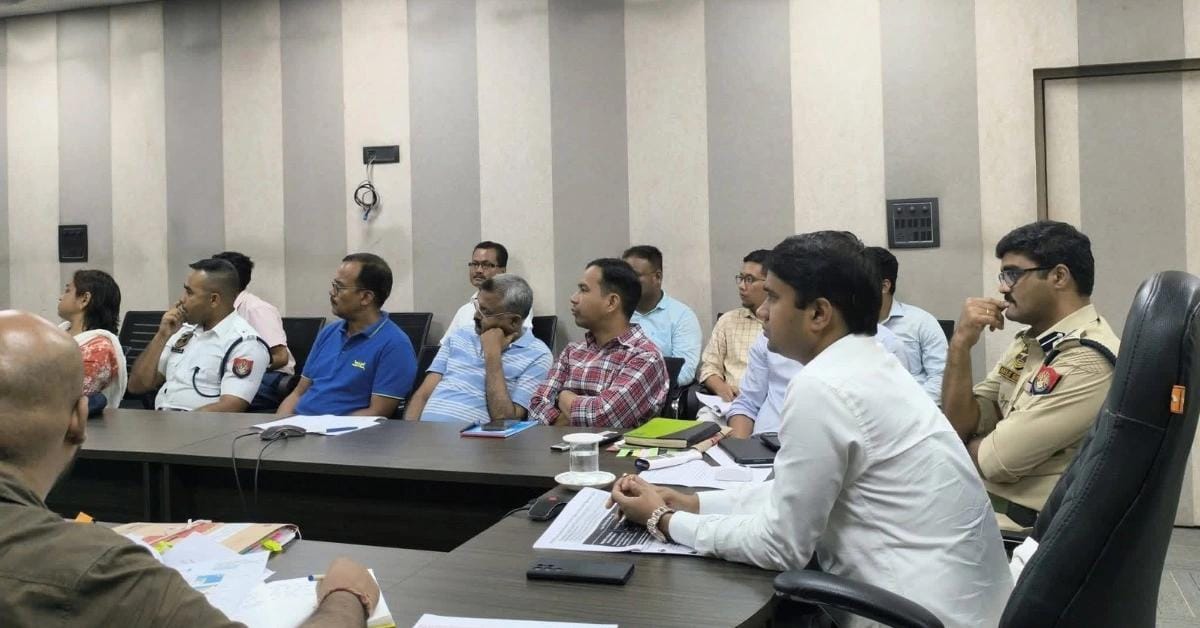
The Dibrugarh district administration held a district-level road safety review meeting on June 2 under the joint leadership of two of the district’s most senior officials — District Commissioner Vikram Koiri and Senior Superintendent of Police Abhijit Gaurav Dilip.
This was not a routine administrative exercise. The meeting was specifically convened to act on road safety directives and recommendations issued directly by the Chief Minister of Assam — a signal that road safety has moved from a departmental concern to a state-level priority.
The room brought together a cross-section of officials whose work affects daily life in the district: Additional District Commissioner, District Transport Officers, Police and Traffic Officers, and representatives from other concerned departments. When this many senior officials sit around the same table to talk about road safety, it reflects both urgency and intent.
Dibrugarh is one of Assam’s most active districts — commercially, administratively, and geographically. The district sits at the heart of Upper Assam’s road network, with heavy movement of goods vehicles, passenger buses, personal vehicles, and two-wheelers on its roads daily.
Road accidents in India continue to claim over 1.5 lakh lives every year, and Assam has historically been among the states with serious road safety challenges. Within this context, a structured review mechanism at the district level — driven by state-level directives — is exactly the kind of coordinated response that public safety experts and community voices have been asking for.
The fact that this meeting was called under the Chief Minister’s road safety recommendations adds institutional weight. It means that what gets decided in Dibrugarh’s district office has accountability flowing upward to the state government. That is accountability that makes a difference.
The meeting covered six core areas of road safety management. Each of these areas touches real lives in concrete ways.
1. Traffic Management and Congestion Control
Congestion in Dibrugarh town — particularly around the market areas, near the hospital zones, and on the National Highway stretches — has been a longstanding concern. Officials reviewed the current state of traffic management and explored strategies to improve flow without compromising safety. Congested roads are not just an inconvenience; they are a significant accident risk. Slow-moving, crowded roads create the conditions for collisions, especially involving two-wheelers and pedestrians.
2. Strict Enforcement of Road Safety Rules
Enforcement is where road safety policy meets the road itself. The meeting specifically addressed strengthening enforcement of existing road safety regulations. This covers helmet compliance, seatbelt usage, mobile phone use while driving, overspeeding, drunk driving, and overloading of vehicles — all of which remain serious problems across the district.
Discussions reportedly focused not just on penalty-based enforcement but on consistent, visible presence of traffic law enforcement. Evidence from across India shows that consistent enforcement — not just occasional crackdowns — is what changes driver behavior over time.
3. Accident Prevention Initiatives
Beyond enforcement, officials discussed proactive accident prevention strategies. These include identifying accident-prone stretches — commonly called black spots — within the district and addressing the road design, signage, lighting, or surface issues that make those stretches dangerous. Accident prevention also involves coordination with highway authorities to ensure that road repair and infrastructure issues are flagged and addressed before they cause harm.
4. Public Awareness and Education Campaigns
One of the most important outcomes of the meeting was an emphasis on public awareness as a pillar of road safety. Regulations only work when people understand them and believe in their purpose. The administration discussed strategies for outreach campaigns, school-level education programs, and community engagement initiatives that build a culture of road safety rather than just a compliance framework.
This reflects a modern understanding of road safety — that sustainable improvement comes from shifting mindset, not just increasing fines.
5. Improved Coordination Among Government Departments
Road safety does not live in one department. It requires traffic police and transport authorities to work together. It needs Public Works Department engineers to fix dangerous stretches. It needs health officials to prepare emergency response. It needs local bodies to manage encroachments near roads. The meeting acknowledged this reality and focused on building better coordination mechanisms across departments so that road safety action does not fall through administrative gaps.
The Role of Multi-Departmental Participation
One of the genuinely encouraging aspects of this meeting was who was in the room. The presence of senior officials from multiple departments — not just police and transport — reflects a whole-of-government approach to road safety.
In the past, road safety meetings often happened in silos. Traffic police would discuss enforcement. Transport departments would review licensing. Public works would handle infrastructure. Rarely did all of these streams come together with a unified action framework. The Dibrugarh meeting, anchored in the Chief Minister’s directives and chaired by the District Commissioner himself, represents a more integrated model.
Integration matters because most road accidents are caused by a combination of factors — a dangerous bend in the road, poor lighting, a driver who has not been adequately educated, enforcement that is inconsistent, and emergency response that arrives too late. Fixing one factor in isolation rarely prevents the accident. Fixing them together does.
The Most Underrated Part of Road Safety
Senior officials at the meeting placed significant emphasis on public awareness — and this deserves more attention than it usually gets.
In conversations about road safety, we tend to focus on enforcement and infrastructure. But behavioral change is the deepest layer of road safety. A driver who genuinely understands why speeding kills, who has internalized the risk to themselves and others, is safer than a driver who slows down only when they see a speed camera.
Dibrugarh’s administration is reportedly exploring strategies that go beyond poster campaigns. Community-level outreach, school programs, engagement with auto-rickshaw and goods vehicle driver communities, and coordination with local media were among the approaches discussed. The goal is not just compliance — it is to build a district where road safety is a shared value, not just a rule to be enforced.
This kind of cultural shift takes time. But it starts with exactly the kind of visible, high-level commitment that a meeting like this represents.
Commuters and Citizens
If you live in or travel through Dibrugarh, here is what this meeting signals for the near term:
Increased traffic enforcement is likely in the coming weeks. Road safety review meetings of this nature are typically followed by visible enforcement drives. Wearing your helmet, fastening your seatbelt, and obeying speed limits is not just the law — it is now under active administrative focus.
Black spot identification and remediation is on the agenda. If there are stretches of road in your area that you know to be consistently dangerous, there may be formal channels opening up for that feedback to reach the district administration.
Public awareness campaigns are being planned. Expect to see road safety messaging more prominently in schools, community spaces, and local media over the coming months.
Multi-department coordination means that complaints about dangerous road conditions — broken dividers, missing signage, poor lighting — may now have a more structured pathway to action.
Road Safety in Assam
The meeting in Dibrugarh is part of a wider road safety push across Assam, driven by Chief Minister-level directives. This top-down accountability structure is significant. When state leadership actively directs district administrations on road safety outcomes, it creates a chain of accountability that is more durable than periodic campaigns.
Assam has been working to align with the United Nations Decade of Action for Road Safety 2021–2030, which calls for a 50% reduction in road traffic deaths by 2030. Meeting that target requires exactly the kind of structured, multi-level, multi-departmental approach that Dibrugarh’s administration demonstrated on June 2.
Final Thought: Road Safety Is Everyone’s Responsibility
District Commissioner Vikram Koiri and SSP Abhijit Gaurav Dilip have sent a clear signal with this meeting: road safety in Dibrugarh is a priority, and the administration is willing to convene the highest levels of district leadership to act on it.
But administration can only do so much. The other half of road safety lives in everyday decisions — whether you check your mirrors, whether you slow down near a school, whether you call out a family member who is driving recklessly.
The roads of Dibrugarh belong to everyone who uses them. The safer we all choose to make them, the fewer families get that phone call they never wanted.
Source: Directorate of Information and Public Relations (DIPR), Assam.
This article is based on official information from the Dibrugarh district administration’s road safety review meeting held on June 2, 2026.